Finding Legacy in the Lineage: Lessons from Reuben's Sons
“The sons, I say, of Reuben the firstborn of Israel were, Hanoch, and Pallu, Hezron, and Carmi.” — 1 Chronicles 5:3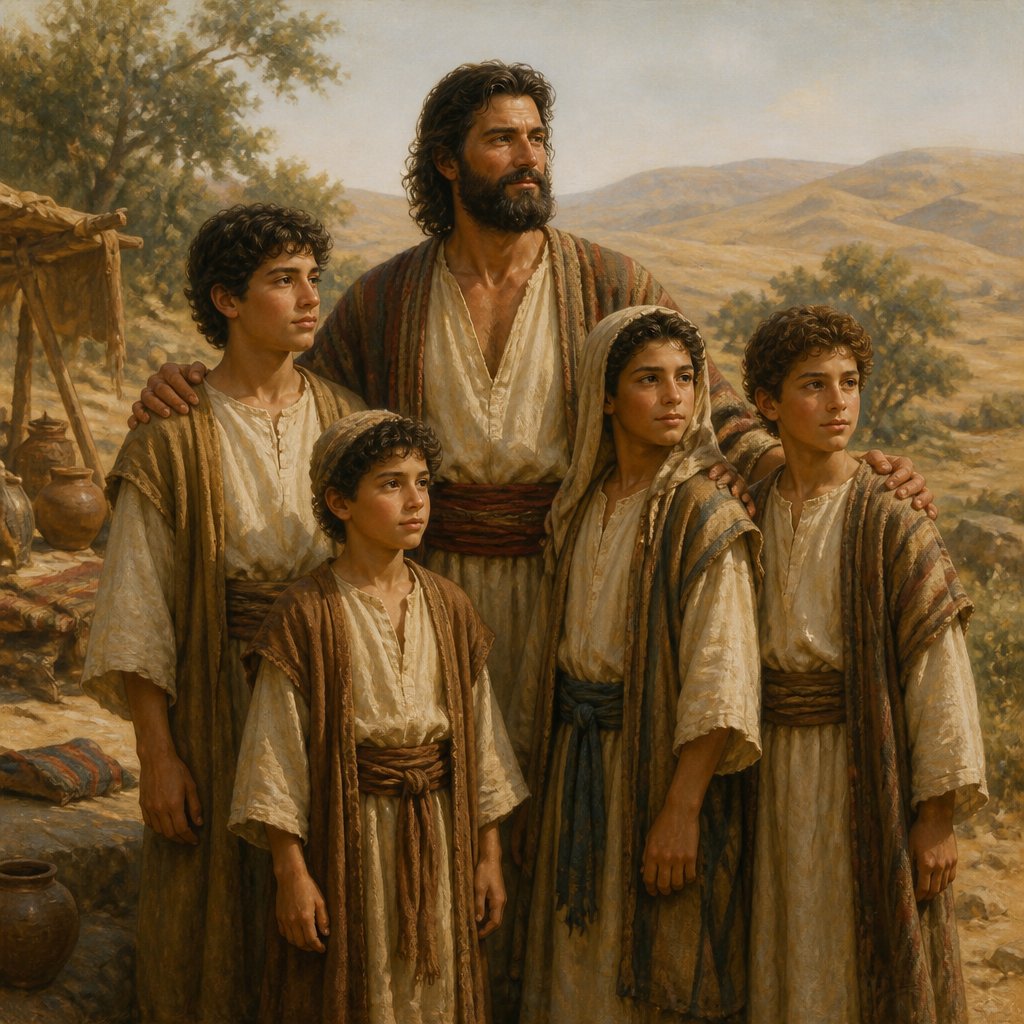
The words written in 1 Chronicles 5:3, "The sons, I say, of Reuben the firstborn of Israel were, Hanoch, and Pallu, Hezron, and Carmi," while seemingly a straightforward genealogical account, offer profound insights into our spiritual legacy, familial bonds, and the importance of remembering where we come from.
In our fast-paced world, genealogy can often feel irrelevant or tedious. We may not think twice about our lineage or our ancestors' stories, focusing instead on our immediate lives and aspirations. However, the chronicling of family lines in the Bible serves a greater purpose than mere record-keeping. It reminds us that God values our histories, and through them, we find lessons and truths pertinent to our lives today.
Reuben, as the firstborn of Israel, held a unique and significant position in the family hierarchy. This privilege came with great responsibility. The firstborn was expected to shoulder the spiritual leadership of the family and was traditionally the one who would receive a double portion of the inheritance. However, as we reflect on Reuben's life and the subsequent descent of his sons, we discover how the dynamics of family can shape destiny.
Through Hanoch, Pallu, Hezron, and Carmi, we are reminded that each generation has the potential to either uphold or diminish the legacy of those who came before them. Reuben's birthright was ultimately forfeited due to grave mistakes and transgressions noted in Genesis 49:4, which serves as a powerful reminder of the weight that sin and failure can lay upon our inheritance. Reuben's actions highlight that every choice we make carries consequences not only for us but also for our descendants.
Yet, the presence of these names in Scripture also reflects hope and the continuity of family. In the Bible, names often carry meanings that can reveal character or prophetic significance. Hanoch means "dedication," joining us to a commitment to our beliefs and values; Pallu suggests "distinction," indicating that we are to stand out as chosen people; Hezron, meaning "enclosed," reminds us that we are guarded and cared for by God, and Carmi means "my vineyard," symbolizing the cultivation of our spiritual relationship with God. Each name reminds us that our legacy can also be characterized by dedication to faith, distinction among our peers, the shelter of God’s promises, and the fruitful life we cultivate in Him.
As modern-day believers and descendants of such families, we too are called to honor the names and stories that came in our bloodline—even if that means acknowledging the frailties and failures found therein. Whether our ancestors led lives of faith or faltered, we have the ultimate choice to write our own narratives rooted firmly in the will of God.
Let’s take this opportunity to reflect on our heritage. What does your spiritual lineage teach you? Are there powerful lessons from your family's history that can guide you today? Whether you come from a long line of believers or are the first to forge a new path in faith, your story matters. God’s plan continues even amid imperfection, and we can rise to fulfill our callings with a fervent spirit to make a difference in the world around us.
Prayerfully consider these questions: How can understanding your family’s story help you build your own spiritual legacy? How can you honor your lineage as you pursue God’s purpose for your life? Let these thoughts guide you as you navigate your faith journey, forging a path that extends beyond your earthly life and influences generations to come, just as the names of Reuben's sons have far outlived their lifetime in the Scriptures.
Get our apps


Artwork for 1 Chronicles 5:3

1 Chronicles 5:3 - "The sons, I say, of Reuben the firstborn of Israel were, Hanoch, and Pallu, Hezron, and Carmi."
"The sons, I say, of Reuben the firstborn of Israel were, Hanoch, and Pallu, Hezron, and Carmi." - 1 Chronicles 5:3

1 Chronicles 3:5 - "And these were born unto him in Jerusalem; Shimea, and Shobab, and Nathan, and Solomon, four, of Bath-shua the daughter of Ammiel:"

2 Chronicles 5:3 - "Wherefore all the men of Israel assembled themselves unto the king in the feast which was in the seventh month."

1 Chronicles 5:5 - "Micah his son, Reaia his son, Baal his son,"

1 Chronicles 1:3 - "Henoch, Methuselah, Lamech,"
"Wherefore all the men of Israel assembled themselves unto the king in the feast which was in the seventh month." - 2 Chronicles 5:3

1 Chronicles 8:5 - "And Gera, and Shephuphan, and Huram."

1 Chronicles 14:5 - "And Ibhar, and Elishua, and Elpalet,"

1 Chronicles 2:5 - "The sons of Pharez; Hezron, and Hamul."

1 Chronicles 3:3 - "The fifth, Shephatiah of Abital: the sixth, Ithream by Eglah his wife."

1 Chronicles 5:19 - "And they made war with the Hagarites, with Jetur, and Nephish, and Nodab."

1 Chronicles 5:4 - "The sons of Joel; Shemaiah his son, Gog his son, Shimei his son,"

1 Chronicles 3:7 - "And Nogah, and Nepheg, and Japhia,"

1 Chronicles 1:5 - "¶ The sons of Japheth; Gomer, and Magog, and Madai, and Javan, and Tubal, and Meshech, and Tiras."

1 Chronicles 9:5 - "And of the Shilonites; Asaiah the firstborn, and his sons."

1 Chronicles 3:8 - "And Elishama, and Eliada, and Eliphelet, nine."

1 Chronicles 3:6 - "Ibhar also, and Elishama, and Eliphelet,"

1 Chronicles 12:5 - "Eluzai, and Jerimoth, and Bealiah, and Shemariah, and Shephatiah the Haruphite,"

1 Chronicles 6:5 - "And Abishua begat Bukki, and Bukki begat Uzzi,"

1 Chronicles 5:15 - "Ahi the son of Abdiel, the son of Guni, chief of the house of their fathers."

1 Chronicles 5:12 - "Joel the chief, and Shapham the next, and Jaanai, and Shaphat in Bashan."

"Henoch, Methuselah, Lamech," - 1 Chronicles 1:3

1 Chronicles 8:3 - "And the sons of Bela were, Addar, and Gera, and Abihud,"

1 Chronicles 26:3 - "Elam the fifth, Jehohanan the sixth, Elioenai the seventh."

1 Chronicles 3:23 - "And the sons of Neariah; Elioenai, and Hezekiah, and Azrikam, three."

1 Chronicles 3:17 - "¶ And the sons of Jeconiah; Assir, Salathiel his son,"
"And these were born unto him in Jerusalem; Shimea, and Shobab, and Nathan, and Solomon, four, of Bath-shua the daughter of Ammiel:" - 1 Chronicles 3:5

1 Chronicles 3:14 - "Amon his son, Josiah his son."

Isaiah 56:3-5