The Sovereignty of God in Captivity
“And Jehozadak went into captivity, when the LORD carried away Judah and Jerusalem by the hand of Nebuchadnezzar.” — 1 Chronicles 6:15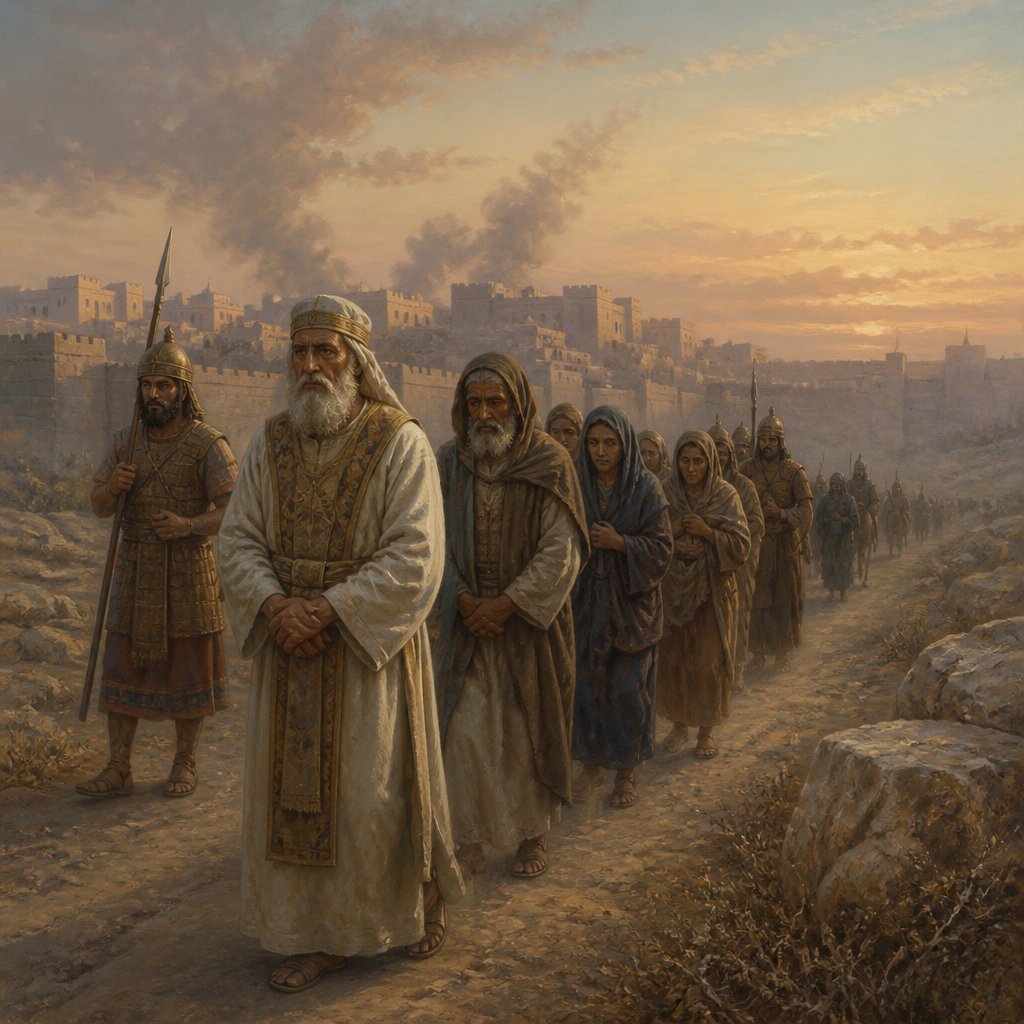
The passage in 1 Chronicles 6:15 states, "And Jehozadak went into captivity, when the LORD carried away Judah and Jerusalem by the hand of Nebuchadnezzar." This verse speaks volumes not just about a historical event, but also about the profound theological implications of God’s sovereignty, human disobedience, and the hope of restoration.
To comprehend the significance of Jehozadak going into captivity, we must first understand the broader context of Judah’s spiritual state. The chronicler, writing at a time when the Jewish people were returning from exile, wanted to remind them of their roots, their leaders, and, most importantly, their God. Jehozadak was a high priest, and his experience of captivity serves as a pivotal reminder of the consequences that arise when a nation turns its back on God.
Throughout scripture, we see that God’s hand is continually at work, even during times of judgment. Jehozadak's journey into Babylon—as a captive—should not only be seen as a punishment, but as part of God’s larger plan. It reveals to us that even in our darkest moments, when it seems that hope is lost, God is still sovereign and in control. The exile was not beyond God's reach; rather, it served as a means for His people to reflect, repent, and ultimately return to Him.
The phrase "the LORD carried away" is particularly striking. It illustrates that God is not an indifferent observer to the affairs of human beings; He is actively involved in the reality of our lives. It suggests that even when He allows suffering and loss, it is under His divine authority. This can be a source of comfort for us today. In our own lives, when we are faced with trials—be they personal, familial, or community-related—we must remember that God is still in control. Our challenges might feel like a captivity; yet, through them, God can work to refine us, teach us resilience, and draw us closer to His heart.
There is a lesson in surrender and submission here. Jehozadak’s captivity was not merely a physical displacement but also a spiritual one. It highlights the necessity of recognizing our dependence on God. In moments when we are "captured" by our circumstances, we are often prompted to lean more deeply into our faith. It is a reminder that our ultimate allegiance must be to the Lord, who holds our future in His hands.
Moreover, this verse instills hope. The history of Israel demonstrates that after every period of exile or hardship, God provided a way for His people to return to Him and to their homeland. Jehozadak symbolizes not just the loss but the possibility of restoration. The God we serve is not just a God of judgment but also a God of mercy and redemption. After the Babylonian captivity, many Israelites returned, they rebuilt their temple, their city, and their lives with newfound vigor and dependence on God’s promises.
For us, the retroactive message of 1 Chronicles 6:15 can inspire our faith during our times of turmoil. It reminds us that captivity can serve as a precursor to conversion; the times when we feel most trapped can become the most fruitful periods in our spiritual journeys. Even in our personal ‘captivities’—whether they are relational, financial, or spiritual—we must cling to the certainty that God’s purposes will prevail, and there is always a pathway back to Him.
As we meditate on Jehozadak’s experience, let us evaluate our own lives and ask ourselves: In what areas do we feel we are in captivity? How can we submit these areas to God to bring about redemption and restoration? Let us choose to embrace the hope that springs from submitting our will to the sovereignty of our God, who carries us through every trial with grace and mercy.
Get our apps


Artwork for 1 Chronicles 6:15

1 Chronicles 6:15 - "And Jehozadak went into captivity, when the LORD carried away Judah and Jerusalem by the hand of Nebuchadnezzar."
"And Jehozadak went into captivity, when the LORD carried away Judah and Jerusalem by the hand of Nebuchadnezzar." - 1 Chronicles 6:15

1 Chronicles 15:6 - "Of the sons of Merari; Asaiah the chief, and his brethren two hundred and twenty:"
"Of the sons of Merari; Asaiah the chief, and his brethren two hundred and twenty:" - 1 Chronicles 15:6

1 Chronicles 1:15

1 Chronicles 1:15

1 Chronicles 1:15 - "And the Hivite, and the Arkite, and the Sinite,"
2 Kings 15:6 - "And the rest of the acts of Azariah, and all that he did, are they not written in the book of the chronicles of the kings of Judah?"

2 Chronicles 15:6 - "And nation was destroyed of nation, and city of city: for God did vex them with all adversity."

1 Chronicles 6:6 - "And Uzzi begat Zerahiah, and Zerahiah begat Meraioth,"

1 Chronicles 8:15 - "And Zebadiah, and Arad, and Ader,"

1 Chronicles 24:15 - "The seventeenth to Hezir, the eighteenth to Aphses,"

1 Chronicles 1:6 - "And the sons of Gomer; Ashchenaz, and Riphath, and Togarmah."

1 Chronicles 6:1 - "The sons of Levi; Gershon, Kohath, and Merari."

1 Chronicles 2:15 - "Ozem the sixth, David the seventh:"

1 Chronicles 15:4 - "And David assembled the children of Aaron, and the Levites:"

1 Chronicles 23:15 - "The sons of Moses were, Gershom, and Eliezer."

1 Chronicles 15:23 - "And Berechiah and Elkanah were doorkeepers for the ark."

"And the Hivite, and the Arkite, and the Sinite," - 1 Chronicles 1:15

1 Chronicles 14:6 - "And Nogah, and Nepheg, and Japhia,"

1 Chronicles 15:15 - "And the children of the Levites bare the ark of God upon their shoulders with the staves thereon, as Moses commanded according to the word of the LORD."

1 Chronicles 3:6 - "Ibhar also, and Elishama, and Eliphelet,"

1 Chronicles 6:25 - "And the sons of Elkanah; Amasai, and Ahimoth."

1 Chronicles 15:9 - "Of the sons of Hebron; Eliel the chief, and his brethren fourscore:"

2 Chronicles 15:1 - "And the Spirit of God came upon Azariah the son of Oded:"

1 Chronicles 26:15 - "To Obed-edom southward; and to his sons the house of Asuppim."

1 Chronicles 15:1 - "And David made him houses in the city of David, and prepared a place for the ark of God, and pitched for it a tent."

1 Chronicles 6:16 - "¶ The sons of Levi; Gershom, Kohath, and Merari."

1 Chronicles 6:17 - "And these be the names of the sons of Gershom; Libni, and Shimei."

1 Chronicles 6:28 - "And the sons of Samuel; the firstborn Vashni, and Abiah."