The Sons of Issachar: A Legacy of Wisdom and Understanding
“Now the sons of Issachar were, Tola, and Puah, Jashub, and Shimron, four.” — 1 Chronicles 7:1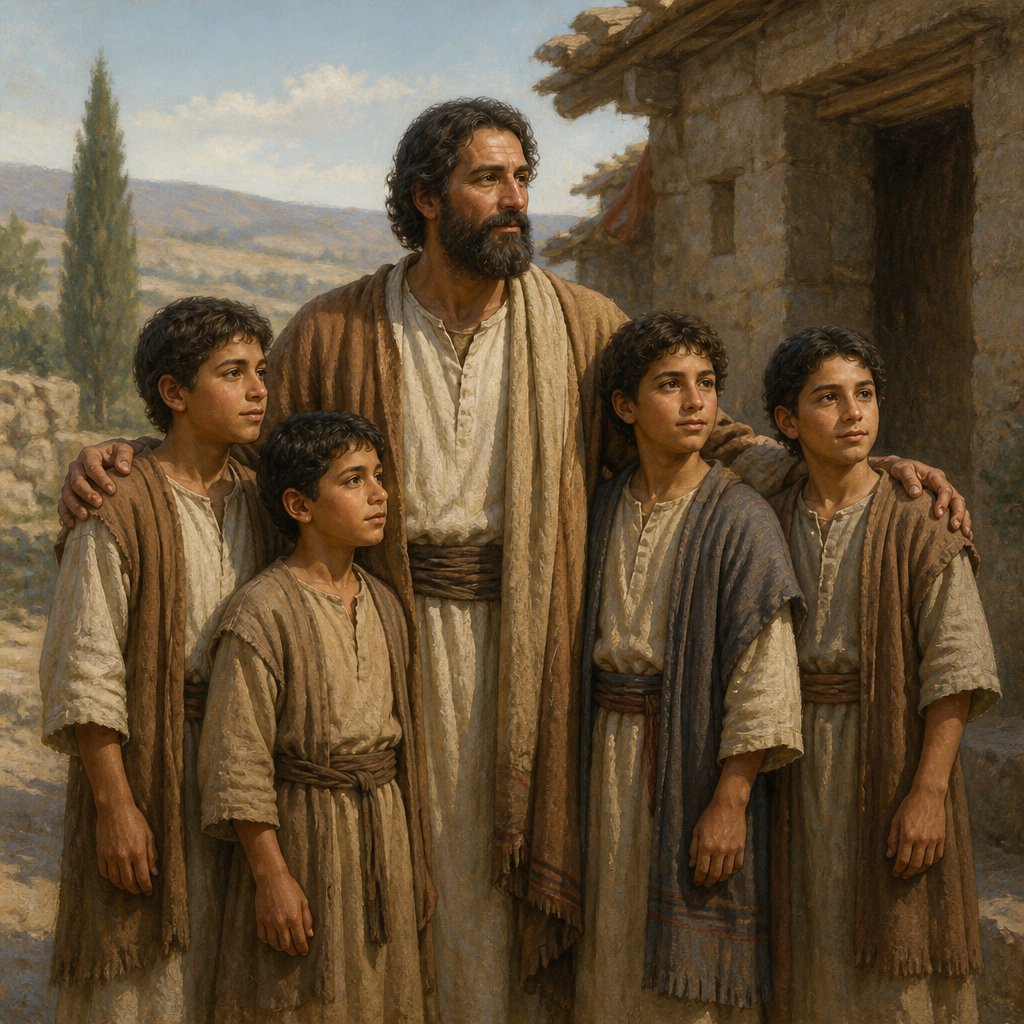
In 1 Chronicles 7:1, we encounter a seemingly simple verse that states, "Now the sons of Issachar were, Tola, and Puah, Jashub, and Shimron, four." At first glance, it may appear to be merely a genealogical record, a listing of names that can be easily overlooked in the broader narrative of Scripture. However, as is often the case in the Bible, every detail, even the names of individuals long forgotten, carries significance and purpose.
To truly appreciate this verse, we must first understand the context of Issachar himself. Issachar was one of the twelve sons of Jacob, and his descendants made up one of the tribes of Israel. Their legacy is notable not just for their quantity, but for the quality of their traits and contributions to the nation of Israel. The sons mentioned here—Tola, Puah, Jashub, and Shimron—represent not just individuals, but the embodiment of a calling that was significant for the kingdom of God.
The name Tola means 'worm' in Hebrew, yet despite the humbleness of its meaning, the character of Tola is one that inspires resilience. In later accounts (Judges 10:1), Tola emerges as a judge of Israel, leading his people during a time of crisis. From his ascent, we learn that even those who might feel small or insignificant have the potential for greatness; they can emerge as leaders when they align their lives with God's purpose. How often do we underestimate how God can use someone whom the world considers insignificant?
Puah, whose name is often associated with 'brilliance' or 'splendor,' implies an aspect of royalty and discernment. In a spiritual sense, we are reminded that God seeks those with such discernment. The ability to understand complex spiritual truths and the wisdom to apply them in our lives is critical as we navigate our own challenges. The presence of Puah, therefore, reminds us of the importance of wisdom and understanding in our spiritual walk, echoing Proverbs 4:7, which states, "Wisdom is the principal thing; therefore get wisdom: and with all thy getting get understanding."
Jashub means 'returning' or 'the one who turns back,' which serves as an invitation for us to constantly recommit ourselves to God. Just as Jashub’s name suggests, all of us can stray off the path at times. However, God always calls us back. Each failure or wandering represents an opportunity for growth and resurgence. The very act of repentance is a turning back to God, a returning to our first love and re-engaging our relationship with Him.
Shimron, the last son mentioned, translates to 'hearing' or 'listening.' This notion of attentiveness speaks directly to our relationship with God and others. James 1:19 exhorts us to be “swift to hear, slow to speak, slow to wrath.” The tribe of Issachar was known for their discernment concerning the times and seasons (1 Chronicles 12:32). Listening may seem passive, yet it is an active engagement with God’s voice, allowing us to understand His will and respond appropriately.
The names of these four sons of Issachar collectively illustrate not just the faithful heritage of this tribe, but they challenge us to embody these traits as well: resilience, wisdom, repentance, and attentiveness. As believers, we must ask ourselves: Do we exhibit these characteristics in our lives? Are we leaders like Tola, wise like Puah, repentant like Jashub, or attentive like Shimron?
In this age where distractions abound, where opinions drown out the truth, may we, like the sons of Issachar, develop a spirit that seeks understanding, rises up in leadership, recognizes the need for return, and actively listens to God. Each day presents us with choices that can lead us towards God’s divine purpose. The legacy of Issachar is one of intentional living, marked by a hunger for wisdom, a heart inclined toward repentance, and ears tuned to the voice of God.
Get our apps


Artwork for 1 Chronicles 7:1

1 Chronicles 7:1 - "Now the sons of Issachar were, Tola, and Puah, Jashub, and Shimron, four."
"Now the sons of Issachar were, Tola, and Puah, Jashub, and Shimron, four." - 1 Chronicles 7:1

1 Chronicles 1:7 - "And the sons of Javan; Elishah, and Tarshish, Kittim, and Dodanim."

1 Chronicles 14:7 - "And Elishama, and Beeliada, and Eliphalet."

1 Chronicles 3:7 - "And Nogah, and Nepheg, and Japhia,"

1 Chronicles 23:7 - "¶ Of the Gershonites were, Laadan, and Shimei."

1 Chronicles 7:39 - "And the sons of Ulla; Arah, and Haniel, and Rezia."

1 Chronicles 7:38 - "And the sons of Jether; Jephunneh, and Pispah, and Ara."

1 Chronicles 12:7 - "And Joelah, and Zebadiah, the sons of Jeroham of Gedor."

1 Chronicles 7:6 - "¶ The sons of Benjamin; Bela, and Becher, and Jediael, three."

1 Chronicles 7:34 - "And the sons of Shamer; Ahi, and Rohgah, Jehubbah, and Aram."

1 Chronicles 4:7 - "And the sons of Helah were, Zereth, and Jezoar, and Ethnan."

1 Chronicles 6:7 - "Meraioth begat Amariah, and Amariah begat Ahitub,"

1 Chronicles 7:37 - "Bezer, and Hod, and Shamma, and Shilshah, and Ithran, and Beera."

1 Chronicles 7:27 - "Non his son, Jehoshua his son."

1 Chronicles 7:33 - "And the sons of Japhlet; Pasach, and Bimhal, and Ashvath. These are the children of Japhlet."

1 Chronicles 7:32 - "And Heber begat Japhlet, and Shomer, and Hotham, and Shua their sister."

1 Chronicles 21:7 - "And God was displeased with this thing; therefore he smote Israel."

1 Chronicles 7:36 - "The sons of Zophah; Suah, and Harnepher, and Shual, and Beri, and Imrah,"

1 Chronicles 7:19 - "And the sons of Shemidah were, Ahian, and Shechem, and Likhi, and Aniam."

1 Chronicles 11:7 - "And David dwelt in the castle; therefore they called it the city of David."

1 Chronicles 7:31 - "And the sons of Beriah; Heber, and Malchiel, who is the father of Birzavith."

1 Chronicles 7:18 - "And his sister Hammoleketh bare Ishod, and Abiezer, and Mahalah."

1 Chronicles 7:30 - "The sons of Asher; Imnah, and Isuah, and Ishuai, and Beriah, and Serah their sister."

1 Chronicles 7:13 - "¶ The sons of Naphtali; Jahziel, and Guni, and Jezer, and Shallum, the sons of Bilhah."

1 Chronicles 7:35 - "And the sons of his brother Helem; Zophah, and Imna, and Shelesh, and Amal."

"And the sons of Javan; Elishah, and Tarshish, Kittim, and Dodanim." - 1 Chronicles 1:7

1 Chronicles 7:12 - "Shuppim also, and Huppim, the children of Ir, and Hushim, the sons of Aher."

1 Chronicles 24:7 - "Now the first lot came forth to Jehoiarib, the second to Jedaiah,"

1 Chronicles 15:7 - "Of the sons of Gershom; Joel the chief, and his brethren an hundred and thirty:"