Divine Interventions and Human Choices: A Reflection on 1 Chronicles 7:23
“And when he went in to his wife, she conceived, and bare a son, and he called his name Beriah, because it went evil with his house.” — 1 Chronicles 7:23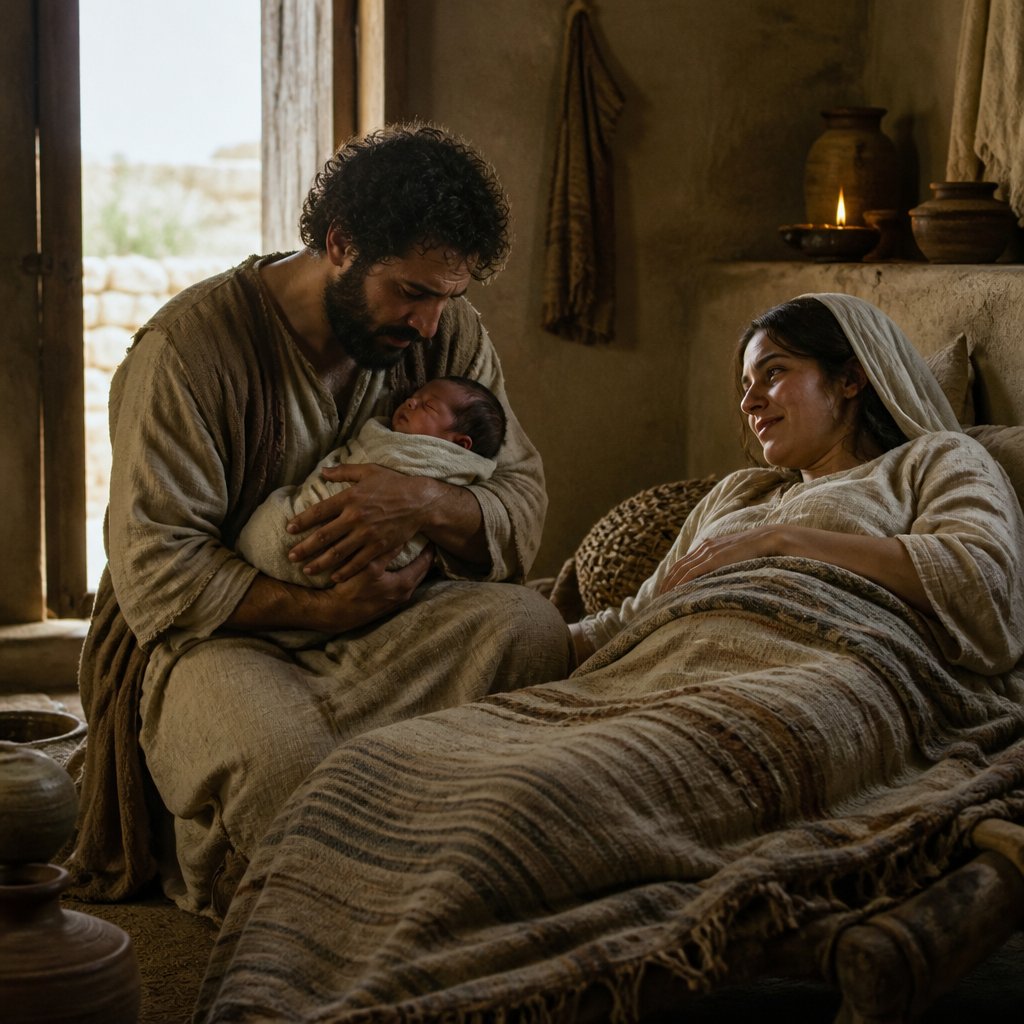
In the chronicles of the Old Testament, amidst the genealogies and lists of names that might seem overwhelming or monotonous, there are powerful truths waiting to be uncovered. 1 Chronicles 7:23 states, "And when he went in to his wife, she conceived, and bare a son, and he called his name Beriah, because it went evil with his house." This verse, while short, encapsulates profound themes of divine providence, human responsibility, and the weight of legacy.
The story behind the name ‘Beriah’ and its implications deserves closer examination. Beriah's conception came during a time of turmoil for His family. The name itself derives from the Hebrew root meaning "to create" or "to bring into existence," yet it is described here with a sense of foreboding. Beriah was born into a house that was already marked by misfortune—"because it went evil with his house." This phrase speaks to a reality that religious people often grapple with: how do we reconcile our faith with the painful choices and circumstances that exist in our lives?
In this context, the verse sheds light on a key truth about life—it is inherently fraught with challenges and suffering aimed at both society and individual families. The reality that "it went evil with his house" illuminates the messy, often painful journey of humanity. Families, regardless of their spiritual heritage, experience conflict, loss, and the consequences of sin—both their own and the sins of others.
As we ponder Beriah’s birth, we are reminded of the mercy that accompanies the act of procreation. Despite the challenges facing his family, Beriah represents hope, new beginnings, and God’s continued work in the midst of darkness. This verse invites us into a broader understanding of God's grace: it is often most poignant in our trials.
When we reflect on Beriah’s arrival into the world, we can liken it to the moments in our lives when hope seems distant, yet God chooses to breathe new opportunities into our circumstances. Consider the many times we have felt like we were living in „evil‟ situations—whether through illness, financial crises, or interpersonal conflicts. It is there, at our lowest, that God’s work shines brightest, reminding us that He brings forth life even in desolate places.
This verse challenges us to ask ourselves: How do we respond to our circumstances? In the face of adversity, can we still lean toward faith, making choices that honor God and serve as an example of hope for the generations to come? Beriah’s legacy goes beyond his mere naming; it encapsulates the reminder that God is at work even in our imperfect situations. It pushes us to re-evaluate how we approach our own names and legacies that we are crafting daily through our actions.
Further contemplating the significance of naming, we note that names carry weight—they communicate identity and purpose. Beriah's inception amidst difficulties demonstrates that we must not allow the trials of our past or present to dictate who we become or how we express our legacy. Instead, we must choose to find strength in God’s promise of redemption.
Moreover, this verse serves as a reminder that every member of our household is affected by our spiritual decisions. Just as Beriah’s arrival was framed by the sorrows surrounding him, our choices impact our families and their destinies. In raising our families, let us be constant reminders of God's goodness and faithfulness, especially when we face hardships. May we be diligent in instilling hope, purpose, and a history rooted in faith.
In conclusion, as we reflect on 1 Chronicles 7:23, let us hold on to the assurance that even when it seems „evil goes with our house,‟ God introduces new life, new hope, and new beginnings. Let us honor our families and our God by choosing faith amidst hardship, knowing that our stories are woven into His greater narrative.
Get our apps


Artwork for 1 Chronicles 7:23
1 Chronicles 7:23 - "¶ And when he went in to his wife, she conceived, and bare a son, and he called his name Beriah, because it went evil with his house."
"¶ And when he went in to his wife, she conceived, and bare a son, and he called his name Beriah, because it went evil with his house." - 1 Chronicles 7:23

1 Chronicles 23:7 - "¶ Of the Gershonites were, Laadan, and Shimei."

"¶ Of the Gershonites were, Laadan, and Shimei." - 1 Chronicles 23:7

1 Chronicles 23:23 - "The sons of Mushi; Mahli, and Eder, and Jeremoth, three."

1 Chronicles 8:23 - "And Abdon, and Zichri, and Hanan,"

1 Chronicles 1:23 - "And Ophir, and Havilah, and Jobab. All these were the sons of Joktan."

1 Chronicles 26:23 - "Of the Amramites, and the Izharites, the Hebronites, and the Uzzielites:"

1 Chronicles 23:18 - "Of the sons of Izhar; Shelomith the chief."

1 Chronicles 23:16 - "Of the sons of Gershom, Shebuel was the chief."

1 Chronicles 23:15 - "The sons of Moses were, Gershom, and Eliezer."

1 Chronicles 15:23 - "And Berechiah and Elkanah were doorkeepers for the ark."

1 Chronicles 23:20 - "Of the sons of Uzziel; Michah the first, and Jesiah the second."

1 Chronicles 3:23 - "And the sons of Neariah; Elioenai, and Hezekiah, and Azrikam, three."

1 Chronicles 23:8 - "The sons of Laadan; the chief was Jehiel, and Zetham, and Joel, three."

1 Chronicles 23:12 - "¶ The sons of Kohath; Amram, Izhar, Hebron, and Uzziel, four."

"The sons of Mushi; Mahli, and Eder, and Jeremoth, three." - 1 Chronicles 23:23

1 Chronicles 23:2 - "¶ And he gathered together all the princes of Israel, with the priests and the Levites."

1 Chronicles 1:7 - "And the sons of Javan; Elishah, and Tarshish, Kittim, and Dodanim."

1 Chronicles 23:30 - "And to stand every morning to thank and praise the LORD, and likewise at even;"

1 Chronicles 23:21 - "¶ The sons of Merari; Mahli, and Mushi. The sons of Mahli; Eleazar, and Kish."

1 Chronicles 14:7 - "And Elishama, and Beeliada, and Eliphalet."

1 Chronicles 3:7 - "And Nogah, and Nepheg, and Japhia,"

1 Chronicles 6:23 - "Elkanah his son, and Ebiasaph his son, and Assir his son,"

"And Abdon, and Zichri, and Hanan," - 1 Chronicles 8:23

1 Chronicles 7:27 - "Non his son, Jehoshua his son."

1 Chronicles 25:23 - "The sixteenth to Hananiah, he, his sons, and his brethren, were twelve:"

1 Chronicles 23:1 - "So when David was old and full of days, he made Solomon his son king over Israel."

1 Chronicles 24:23 - "And the sons of Hebron; Jeriah the first, Amariah the second, Jahaziel the third, Jekameam the fourth."

1 Chronicles 23:9 - "The sons of Shimei; Shelomith, and Haziel, and Haran, three. These were the chief of the fathers of Laadan."