The Legacy of the Priesthood: Honoring Our Calling
“And of the priests; Jedaiah, and Jehoiarib, and Jachin,” — 1 Chronicles 9:10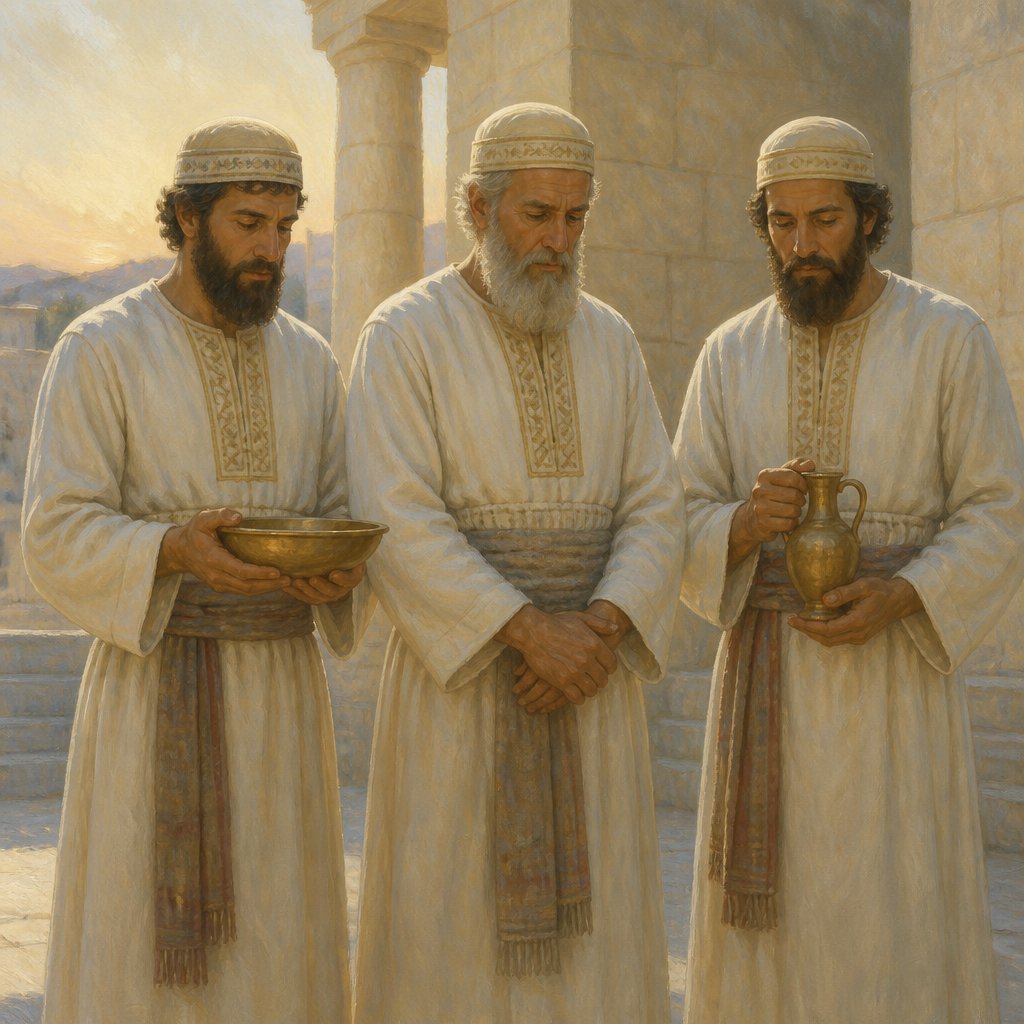
1 Chronicles 9:10 states, "And of the priests; Jedaiah, and Jehoiarib, and Jachin." At first glance, this verse may appear to be simply a list of names, a mere catalog of priests that served during the time of the Israelites. However, buried within the simplicity of this listing is a profound understanding of not only the priestly lineage but also the importance of faithfulness in our own lives and callings.
The name Jedaiah means “Yahweh has known.” What a comforting thought! In a world where people often feel unseen, this name reminds us that God knows us intimately. He is aware of our struggles, our turmoil, and our triumphs. Just as Jedaiah was acknowledged in the priestly service, so we too are called by name and known by God. We must reflect on how this knowledge informs our everyday lives and encourages us to live out our calling, despite the challenges we may face. Knowing that God has chosen us—has known us—can lead us to a place of trust and confidence in His plan.
Jehoiarib means “Yahweh will contend,” which showcases God's commitment to fight on our behalf. He is our protector and defender. In a spiritual sense, this name evokes a truth about the priestly intercession; priests were seen as mediators between God and the people. The role of Jehoiarib teaches us that in our ministry—whether in prayer, encouragement, or service—we, too, contend for others, bringing their needs before the Lord. This makes us participants in God’s divine plan, where we do not just stand idle but engage actively in bringing about change in the lives of those around us through prayer and intercession.
Finally, the name Jachin meaning “He will establish” emphasizes stability and strength. This reinforces the idea that God is always working to establish His kingdom here on earth through us. As priests in this New Testament age (1 Peter 2:9), we are called to be a royal priesthood. Our daily lives should reflect our divine heritage, as we act as vessels through which God can establish His will. Jachin serves as a reminder that in every season of life, we are called to stand firm, establishing ourselves in faith, and working diligently to strengthen our communities.
Each of these priests served not just as men with names but as symbols of God's ongoing covenant with His people. They remind us of a legacy of faith, showcasing the rich tapestry of individuals who shaped Israel’s spiritual heritage. By understanding the significance of these names, we can draw parallels to our own roles in society today. We, too, must be a people of prayer, known by God, standing ready to contend for the faith, and establishing God’s will in our world.
As we meditate on these verses, it becomes apparent that every detail in God’s Word caters to a larger narrative: the establishment of His kingdom on earth through faithful servants. Are we walking within our priestly callings, reflecting the heart of God in our daily lives? Do we recognize our identities in these names, representing a God who knows us, fights for us, and desires to establish His purpose through us?
In conclusion, while 1 Chronicles 9:10 might appear as mere historical record, it calls us into a deeper understanding of our own identity and purpose as believers. May we embrace the roles of Jedaiah, Jehoiarib, and Jachin in our spiritual journeys—knowing, contending, and establishing—for the glory of God.
Get our apps


Artwork for 1 Chronicles 9:10

1 Chronicles 9:10 - "¶ And of the priests; Jedaiah, and Jehoiarib, and Jachin,"
"¶ And of the priests; Jedaiah, and Jehoiarib, and Jachin," - 1 Chronicles 9:10

1 Chronicles 10:9 - "And when they had stripped him, they took his head, and his armour, and sent into the land of the Philistines round about, to carry tidings unto their idols, and to the people."

Psalm 10:9-10

2 Chronicles 9:10 - "And the servants also of Huram, and the servants of Solomon, which brought gold from Ophir, brought algum trees and precious stones."

1 Chronicles 4 : 10

1 Chronicles 10:10 - "And they put his armour in the house of their gods, and fastened his head in the temple of Dagon."

1 Chronicles 9:37 - "And Gedor, and Ahio, and Zechariah, and Mikloth."

1 Chronicles 24:9 - "The fifth to Malchijah, the sixth to Mijamin,"

1 Chronicles 1:10 - "And Cush begat Nimrod: he began to be mighty upon the earth."

1 Chronicles 12:10 - "Mishmannah the fourth, Jeremiah the fifth,"

1 Chronicles 24:10 - "The seventh to Hakkoz, the eighth to Abijah,"

John 10:9

1 Chronicles 9:5 - "And of the Shilonites; Asaiah the firstborn, and his sons."

1 Chronicles 9:30 - "And some of the sons of the priests made the ointment of the spices."

1 Chronicles 6:9 - "And Ahimaaz begat Azariah, and Azariah begat Johanan,"

1 Chronicles 12:9 - "Ezer the first, Obadiah the second, Eliab the third,"

1 Chronicles 14:9 - "And the Philistines came and spread themselves in the valley of Rephaim."

Daniel 7: 9-10

Daniel 7:9-10

Daniel 7:9-10

1 Chronicles 1:9 - "And the sons of Cush; Seba, and Havilah, and Sabta, and Raamah, and Sabtecha. And the sons of Raamah; Sheba, and Dedan."

Daniel 7:9-10

1 Chronicles 26:9 - "And Meshelemiah had sons and brethren, strong men, eighteen."

1 Chronicles 9:41 - "And the sons of Micah were, Pithon, and Melech, and Tahrea, and Ahaz."

1 Chronicles 21:9 - "¶ And the LORD spake unto Gad, David's seer, saying,"

1 Chronicles 9:9 - "And their brethren, according to their generations, nine hundred and fifty and six. All these men were chief of the fathers in the house of their fathers."

1 Chronicles 9:6 - "And of the sons of Zerah; Jeuel, and their brethren, six hundred and ninety."

1 Chronicles 15:9 - "Of the sons of Hebron; Eliel the chief, and his brethren fourscore:"

1 Chronicles 9:21 - "And Zechariah the son of Meshelemiah was porter of the door of the tabernacle of the congregation."