The Calling of the Capable: A Reflection on Service
“And their brethren, heads of the house of their fathers, a thousand and seven hundred and threescore; very able men for the work of the service of the house of God.” — 1 Chronicles 9:13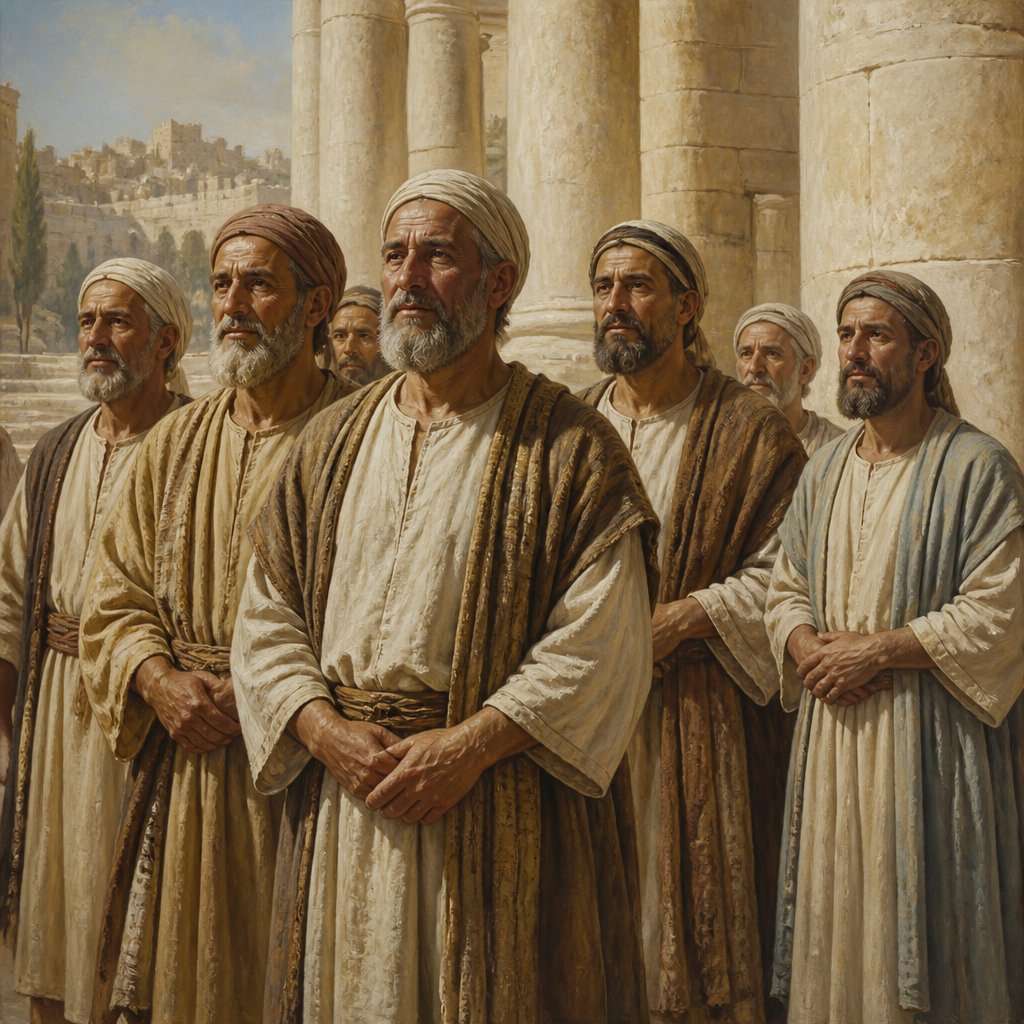
As I reflect on the verse 1 Chronicles 9:13, which states, "And their brethren, heads of the house of their fathers, a thousand and seven hundred and threescore; very able men for the work of the service of the house of God," I find several profound truths related to ministry, leadership, and the essence of servitude within the community of faith.
The context of this scripture is significant. The books of Chronicles recount the history of Israel, particularly through the lens of the priestly and Levitical orders, as well as the various families and their roles within the community after the Babylonian exile. This particular verse highlights a group of men who were not only leaders but also servants dedicated to the sacred work of the House of God.
The first thing that stands out in this verse is the mention of "heads of the house of their fathers". This phrase is rich in meaning, signaling the importance of heritage and lineage in Hebrew culture. Within Israel, identity was deeply rooted in family, and the roles assigned to individuals often stemmed from their familial responsibilities. These men represented more than just themselves; they embodied the aspirations, faith, and service of generations that preceded them. In our own lives, we carry the legacies of our families, shaping our understanding of faith, service, and leadership. We must ask ourselves—how are we honoring the calling that has been passed down to us, and how are we setting an example for future generations?
Next, the specific numbers mentioned—in this case, 1,760 men—elicit reflection on the scale and organization of those dedicated to God's service. It is not merely the quantity of individuals that is noteworthy, but their qualifications as “very able men for the work of the service of the house of God.” This speaks to a rigorous standard for those who serve in ministry. The expectation is not simply to have bodies in the seats or roles filled but to have capable, dedicated, and equipped individuals who understand the gravity of their ministry. In today’s Church, we must strive to recognize and cultivate our own spiritual gifts and the gifts of those around us. Each member of the body of Christ carries unique talents, and it is our responsibility to nurture and deploy those talents towards enriching the community and advancing God’s kingdom.
Moreover, as we consider the notion of "service" here, we can draw parallels to Christ's calling of His disciples, where servitude was a prime principle. Jesus Himself modeled the ultimate form of service through His life and ministry, culminating in His sacrificial death on the cross. He taught His disciples that greatness in the Kingdom of God is measured by one’s willingness to serve (Matthew 20:26-28). This biblical calling transcends time and tradition, calling every believer to participate actively in serving not only within the walls of the church but also in the wider community.
In practical terms, how do we manifest this? Service can come in many forms; it could be through volunteering in church ministries, reaching out to those in need in our neighborhoods, or simply lending an ear to those in distress. As we engage in acts of service, we contribute to the flourishing of the Body of Christ and reflect God’s love to a world in need.
Finally, let us not overlook the word "able"—these men were not just willing; they were equipped. They must have been trained, empowered, and committed to their roles. Similarly, we must seek the empowerment of the Holy Spirit to serve effectively. We must channel our abilities towards edifying the church and glorifying God.
In closing, as we meditate on 1 Chronicles 9:13, let us embrace our identities as both servants and leaders within our families, churches, and communities. May we honor those who have come before us by faithfully stepping into the roles we are called to, leading with a spirit of capability and service. Let each action we undertake echo the dedication and commitment exemplified by these ancient leaders, always aiming to fulfill the work of the service of the house of God.
Get our apps


Artwork for 1 Chronicles 9:13

1 Chronicles 9:13 - "And their brethren, heads of the house of their fathers, a thousand and seven hundred and threescore; very able men for the work of the service of the house of God."
"And their brethren, heads of the house of their fathers, a thousand and seven hundred and threescore; very able men for the work of the service of the house of God." - 1 Chronicles 9:13

1 Chronicles 13:9 - "¶ And when they came unto the threshingfloor of Chidon, Uzza put forth his hand to hold the ark; for the oxen stumbled."

2 Chronicles 9:13 - "¶ Now the weight of gold that came to Solomon in one year was six hundred and threescore and six talents of gold;"

1 Chronicles 1:13 - "And Canaan begat Zidon his firstborn, and Heth,"

1 Chronicles 13:1 - "And David consulted with the captains of thousands and hundreds, and with every leader."

1 Chronicles 24:13 - "The thirteenth to Huppah, the fourteenth to Jeshebeab,"

1 Chronicles 12:13 - "Jeremiah the tenth, Machbanai the eleventh."

1 Chronicles 9:37 - "And Gedor, and Ahio, and Zechariah, and Mikloth."

1 Chronicles 9:10 - "¶ And of the priests; Jedaiah, and Jehoiarib, and Jachin,"

1 Chronicles 24:9 - "The fifth to Malchijah, the sixth to Mijamin,"

1 Chronicles 9:5 - "And of the Shilonites; Asaiah the firstborn, and his sons."

1 Chronicles 6:13 - "And Shallum begat Hilkiah, and Hilkiah begat Azariah,"
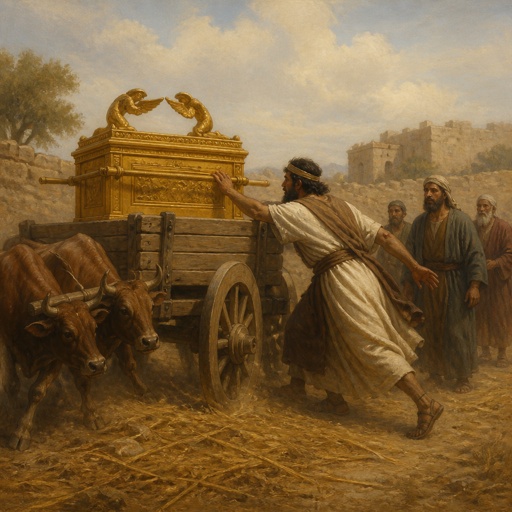
"¶ And when they came unto the threshingfloor of Chidon, Uzza put forth his hand to hold the ark; for the oxen stumbled." - 1 Chronicles 13:9

1 Chronicles 13:13 - "So David brought not the ark home to himself to the city of David, but carried it aside into the house of Obed-edom the Gittite."

1 Chronicles 9:30 - "And some of the sons of the priests made the ointment of the spices."

1 Chronicles 6:9 - "And Ahimaaz begat Azariah, and Azariah begat Johanan,"

1 Chronicles 12:9 - "Ezer the first, Obadiah the second, Eliab the third,"

1 Chronicles 4:13 - "And the sons of Kenaz; Othniel, and Seraiah: and the sons of Othniel; Hathath."

1 Chronicles 14:13 - "And the Philistines yet again spread themselves abroad in the valley."

1 Chronicles 14:9 - "And the Philistines came and spread themselves in the valley of Rephaim."

1 Chronicles 1:9 - "And the sons of Cush; Seba, and Havilah, and Sabta, and Raamah, and Sabtecha. And the sons of Raamah; Sheba, and Dedan."

1 Chronicles 26:9 - "And Meshelemiah had sons and brethren, strong men, eighteen."

1 Chronicles 9:41 - "And the sons of Micah were, Pithon, and Melech, and Tahrea, and Ahaz."

1 Chronicles 21:9 - "¶ And the LORD spake unto Gad, David's seer, saying,"

1 Chronicles 9:9 - "And their brethren, according to their generations, nine hundred and fifty and six. All these men were chief of the fathers in the house of their fathers."

1 Chronicles 7:13 - "¶ The sons of Naphtali; Jahziel, and Guni, and Jezer, and Shallum, the sons of Bilhah."

1 Chronicles 9:6 - "And of the sons of Zerah; Jeuel, and their brethren, six hundred and ninety."

1 Chronicles 15:9 - "Of the sons of Hebron; Eliel the chief, and his brethren fourscore:"

1 Chronicles 9:21 - "And Zechariah the son of Meshelemiah was porter of the door of the tabernacle of the congregation."