Unity in Diversity: A Reflection on 1 Chronicles 9:3
“And in Jerusalem dwelt of the children of Judah, and of the children of Benjamin, and of the children of Ephraim, and Manasseh;” — 1 Chronicles 9:3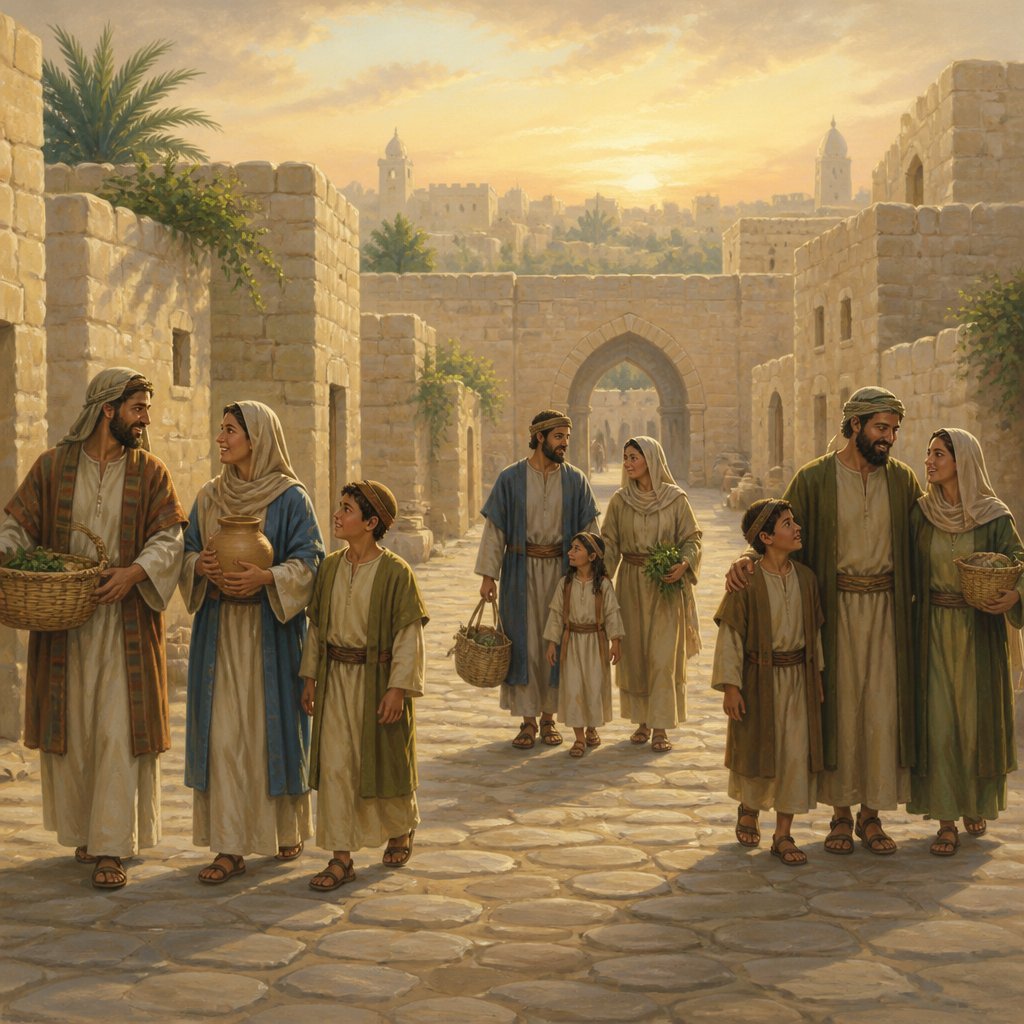
As we delve into the rich tapestry of 1 Chronicles 9:3, we are invited to reflect on the significance of diversity and unity within the community of believers. The verse states, "And in Jerusalem dwelt of the children of Judah, and of the children of Benjamin, and of the children of Ephraim, and Manasseh." This seemingly straightforward declaration holds profound implications for our understanding of community in the body of Christ today.
In this passage, we observe a vivid picture of the returning exiles from Babylon, who settled in Jerusalem to rebuild their lives and restore the city. The mention of multiple tribes—the children of Judah, Benjamin, Ephraim, and Manasseh—reveals God’s sovereign plan for unity, where diversity is celebrated. In a time historically marked by division, strife, and separation, the Lord inspires a gathering of various tribes, each with its unique history and culture, into one communal space. This is an essential reminder for us as followers of Christ, who calls us to embrace fellowship with one another, regardless of our backgrounds, cultures, or denominations.
First, let’s consider the significance of each tribe. The tribe of Judah is well-known for its leadership role; it is from this tribe that King David sprang and ultimately, the lineage of Christ himself. Judah symbolizes strength, worship, and praise. Benjamin, the youngest son of Jacob, signifies unity and honor. His tribe was known for its fierce loyalty and warrior spirit. Ephraim and Manasseh are often associated with blessings and abundance, being the sons of Joseph who received Joseph's double portion inheritance.
When we see these tribes come together in Jerusalem, we are reminded that different backgrounds bring unique strength to the community. When we unite in Christ, those differences do not become causes of division; rather, they enrich our collective experience. The body of Christ, as articulated in 1 Corinthians 12, is made up of many parts, each essential and valuable in its own right. Paul emphasizes that every person has a role to play, which highlights the beauty of our diversity under the lordship of Jesus Christ.
As we ponder the significance of Jerusalem as a common dwelling place for these tribes, we recognize that it symbolizes not just a geographical location but a spiritual center. Jerusalem represents the place where God's presence dwelled among His people. In our lives today, the local church serves as our Jerusalem—where we come together to worship, share, and grow in faith. It is here, amidst our differences, that we encounter the Holy Spirit in powerful ways, learning to love one another as Christ has loved us.
Furthermore, we notice that it wasn’t only the children of Judah and Benjamin that settled in Jerusalem but also those from Ephraim and Manasseh. This inclusive gathering underscores God's desire for all peoples to be part of His kingdom. As Christ followers, we are called to break down the walls of division that exist due to race, class, or background. The church should be a sanctuary for all, reflecting the heart of God who desires that none should perish but that all come to repentance (2 Peter 3:9).
So, how do we live out this calling in our day-to-day lives? It begins with recognizing and celebrating our differences as God’s design. Whether through service projects, Bible studies, or simply sharing meals together, we can take active steps toward fostering genuine relationships across lines that often divide us. We should also heed the apostle Paul’s challenge in Ephesians 4:3 to be diligent in keeping the unity of the Spirit in the bond of peace.
In conclusion, as we contemplate 1 Chronicles 9:3, let’s remember that God has a specific purpose for our unity amid diversity. We are collectively stronger, able to better represent the fullness of who Christ is. Let our lives embody this unity, showing the world the powerful love of God through our commitment to one another. May we dwell together, not as tribes divided, but as one body—united in Christ.
Get our apps


Artwork for 1 Chronicles 9:3

1 Chronicles 9:3 - "And in Jerusalem dwelt of the children of Judah, and of the children of Benjamin, and of the children of Ephraim, and Manasseh;"
"And in Jerusalem dwelt of the children of Judah, and of the children of Benjamin, and of the children of Ephraim, and Manasseh;" - 1 Chronicles 9:3

1 Chronicles 3:9 - "These were all the sons of David, beside the sons of the concubines, and Tamar their sister."

2 Chronicles 9:3 - "And when the queen of Sheba had seen the wisdom of Solomon, and the house that he had built,"

"These were all the sons of David, beside the sons of the concubines, and Tamar their sister." - 1 Chronicles 3:9

1 Chronicles 1:3 - "Henoch, Methuselah, Lamech,"

2 Chronicles 3:9 - "And the weight of the nails was fifty shekels of gold. And he overlaid the upper chambers with gold."

1 Chronicles 9:37 - "And Gedor, and Ahio, and Zechariah, and Mikloth."

1 Chronicles 9:10 - "¶ And of the priests; Jedaiah, and Jehoiarib, and Jachin,"

1 Chronicles 24:9 - "The fifth to Malchijah, the sixth to Mijamin,"

1 Chronicles 9:5 - "And of the Shilonites; Asaiah the firstborn, and his sons."

1 Chronicles 3:3 - "The fifth, Shephatiah of Abital: the sixth, Ithream by Eglah his wife."

"And when the queen of Sheba had seen the wisdom of Solomon, and the house that he had built," - 2 Chronicles 9:3

1 Chronicles 3:7 - "And Nogah, and Nepheg, and Japhia,"

1 Chronicles 6:9 - "And Ahimaaz begat Azariah, and Azariah begat Johanan,"

1 Chronicles 9:30 - "And some of the sons of the priests made the ointment of the spices."

1 Chronicles 12:9 - "Ezer the first, Obadiah the second, Eliab the third,"

1 Chronicles 14:9 - "And the Philistines came and spread themselves in the valley of Rephaim."

1 Chronicles 3:8 - "And Elishama, and Eliada, and Eliphelet, nine."

1 Chronicles 1:9 - "And the sons of Cush; Seba, and Havilah, and Sabta, and Raamah, and Sabtecha. And the sons of Raamah; Sheba, and Dedan."

1 Chronicles 3:6 - "Ibhar also, and Elishama, and Eliphelet,"

1 Chronicles 26:9 - "And Meshelemiah had sons and brethren, strong men, eighteen."

1 Chronicles 21:9 - "¶ And the LORD spake unto Gad, David's seer, saying,"

1 Chronicles 9:41 - "And the sons of Micah were, Pithon, and Melech, and Tahrea, and Ahaz."

1 Chronicles 9:9 - "And their brethren, according to their generations, nine hundred and fifty and six. All these men were chief of the fathers in the house of their fathers."

1 Chronicles 9:6 - "And of the sons of Zerah; Jeuel, and their brethren, six hundred and ninety."

1 Chronicles 15:9 - "Of the sons of Hebron; Eliel the chief, and his brethren fourscore:"

1 Chronicles 9:21 - "And Zechariah the son of Meshelemiah was porter of the door of the tabernacle of the congregation."

"Henoch, Methuselah, Lamech," - 1 Chronicles 1:3

1 Chronicles 9:40 - "And the son of Jonathan was Merib-baal: and Merib-baal begat Micah."