Generations of Faith: The Legacy of Moza and His Descendants
“And Moza begat Binea; and Rephaiah his son, Eleasah his son, Azel his son.” — 1 Chronicles 9:43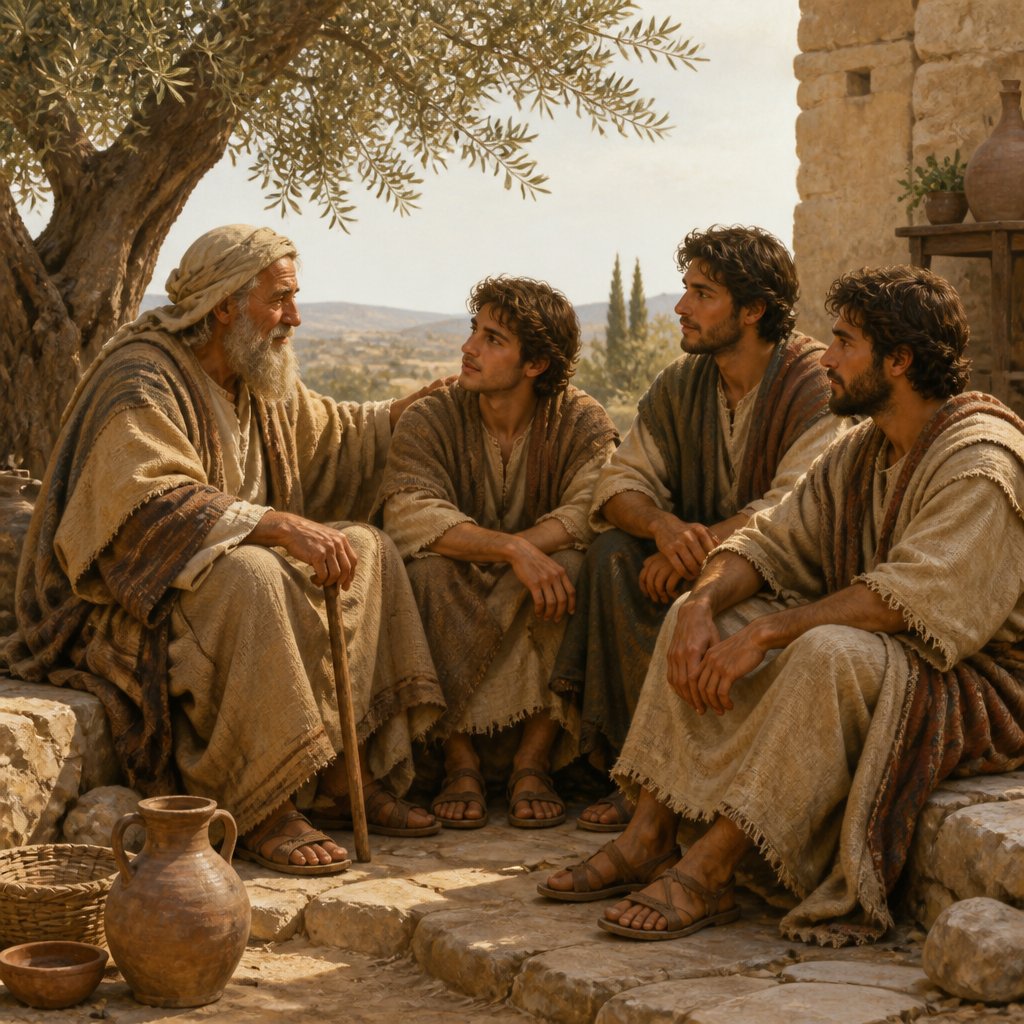
In the book of 1 Chronicles, chapter 9, verse 43, we uncover a lineage that speaks volumes about the significance of family and heritage in the kingdom of God. The text reads, "And Moza begat Binea; and Rephaiah his son, Eleasah his son, Azel his son" (1 Chronicles 9:43, KJV). While at first glance, it may seem easy to overlook such a verse amidst the genealogies that fill the pages of Scripture, it reveals a critical facet of our faith—understanding the importance of legacy, identity, and our role in God's redemptive plan.
### A Biblical Context
1 Chronicles was written during a time when the Israelites were returning from Babylonian exile, eager to reconnect with their roots and their God. The author meticulously lists genealogies to remind the people of their identity, connecting them back to their ancestral heritage. Moza, a name found within this lineage, serves as a reminder that each individual has a role in the greater tapestry of God's story on earth.
### The Significance Of Family Trees
Genealogies often serve to remind us that faith is passed down through the generations. Each name mentioned in this lineage bears witness to the lives lived, the struggles faced, and the faith exercised. Moza’s act of begetting Binea reflects a pivotal moment where faith is transmitted. It prompts us to consider how our lives influence those around us. Can we, like Moza, raise up the next generation to be carriers of faith? Are we mindful of the spiritual seeds we are planting in the lives of our children and the community?
### Interpreting the Names
Let us examine the names mentioned in this verse. Binea, Rephaiah, Eleasah, and Azel each represent a continuation of a legacy. Binea means “built,” which can be seen as a metaphor for construction—spiritually building others up in faith. It indicates a commitment to support and nurture those in our lives. Rephaiah translates to “Yahweh has healed,” suggesting that our family connections should embody healing and restoration.
Eleasah means “God has helped,” and it serves as a powerful reminder that in our lineage, we are never alone; we have divine assistance as we navigate life. Lastly, Azel means “to be near,” suggesting closeness and intimacy—both with God and with one another. Together, these names reinforce the calling we have to nurture resilience, healing, assistance, and closeness in our relationships.
### A Personal Application
In our own lives, we frequently find ourselves in the roles of our ancestors, be it parent, grandparent, mentor, or friend. What legacy are we leaving behind? Are we nurturing those around us with love, wisdom, and kindness? Just as Moza’s descendants were known not just for their lineage but for what they represented in their community, we too can cultivate a legacy that reflects the heart of God.
Let us commit to being intentional in our relationships—building up, healing, helping, and drawing close to one another. We can draw profound lessons from this genealogy, living our lives as testimonies of faith, where each generation stands on the shoulders of those who came before, forging a deep and abiding legacy.
### Prayer
Heavenly Father, I thank You for the legacy of faith that has been passed down through generations. Help me to be a steward of this gift, nurturing and building up those You have placed in my life. May my actions reflect Your love and life, and may I foster an environment of healing and closeness in my family and community. Guide me as I strive to leave behind a legacy that honors You and encourages those who follow after me. In Jesus’ name, Amen.
### Conclusion
As we ponder the lineage of Moza and commit to our own roles within our families, may we remember to keep the faith alive across generations. Let us strive to foster relationships that are reflective of God’s love and salvation—built character by character, story by story, and generation by generation.
Get our apps


Artwork for 1 Chronicles 9:43

1 Chronicles 9:43 - "And Moza begat Binea; and Rephaiah his son, Eleasah his son, Azel his son."
"And Moza begat Binea; and Rephaiah his son, Eleasah his son, Azel his son." - 1 Chronicles 9:43

1 Chronicles 11:43 - "Hanan the son of Maachah, and Joshaphat the Mithnite,"

1 Chronicles 2:43 - "And the sons of Hebron; Korah, and Tappuah, and Rekem, and Shema."

1 Chronicles 6:43 - "The son of Jahath, the son of Gershom, the son of Levi."

1 Chronicles 4:43 - "And they smote the rest of the Amalekites that were escaped, and dwelt there unto this day."

1 Chronicles 16:43 - "And all the people departed every man to his house: and David returned to bless his house."

"Hanan the son of Maachah, and Joshaphat the Mithnite," - 1 Chronicles 11:43

1 Chronicles 1:43 - "¶ Now these are the kings that reigned in the land of Edom before any king reigned over the children of Israel; Bela the son of Beor: and the name of his city was Dinhabah."

"The son of Jahath, the son of Gershom, the son of Levi." - 1 Chronicles 6:43

"And the sons of Hebron; Korah, and Tappuah, and Rekem, and Shema." - 1 Chronicles 2:43

"And they smote the rest of the Amalekites that were escaped, and dwelt there unto this day." - 1 Chronicles 4:43

1 Chronicles 9:37 - "And Gedor, and Ahio, and Zechariah, and Mikloth."

1 Chronicles 9:10 - "¶ And of the priests; Jedaiah, and Jehoiarib, and Jachin,"

1 Chronicles 24:9 - "The fifth to Malchijah, the sixth to Mijamin,"

1 Chronicles 9:5 - "And of the Shilonites; Asaiah the firstborn, and his sons."

1 Chronicles 6:9 - "And Ahimaaz begat Azariah, and Azariah begat Johanan,"

1 Chronicles 9:30 - "And some of the sons of the priests made the ointment of the spices."

1 Chronicles 12:9 - "Ezer the first, Obadiah the second, Eliab the third,"

1 Chronicles 14:9 - "And the Philistines came and spread themselves in the valley of Rephaim."

1 Chronicles 1:9 - "And the sons of Cush; Seba, and Havilah, and Sabta, and Raamah, and Sabtecha. And the sons of Raamah; Sheba, and Dedan."

1 Chronicles 26:9 - "And Meshelemiah had sons and brethren, strong men, eighteen."

1 Chronicles 21:9 - "¶ And the LORD spake unto Gad, David's seer, saying,"

1 Chronicles 9:41 - "And the sons of Micah were, Pithon, and Melech, and Tahrea, and Ahaz."

1 Chronicles 9:9 - "And their brethren, according to their generations, nine hundred and fifty and six. All these men were chief of the fathers in the house of their fathers."

1 Chronicles 9:6 - "And of the sons of Zerah; Jeuel, and their brethren, six hundred and ninety."

1 Chronicles 15:9 - "Of the sons of Hebron; Eliel the chief, and his brethren fourscore:"

1 Chronicles 9:21 - "And Zechariah the son of Meshelemiah was porter of the door of the tabernacle of the congregation."
"And all the people departed every man to his house: and David returned to bless his house." - 1 Chronicles 16:43

1 Chronicles 9:40 - "And the son of Jonathan was Merib-baal: and Merib-baal begat Micah."