The Search for Signs and Wisdom: A Pathway to Faith
“For the Jews require a sign, and the Greeks seek after wisdom:” — 1 Corinthians 1:22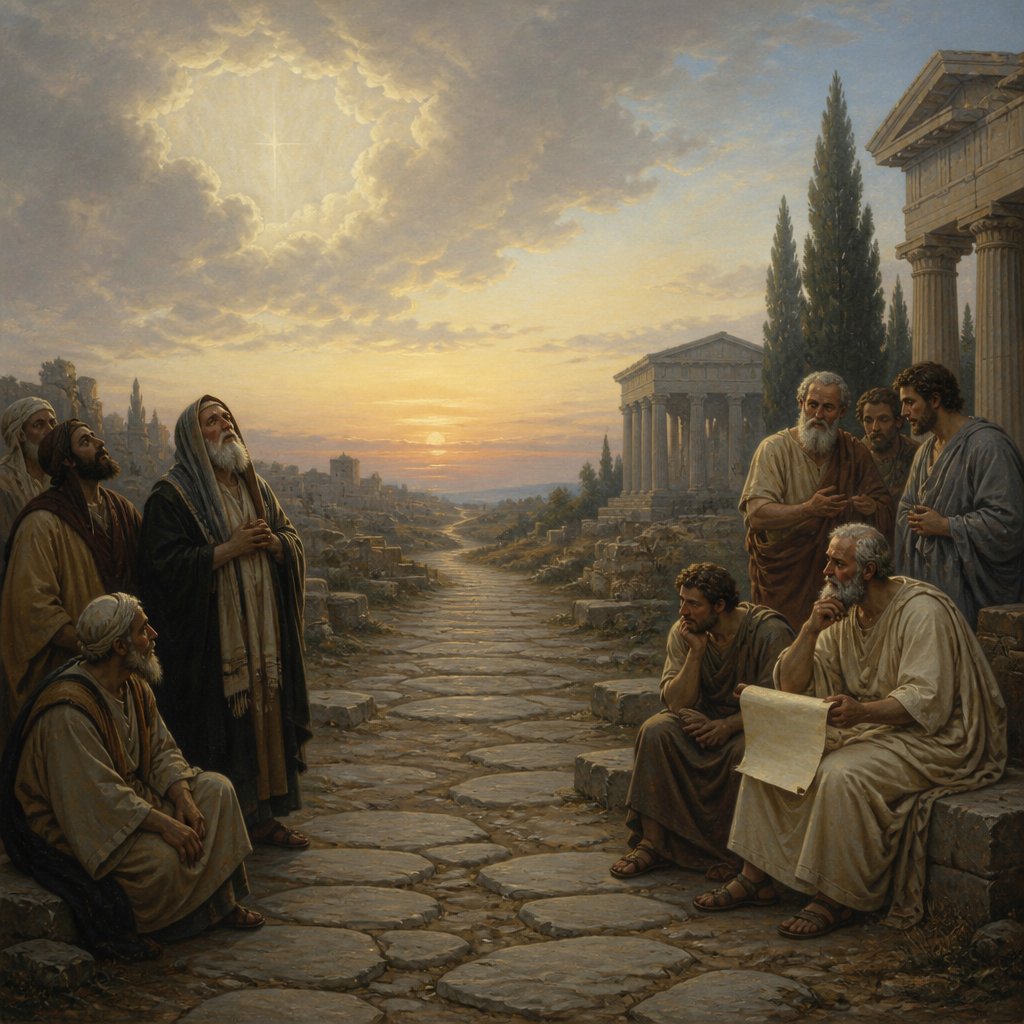
In the bustling streets of Corinth, the backdrop of commerce and charisma, the Apostle Paul tenderly confronted the desires and demands of both Jews and Greeks. He poignantly stated, "For the Jews require a sign, and the Greeks seek after wisdom" (1 Corinthians 1:22, KJV). This simple yet profound declaration encapsulates not only the cultural dynamics of his time but also the enduring quest for understanding and validation in the heart of every man and woman.
The Jews, steeped in a rich tradition of miraculous events—from the parting of the Red Sea to the fire descending upon Mount Sinai—were people of signs. They looked for divine manifestations, physical confirmations that God was acting among them. The fulfillment of prophecy, miraculous healings, and the extraordinary were integral to their faith. When Jesus walked among them, they often demanded signs to prove His authority and His messianic identity (Matthew 12:38).
On the other hand, the Greeks, representative of the broader Gentile world, prided themselves on philosophy, reason, and the pursuit of wisdom. They sought a rational understanding of the universe and human existence. For them, knowledge was power, and they gravitated toward arguments, debates, and intellectual discourse, hoping to make sense of the chaos around them through human reasoning and logic. The great thinkers of Athens and beyond influenced their minds, often dismissing anything that could not be measured, calculated, or understood through human intellect.
In this culturally rich and diverse landscape, Paul uniquely positioned the message of the Gospel. The challenge of the Gospel was that it was often seen as foolishness to both these groups; it lacked the expected signs for the Jews and the intellectual rigor sought by the Greeks. Paul did not shy away from this reality but boldly engaged with it, declaring that while the Jews sought a sign and the Greeks sought wisdom, true faith transcends both. As he later affirmed, "For after that in the wisdom of God the world by wisdom knew not God, it pleased God by the foolishness of preaching to save them that believe" (1 Corinthians 1:21, KJV).
This quest for signs and wisdom is not far removed from our modern context. As believers today, we also find ourselves navigating similar pressures. In an age deeply grounded in scientific reasoning and empirical data, we often seek confirmations of our faith through physical and visible signs. How easy it is to desire a miracle as proof of God’s presence when chaos reigns in our lives! Similarly, in our societies, the chase for wisdom—be it through scholarship, academia, or expert opinion—competes with our spiritual understanding. We’re conditioned to trust what we can see and prove, often undermining the beauty of faith.
However, Paul invites us to see beyond the veil of our expectations. He beckons us to embrace a faith that often exists in the unseen. Hebrews 11:1 beautifully articulates this, reminding us, "Now faith is the substance of things hoped for, the evidence of things not seen" (KJV).
Christianity invites us into a relationship with Christ that defies the simplicity of signs and the narrowness of human wisdom. The ultimate sign, Jesus Himself, was raised from the dead—a reality that requires not just intellectual acknowledgment but a leap of faith into relationship. It defies human understanding yet promises profound life and transformation.
As we navigate our spiritual journeys, let us learn from Paul’s message to the Corinthians. Rather than fixating solely on divine signs or wisdom, let us seek after Christ—the source of all truth and understanding. Let us engage with our doubts and questions, and rather than being discouraged, let them lead us deeper into the arms of our Savior who promises wisdom beyond any human understanding and miracles that flow from a place of faith. May our searches for signs lead us to the greatest sign of all, the faith in Christ crucified and risen—evidence that indeed changes everything.
Get our apps


Artwork for 1 Corinthians 1:22

1 Corinthians 1:22 - "For the Jews require a sign, and the Greeks seek after wisdom:"
"For the Jews require a sign, and the Greeks seek after wisdom:" - 1 Corinthians 1:22

1 Corinthians 12:12-22

1 Corinthians 10:22 - "Do we provoke the Lord to jealousy? are we stronger than he?"

1 Corinthians 16:22 - "If any man love not the Lord Jesus Christ, let him be Anathema Maranatha."

2 Corinthians 1:22 - "Who hath also sealed us, and given the earnest of the Spirit in our hearts."

1 Corinthians 15:22 - "For as in Adam all die, even so in Christ shall all be made alive."

1 Corinthians 12:22 - "Nay, much more those members of the body, which seem to be more feeble, are necessary:"

1 Corinthians 3:22 - "Whether Paul, or Apollos, or Cephas, or the world, or life, or death, or things present, or things to come; all are your's;"

1 Corinthians 14:22 - "Wherefore tongues are for a sign, not to them that believe, but to them that believe not: but prophesying serveth not for them that believe not, but for them which believe."
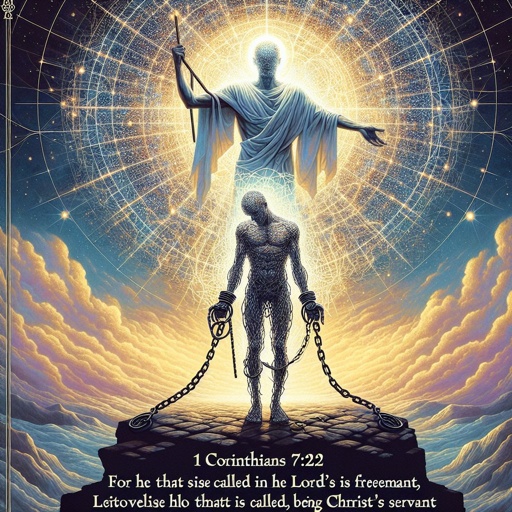
1 Corinthians 7:22 - "For he that is called in the Lord, being a servant, is the Lord's freeman: likewise also he that is called, being free, is Christ's servant."

1 Corinthians 1:19-20

1 Corinthians 1:19-20

1 Corinthians 1:19-20

1 Corinthians 1:19-20

1 Corinthians 1:19-20

1 Corinthians 1:19-20

1 Corinthians 1:19-20

1 Corinthians 1:19-20

1 Corinthians 1:19-20

1 Corinthians 1:19-20

1 Corinthians 9:22 - "To the weak became I as weak, that I might gain the weak: I am made all things to all men, that I might by all means save some."
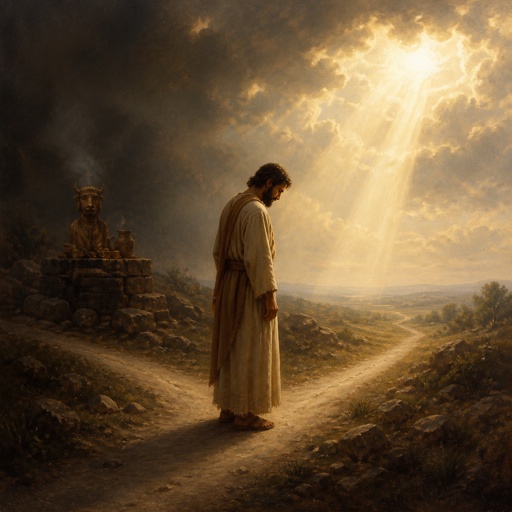
"Do we provoke the Lord to jealousy? are we stronger than he?" - 1 Corinthians 10:22

1 Corinthians 15:22-23 - "For as in Adam all die, so also in Christ shall all be made alive. But each in his own order: Christ the firstfruits, then at his coming those who belong to Christ."

1 Corinthians 1:19-20

1 Corinthians 1:19-20

1 Corinthians 1:19-20

1 Corinthians 1:19-20

1 Corinthians 1:19-20

1 Corinthians 1:19-20