The Weight of Conscience: Understanding Liberty in Christ
“Conscience, I say, not thine own, but of the other: for why is my liberty judged of another man’s conscience?” — 1 Corinthians 10:29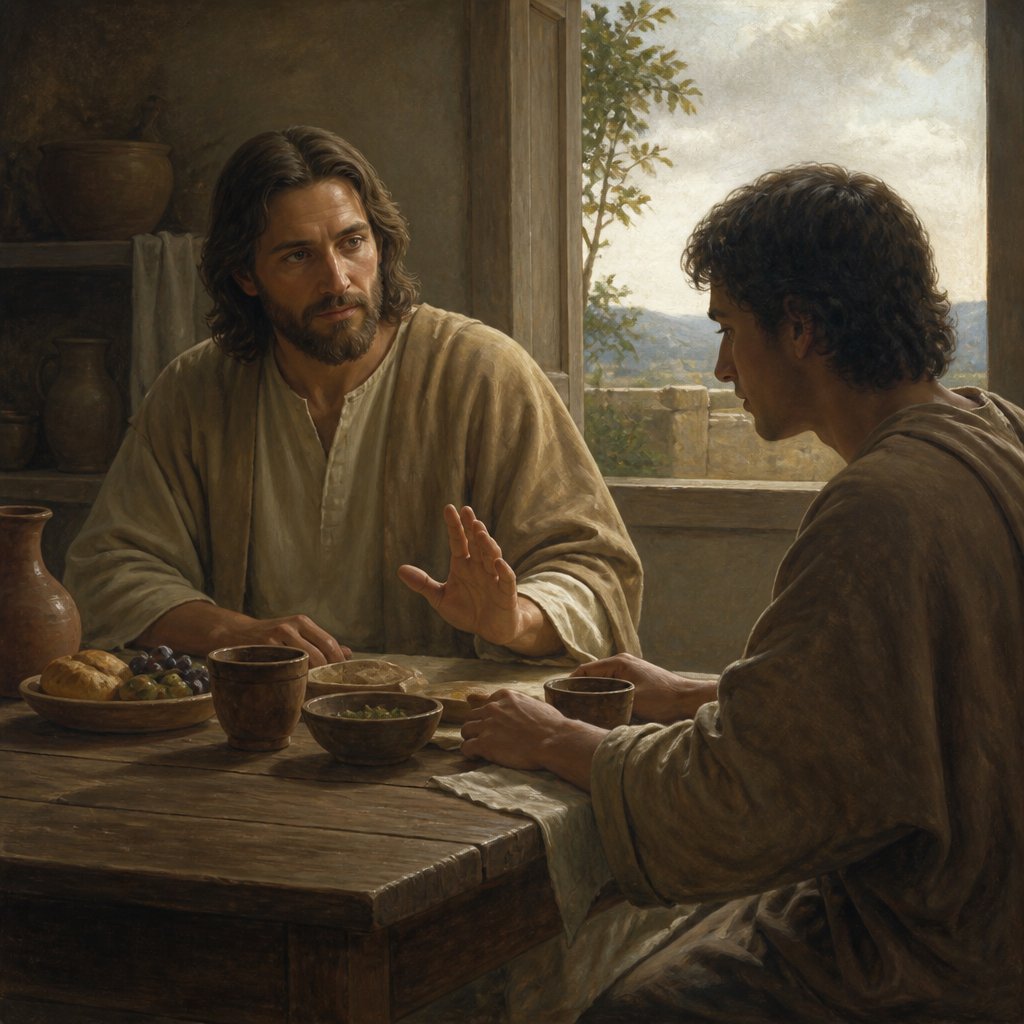
In the heart of Paul's letter to the Corinthians, we find a profound challenge that transcended the cultural struggles of the early church and resonates deeply with us today. In 1 Corinthians 10:29, Paul states, "Conscience, I say, not thine own, but of the other: for why is my liberty judged of another man's conscience?" This verse encapsulates a critical principle of the Christian life—the consideration of others' consciences in the exercise of our own freedoms.
To understand the full gravity of this passage, we must first consider the context in which Paul was writing. The Corinthian church was rife with divisions and disputes over issues such as food offered to idols, spiritual gifts, and the nature of Christian freedom. Many believers insisted on their liberty to partake in activities that could lead others to stumble in their faith. However, Paul calls for a paradigm shift: rather than merely defending personal rights, we are to actively consider the impact of our actions on the faith and conscience of others.
The phrase "not thine own, but of the other" invites us to put aside our self-centeredness and to cultivate a mindset that prioritizes community over individual liberty. In a society that celebrates personal autonomy, this call can feel revolutionary. Paul is not suggesting that our conscience should be governed by another; rather, he is urging that we regard the consciences of our brothers and sisters with utmost care.
This brings to light the tension between liberty and love within the Christian community. Liberty in Christ means we have been set free from the bondage of sin and the heavy weight of legalism. However, with that freedom comes immense responsibility: the need to love our neighbor as ourselves. As Christians, we must ask ourselves whether our actions contribute to the building up of the body of Christ or if they lead to division and misunderstanding.
Paul’s rhetorical question, "for why is my liberty judged of another man's conscience?" challenges us to reflect on our motivations and the implications of our actions. It recognizes that while we are free in Christ, this freedom is not an excuse for reckless behavior or indifference toward our fellow believers. Our decisions, no matter how innocuous they may seem to us, can have profound effects on those around us. The liberties we enjoy must be weighed against the questions of whether they encourage or hinder others in their walk with God.
Consider, for instance, our conduct in environments where new believers are present—settings that require sensitivity and awareness. Our critical attitude toward the consciences that others bear might signal a lack of empathy or, worse, a disregard for the fragile state of faith they inhabit. We must be careful that our pursuit of liberty does not become a stumbling block to another’s spiritual journey. Paul reminds us that love must govern our actions and that our ultimate goal should always seek the edification of others (1 Corinthians 10:24).
Embracing this principle creates a culture of mutual respect and solidarity within the church. Rather than viewing liberty as a personal claim, we see it as a communal gift. We begin to understand that our freedoms are most beautifully expressed when shared with others—when we can rejoice in the freedoms of those around us and ensure that we are not leading them astray.
As we ponder this passage, let’s ask the Holy Spirit to instill in us a spirit of sensitivity and grace. May we be willing to adjust our liberties for the sake of others and seek always to build bridges rather than erect barriers.
Let us pray: "Dear Lord, help me to see my freedoms through the lens of love. May my choices reflect Your heart, always considering the impact on those around me. Guide me in the way of humility, so that my life can be a source of encouragement and strength to others in their journey with You. Amen."
In this light, Paul’s exhortation is far from a constraint; it is an invitation to a deeper, more meaningful expression of liberty – one that reflects Christ’s love, sacrifices for the sake of unity, and builds a stronger, healthier church community.
Get our apps


Artwork for 1 Corinthians 10:29

1 Corinthians 10:29 - "Conscience, I say, not thine own, but of the other: for why is my liberty judged of another man's conscience?"
"Conscience, I say, not thine own, but of the other: for why is my liberty judged of another man's conscience?" - 1 Corinthians 10:29

1 Corinthians 1:29 - "That no flesh should glory in his presence."

1 Corinthians 11:26-29

1 Corinthians 11:26-29

1 Corinthians 14:29 - "Let the prophets speak two or three, and let the other judge."

1 Corinthians 10:13

1 Corinthians 10:13

1 Corinthians 10:13

1 Corinthians 12:29 - "Are all apostles? are all prophets? are all teachers? are all workers of miracles?"

"That no flesh should glory in his presence." - 1 Corinthians 1:29

1 Corinthians 10:26 - "For the earth is the Lord's, and the fulness thereof."

1 Corinthians 7:29 - "But this I say, brethren, the time is short: it remaineth, that both they that have wives be as though they had none;"

1 Corinthians 10:10 - "Neither murmur ye, as some of them also murmured, and were destroyed of the destroyer."

1 Corinthians 15:29 - "Else what shall they do which are baptized for the dead, if the dead rise not at all? why are they then baptized for the dead?"

1 Corinthians 1:28-29 - "God chose what is low and despised in the world, even things that are not, to bring to nothing things that are, so that no human being might boast in the presence of God."

1 Corinthians 10:3 - "And did all eat the same spiritual meat;"

1 Corinthians 10:14 - "Wherefore, my dearly beloved, flee from idolatry."

1 Corinthians 10:2 - "And were all baptized unto Moses in the cloud and in the sea;"

1 Corinthians 10:25 - "Whatsoever is sold in the shambles, that eat, asking no question for conscience sake:"

1 Corinthians 10:5 - "But with many of them God was not well pleased: for they were overthrown in the wilderness."

1 Corinthians 10:24 - "Let no man seek his own, but every man another's wealth."

1 Corinthians 10:15 - "I speak as to wise men; judge ye what I say."

1 Corinthians 11:10 - "For this cause ought the woman to have power on her head because of the angels."

1 Corinthians 11:29 - "For he that eateth and drinketh unworthily, eateth and drinketh damnation to himself, not discerning the Lord's body." The image should not depict explicit or offensive content but be symbolic.

1 Corinthians 10:22 - "Do we provoke the Lord to jealousy? are we stronger than he?"

1 Corinthians 13:10 - "But when that which is perfect is come, then that which is in part shall be done away."

1 Corinthians 10:18 - "Behold Israel after the flesh: are not they which eat of the sacrifices partakers of the altar?"

"Let the prophets speak two or three, and let the other judge." - 1 Corinthians 14:29

1 Corinthians 10:32 - "Give none offence, neither to the Jews, nor to the Gentiles, nor to the church of God:"