Covered in Grace: Understanding the Divine Order
“For if the woman be not covered, let her also be shorn: but if it be a shame for a woman to be shorn or shaven, let her be covered.” — 1 Corinthians 11:6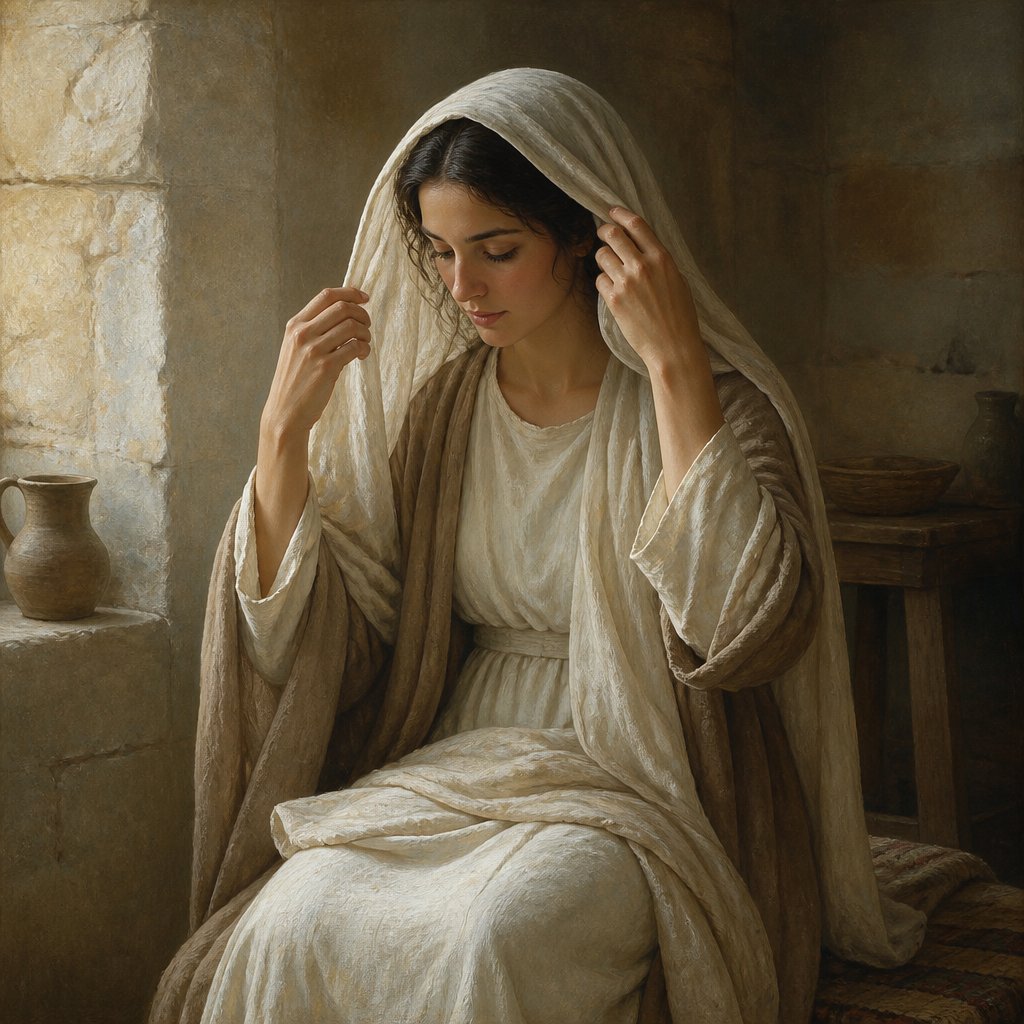
In 1 Corinthians 11:6, we encounter a powerful exhortation from the Apostle Paul that bridges the gap between cultural practices and the theological significance of head coverings. The verse states, "For if the woman be not covered, let her also be shorn: but if it be a shame for a woman to be shorn or shaven, let her be covered." This profound statement encapsulates not just an instruction for women of that time but also resonates with deeper principles of authority, modesty, and respect within the Church.
To unpack this verse, we must first understand the context in which Paul was writing. In the culturally diverse city of Corinth, Christians were grappling with the integration of their faith into a society steeped in different customs and worldviews. The head covering served as a symbol of a woman’s submission to authority and her acknowledgment of God's order, reflecting a broader divine hierarchy—the relationship of Christ to man, and man to woman.
The sheer weight of the message we find in this chapter calls for a careful exploration of its implications. Paul’s directive about women covering their heads is not merely a rule but is deeply rooted in a theology of worship and respect. In the cultural backdrop of the Corinthian church, the head covering indicates respect for the established order of God’s creation. When a woman prays or prophesies, her head being covered signifies her acknowledgment of God’s authority.
Paul juxtaposes two conditions: the consequences of not being covered and the cultural implications of shaving one’s head. It is essential to embrace the seriousness of the phrase "let her also be shorn." Here, Paul nearly provocatively challenges the women of Corinth to reflect on their cultural practices regarding honor and shame. In that society, a woman shaving her head was considered a disgrace; therefore, Paul’s argument reinforces the sentiment that it is better to adhere to the respected practice of wearing a covering than to face shame that might arise from disregarding it.
Yet, while Paul emphasizes this cultural symbolism, we must also recognize that the underlying principle of honor transcends specific head coverings. It’s about submitting to God's glory and order in a relational context. In today’s world, we are often faced with the challenge of navigating cultural expressions of faith and the essence behind them.
As believers, we are called to reflect Christ's love through our interactions and ways we uphold respect within our communities. Paul’s instructions urge us to embody humility and graciousness, understanding that our appearances and actions can either uplift or diminish the work of God and our witness.
Moreover, let’s not lose sight of the heart behind the commands laid out for us in Scripture, which resonates with the essence of love and respect. While many of us may not practice the act of wearing head coverings today, we can embody the spirit of Paul’s instruction by exhibiting a mindset of honor towards those in authority, whether it be our spiritual or temporal leaders.
As we meditate on 1 Corinthians 11:6, let us ask ourselves how we can honor God’s order in our life today. Are our actions and attitudes aligned with the principles of humility and respect? Are we actively showing honor to God, others, and the roles they play in our spiritual journey? Let us remember that God is more concerned with the posture of our heart than the specific visibility of our compliance with cultural norms.
Ultimately, the message of head covering represents a deeper calling to live under Christ’s authority. So let us imbibe this Scripture, recognizing it as an invitation to cover ourselves—not only with external symbols but with internal grace that reflects our relationship with God and our love for others.
In so doing, we fulfill the law of Christ, living in harmony, honor, and respect, within our ecclesiastical communities and beyond.
Get our apps


Artwork for 1 Corinthians 11:6

1 Corinthians 11:6 - "For if the woman be not covered, let her also be shorn: but if it be a shame for a woman to be shorn or shaven, let her be covered."
"For if the woman be not covered, let her also be shorn: but if it be a shame for a woman to be shorn or shaven, let her be covered." - 1 Corinthians 11:6
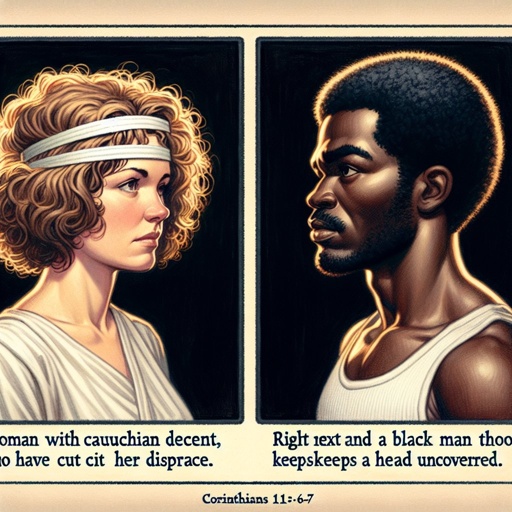
1 Corinthians 11:6-7 - "For if a woman does not cover her head, she might as well have her hair cut off; but if it is a disgrace for a woman to have her hair cut off or her head shaved, then she should cover her head. A man ought not to cover his head, since he is the image and glory of God; but woman is the glory of man."

"For if a woman does not cover her head, she might as well have her hair cut off; but if it is a disgrace for a woman to have her hair cut off or her head shaved, then she should cover her head. A man ought not to cover his head, since he is the image and glory of God; but woman is the glory of man." - 1 Corinthians 11:6-7

1 Corinthians 6:11 - "And such were some of you: but ye are washed, but ye are sanctified, but ye are justified in the name of the Lord Jesus, and by the Spirit of our God."

2 Corinthians 6:11 - "O ye Corinthians, our mouth is open unto you, our heart is enlarged."

1 Corinthians 13:4-6

1 Corinthians 13:4-6

1 Corinthians 13:4-6

1 Corinthians 13:4-6

1 Corinthians 13:4-6

1 Corinthians 13:4-6

1 Corinthians 13:4-6

1 Corinthians 13:4-6

1 Corinthians 6:6 - "But brother goeth to law with brother, and that before the unbelievers."

1 Corinthians 1:6 - "Even as the testimony of Christ was confirmed in you:"

1 Corinthians 11:26-29

1 Corinthians 11:26-29

1 Corinthians 6:19

1 Corinthians 6:19

1 Corinthians 6:19

1 Corinthians 6:11 And such were some of you. But you were washed, but you were sanctified, but you were justified in the name of the Lord Jesus and by the Spirit of our God.

1 Corinthians 11:8 - "For the man is not of the woman; but the woman of the man."

1 Corinthians 6:19

1 Corinthians 6:19

1 Corinthians 6:19

1 Corinthians 11:1 - "Be ye followers of me, even as I also am of Christ."

1 Corinthians 6:11 And such were some of you. But you were washed, but you were sanctified, but you were justified in the name of the Lord Jesus and by the Spirit of our God.

1 Corinthians 6:11 And such were some of you. But you were washed, but you were sanctified, but you were justified in the name of the Lord Jesus and by the Spirit of our God.

1 Corinthians 11:11 - "Nevertheless neither is the man without the woman, neither the woman without the man, in the Lord."