Silence and Submission: Understanding 1 Corinthians 14:34
“Let your women keep silence in the churches: for it is not permitted unto them to speak; but they are commanded to be under obedience, as also saith the law.” — 1 Corinthians 14:34
The apostle Paul’s instruction in 1 Corinthians 14:34, "Let your women keep silence in the churches: for it is not permitted unto them to speak; but they are commanded to be under obedience, as also saith the law," has sparked considerable debate among theologians, scholars, and believers alike. This verse encapsulates a broader discussion about the role of women in the church, their relationship to authority, and the interpretation of Scripture in the context of contemporary society. As we embark on a journey to unpack this verse, it’s essential to approach it with an open heart and a willingness to understand the cultural context of the early church and the timeless principles that transcend cultural boundaries.
Understanding the scripture requires a glimpse into the culture of Corinth during Paul's time. The Corinthian church was a melting pot of diverse backgrounds and ideologies, often marked by chaos and confusion during worship services. Paul’s epistles often address behavioral issues within the church, and this particular instruction on silence can be seen as an effort to promote order and respect during worship.
Yet, it begs the question: is this directive an absolute prohibition against women speaking in church, or is it specific to the situation at Corinth? Examining the context more closely, one sees that Paul addresses a broader audience later in the passage, highlighting the need for order in worship, irrespective of gender. Paul argues that all participants in worship should do so in a manner conducive to edification — building one another up in the faith (1 Corinthians 14:26).
One interpretation is that the directive was intended for women speaking out of turn, disrupting the service, or challenging the authority of male leaders in a way that reflected the broader societal norms of the time. In many ancient cultures, women had a subordinate place in public life, and to speak out in church could symbolize a challenge not only to church authority but to cultural norms. Thus, Paul’s command may be more about the need for orderly worship than an intrinsic value judgment about the speaking abilities or spiritual authority of women.
Moreover, it’s crucial to consider what other scriptures reveal about the role of women in the church. Paul, in his letter to the Galatians, emphatically states, "For ye are all the children of God by faith in Christ Jesus. For as many of you as have been baptized into Christ have put on Christ. There is neither Jew nor Greek, neither bond nor free, neither male nor female: for ye are all one in Christ Jesus" (Galatians 3:26-28 KJV). This declaration underlines the equal value and standing of all believers before Christ. It affirms the significant roles women held in the early church such as deaconesses, evangelists, and witnesses to the resurrection.
Acknowledging this equality does not nullify Paul’s instruction in 1 Corinthians. Instead, it invites us to consider that his intent may not have been to silence women entirely but to guide the expression of their contributions in a way that aligns with God’s order. This scripture can thus serve as a call for women to engage fully in the life of the church, but in ways that respect the teachings of Scripture.
In conclusion, to apply 1 Corinthians 14:34 in our context requires discernment. Women today are valuable contributors to church life, equipped by the Holy Spirit for service and leadership. It is imperative that we cultivate a community where each voice is heard, and order is maintained through submission to one another in reverence to Christ (Ephesians 5:21). Let us strive for a balance of silence and speech, obedience, and freedom, recognizing that in Christ, we all have a role to play in edifying the body of believers and enriching the life of the church overall. May we embody the unity and harmony Paul envisioned for the church, fulfilling our calling with grace and truth.
Get our apps


Artwork for 1 Corinthians 14:34

1 Corinthians 14:34 - "Let your women keep silence in the churches: for it is not permitted unto them to speak; but they are commanded to be under obedience, as also saith the law."
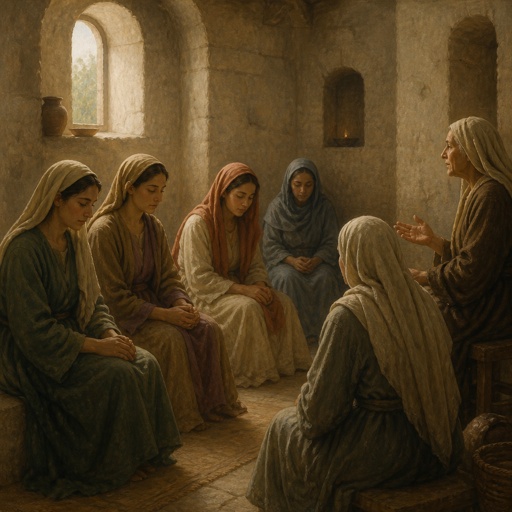
"Let your women keep silence in the churches: for it is not permitted unto them to speak; but they are commanded to be under obedience, as also saith the law." - 1 Corinthians 14:34

1 Corinthians 14:1

1 corinthians 14:1

1 Corinthians 14:36

1 Corinthians 14:37

1 Corinthians 14:36

1 Corinthians 15:34 - "Awake to righteousness, and sin not; for some have not the knowledge of God: I speak this to your shame."

1 Corinthians 14:26-33

1 Corinthians 14:36-40

1 Corinthians 14:36-37

1 Corinthians 14:39-40

1 Corinthians 14:14 - "For if I pray in an unknown tongue, my spirit prayeth, but my understanding is unfruitful."

1 Corinthians 12:14 - "For the body is not one member, but many."

1 Corinthians 14:32 - "And the spirits of the prophets are subject to the prophets."

1 Corinthians 14:40 - "Let all things be done decently and in order."

1 Corinthians 16:14 - "Let all your things be done with charity."

1 Corinthians 1:14 - "I thank God that I baptized none of you, but Crispus and Gaius;"

1 Corinthians 14:38 - "But if any man be ignorant, let him be ignorant."

1 Corinthians 14:1 - "Follow after charity, and desire spiritual gifts, but rather that ye may prophesy."

1 Corinthians 14:17 - "For thou verily givest thanks well, but the other is not edified."

1 Corinthians 14:33 - "For God is not the author of confusion, but of peace, as in all churches of the saints."

1 Corinthians 10:14 - "Wherefore, my dearly beloved, flee from idolatry."

1 Corinthians 14:39 - "Wherefore, brethren, covet to prophesy, and forbid not to speak with tongues."

1 Corinthians 14:3 - "But he that prophesieth speaketh unto men to edification, and exhortation, and comfort."

1 Corinthians 14:29 - "Let the prophets speak two or three, and let the other judge."

1 Corinthians 11:34 - "And if any man hunger, let him eat at home; that ye come not together unto condemnation. And the rest will I set in order when I come."

1 Corinthians 14:20 - "Brethren, be not children in understanding: howbeit in malice be ye children, but in understanding be men."

1 Corinthians 14:8 - "For if the trumpet give an uncertain sound, who shall prepare himself to the battle?"

1 Corinthians 15:14 - "And if Christ be not risen, then is our preaching vain, and your faith is also vain."