Beyond Human Judgment: Embracing Divine Evaluation
“But with me it is a very small thing that I should be judged of you, or of man’s judgment: yea, I judge not mine own self.” — 1 Corinthians 4:3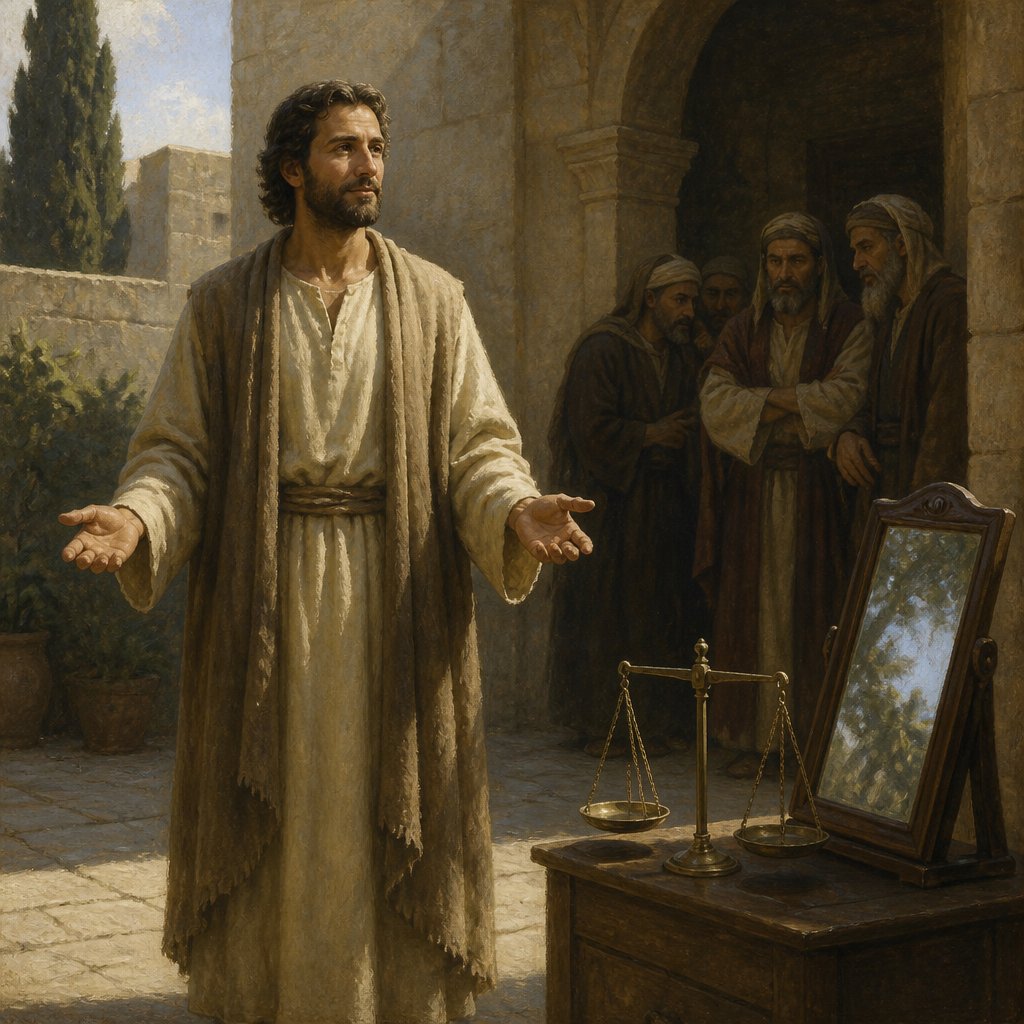
In the world we inhabit, the opinions of others often weigh heavily on our hearts. We find ourselves yearning for acceptance and validation, frequently measuring our worth by the standards and judgments of those around us. However, Paul’s words in 1 Corinthians 4:3 serve as a profound reminder of where our true worth lies – not in the judgments of human beings but in God’s eternal evaluation of our lives: "But with me it is a very small thing that I should be judged of you, or of man's judgment: yea, I judge not mine own self."
This passage forces us to confront an urgent question: Whose judgment do we truly value? Many in Corinth were evaluating Paul’s ministry based on their own standards, reflecting the broader human tendency to scrutinize, criticize, and judge one another. Paul’s response, however, is both liberating and rooted in humility. He declares that it is a ‘very small thing’ to be judged by others, highlighting not only the insignificance of human judgment but also positioning himself firmly in a place of trust in God.
**Releasing the Burden of Judgment**
In a society that thrives on comparison, it is easy to become ensnared in the web of others’ opinions. The desire for peer approval can overshadow our spiritual calling and dilute our purpose. Paul, however, models a counter-cultural attitude. He demonstrates an understanding that the judgment of mankind is fleeting and often flawed. In the grand scheme of God’s plan, human opinion holds little weight.
Consider the implications of this freedom – when we cease to care about man’s judgment, we can fully pursue what God has called us to do. This does not imply that we should disregard accountability or wise counsel; rather, it emphasizes the importance of prioritizing God’s opinion over societal standards. We must evaluate our worth not through the lens of popular opinion but through the light of God’s Word, where our identity as beloved children of the King is firmly established.
**Self-Reflection and Divine Judgment**
Paul also states, “yea, I judge not mine own self.” This declaration points to the human tendency to be overly critical or excessively lenient towards ourselves, both of which can lead to skewed understandings of our identity and purpose. Self-judgment often leads us into a spiral of shame, doubt, and self-condemnation, distracting us from the grace God extends to us.
In Matthew 7:3-5, Jesus reminds us to first remove the plank from our own eye before addressing the speck in another’s. Paul’s commitment to refrain from self-judgment encourages us to seek the guidance of the Holy Spirit for true discernment. God knows our hearts, strengths, and weaknesses better than we do. When we entrust our assessments to Him, we can receive godly clarity that dispels confusion and self-doubt.
**Living for God’s Glory**
As stewards of the Gospel, our primary goal as believers is to live for God's glory. When we stand before Him one day, it will not be His judgment of us that we need to fear, but rather our neglect of His calling. Free from human judgment, we are liberated to serve passionately, risk vulnerability, and wholeheartedly pursue our God-given destinies. This is what it means to live boldly as ambassadors of Christ.
In light of Paul’s powerful words, let us strive to embrace the divine evaluation of our lives as our source of confidence. Let us learn to give thanks for who God declares us to be in Christ, focusing not on the fleeting assessments made by others but on the eternal truth of our identities rooted in Him.
**Conclusion**
In a world rife with judgment, Paul’s encouragement to the Corinthians offers hope. We can shed the burden of human opinion and embrace God’s love. Let us strive to be faithful servants, seeking His approval above all. May we remember that while others may judge us inaccurately, God sees us through the lens of grace and love – and that is the judgment that truly matters.
Get our apps


Artwork for 1 Corinthians 4:3

1 Corinthians 4:3 - "But with me it is a very small thing that I should be judged of you, or of man's judgment: yea, I judge not mine own self."
"But with me it is a very small thing that I should be judged of you, or of man's judgment: yea, I judge not mine own self." - 1 Corinthians 4:3

2 Corinthians 1:3-4

1 Corinthians 3:4 - "For while one saith, I am of Paul; and another, I am of Apollos; are ye not carnal?"

1 Corinthians 1:3-4 - "Grace and peace to you from God our Father and the Lord Jesus Christ. I always thank my God for you because of his grace given you in Christ Jesus."

2 Corinthians 4:3 - "But if our gospel be hid, it is hid to them that are lost:"

1 Corinthians 4:20

1 Corinthians 4:20

1 Corinthians 4:20

1 Corinthians 4:20

1 corinthians 3:16-17

1 Corinthians 13:4-6

1 Corinthians 13:4-6

1 Corinthians 13:4-6

1 Corinthians 13:4-6

1 Corinthians 13:4-6

1 Corinthians 13:4-6

1 Corinthians 13:4-6

1 Corinthians 13:4-6

1 corinthians 3:16-17

1 corinthians 3:16-17

2 Corinthians 3:4 - "And such trust have we through Christ to God-ward:"

1 Corinthians 4:1-2

1 Corinthians 15:3-4 - "For I delivered to you as of first importance what I also received: that Christ died for our sins in accordance with the Scriptures, that he was buried, that he was raised on the third day in accordance with the Scriptures."

1 Corinthians 3:16

1 Corinthians 3:16

1 Corinthians 3:16

1 Corinthians 4:20 - "For the kingdom of God is not in word, but in power."

1 Corinthians 3:23 - "And ye are Christ's; and Christ is God's."

1 Corinthians 13:4-7