In the Shadow of the Law: Embracing Freedom for Others
“To them that are without law, as without law, ( being not without law to God, but under the law to Christ,) that I might gain them that are without law.” — 1 Corinthians 9:21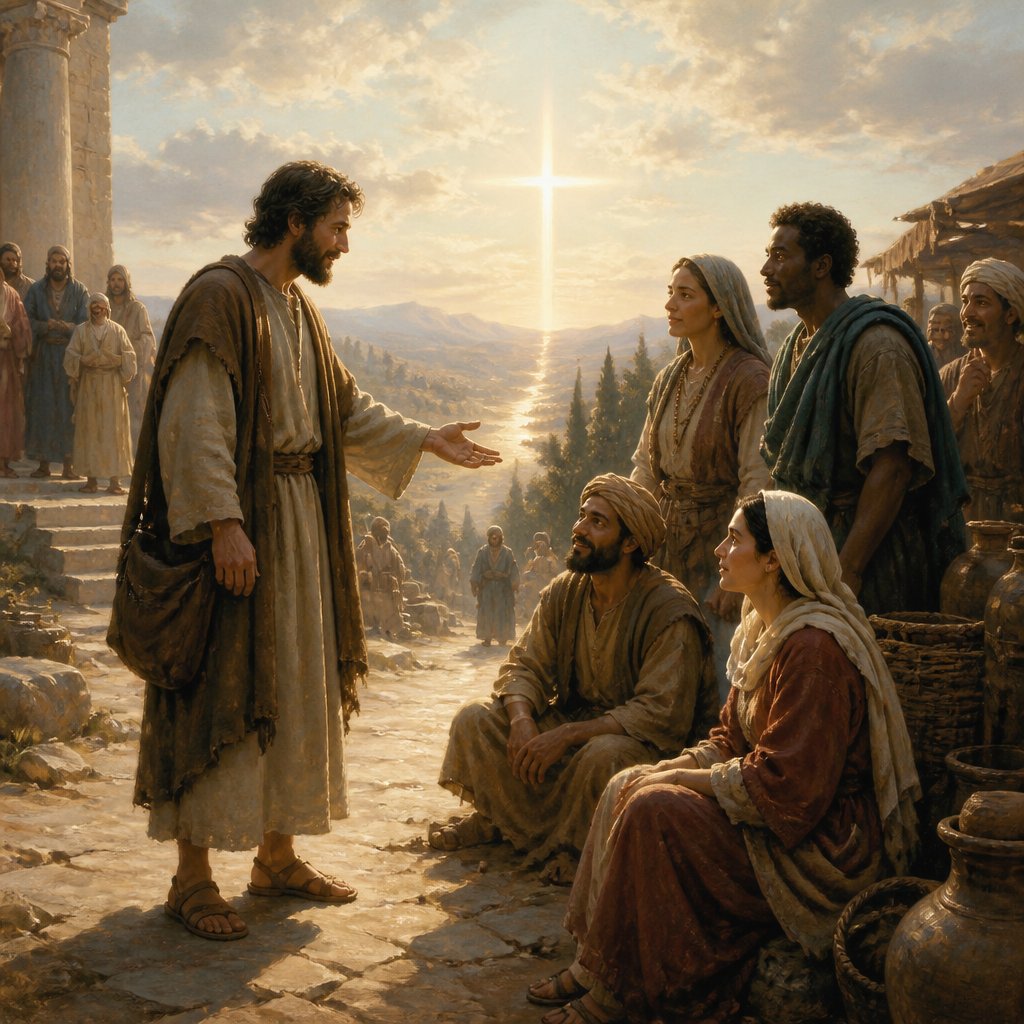
1 Corinthians 9:21 (KJV) states, "To them that are without law, as without law, (being not without law to God, but under the law to Christ,) that I might gain them that are without law." This verse invites us into the heart of what it means to live under the grace of Christ, the ultimate lawgiver, while navigating the complexities of our relationships with those around us.
The Apostle Paul, in his letters, often wrestled with the tensions between law and grace. In this passage, he illustrates how he intentionally adapts his approach to evangelism based on the audience before him. Paul proclaims a profound truth: Liberty in Christ allows us the flexibility to connect with others deeply without compromising our core principles. This flexibility isn't about bending the truth of the Gospel but embodying its essence in a way that resonates with those who are lost.
To grasp the depth of this passage, it is essential to understand what it means to be "without law." Paul was speaking about those who lived outside the Jewish law—Gentiles who may have been unfamiliar with the rigorous requirements of the Torah. By identifying with them and engaging them on their terms, Paul demonstrated an extraordinary model of humility and adaptability. He didn’t abandon his faith or his principles; instead, he showcased how the Gospel can intersect with every facet of a person’s life. This, dear friends, is the embodiment of love in action.
Modern believers find inspiration in Paul’s approach. In our current cultural landscape, where diverse worldviews often clash, it becomes crucial to revisit how we share the message of Christ. Are we throwing the Gospel at people or inviting them into a conversation? Are we imposing our beliefs on others or demonstrating an understanding of their struggles and experiences? Just as Paul became as a Jew to the Jews and as a Gentile to the Gentiles, we too must strive to understand the backgrounds of those we wish to reach.
Moreover, Paul emphasizes that while he embraces the lawlessness of others, he remains "not without law to God, but under the law to Christ." This balance is key. Our freedom in Christ doesn’t suggest a free-for-all of moral ambiguity; rather, it signifies a transformative relationship with Christ that informs our actions and choices. In encountering others, we should embody Christ—full of grace, consulting Scripture, and led by the Holy Spirit. Our goal is not simply to win arguments or debates but to win souls for Christ. Through our actions and attitudes, we can authentically convey the love of God that surpasses human understanding.
Paul’s model challenges us to engage in self-reflection: Who are the "lawless" in our lives? Who are the individuals who seem to be outside of our faith community? How do we approach these people? Are we ready to meet them with open arms, hearts, and minds? The great commission of Christ (Matthew 28:19-20) is not just a call to evangelism; it is a calling to relationship. It suggests we must walk alongside people in their journeys, empathizing and understanding without judgment.
As we strive to live out this principle, let us remember that every encounter with those outside of our faith is an opportunity to reflect the light of Christ. It calls us to a place of radical hospitality and love, which is often counter-cultural. By illustrating genuine interest in their lives and demonstrating the transformative power of Christ through our actions, we may be the living Gospel they need to see.
In conclusion, let us embrace Paul's message of adaptation for the sake of the downtrodden, the lost, and the marginalized. Seek ways to love radically, understand fully, and share the truth of Christ effectively. Let us engage with those outside the law, not to condone, but to guide them into the beautiful grace of Christ, who fulfills the law, teaching us all that true freedom comes not from lawlessness but from living under the lordship of Jesus."
Thus, may our lives echo Paul’s sentiments as we strive daily to win those without law, planting seeds of faith in their hearts.
Get our apps


Artwork for 1 Corinthians 9:21
1 Corinthians 9:21 - "To them that are without law, as without law, (being not without law to God, but under the law to Christ,) that I might gain them that are without law."
"To them that are without law, as without law, (being not without law to God, but under the law to Christ,) that I might gain them that are without law." - 1 Corinthians 9:21

1 Corinthians 9:25-27

1 Corinthians 9:25-27

1 Corinthians 9:25-27

1 Corinthians 9:25-27

1 Corinthians 16:21 - "The salutation of me Paul with mine own hand."

Eternal Victor's Crown: 1 Corinthians 9:25

1 Corinthians 3:21 - "Therefore let no man glory in men. For all things are your's;"

1 Corinthians 9:4 - "Have we not power to eat and to drink?"

1 Corinthians 13:9 - "For we know in part, and we prophesy in part."

1 Corinthians 15:21 - "For since by man came death, by man came also the resurrection of the dead."

1 Corinthians 1:21 - "For after that in the wisdom of God the world by wisdom knew not God, it pleased God by the foolishness of preaching to save them that believe."

1 Corinthians 11:9 - "Neither was the man created for the woman; but the woman for the man."

1 Corinthians 9:3 - "Mine answer to them that do examine me is this,"

2 Corinthians 9:1 - "For as touching the ministering to the saints, it is superfluous for me to write to you:"

1 Corinthians 5:9 - "I wrote unto you in an epistle not to company with fornicators:"

2 Corinthians 1:21 - "Now he which stablisheth us with you in Christ, and hath anointed us, is God;"

1 Corinthians 4:21 - "What will ye? shall I come unto you with a rod, or in love, and in the spirit of meekness?"

1 Corinthians 16:9 - "For a great door and effectual is opened unto me, and there are many adversaries."

1 Corinthians 7:21 - "Art thou called being a servant? care not for it: but if thou mayest be made free, use it rather."

1 Corinthians 9:9 - "For it is written in the law of Moses, Thou shalt not muzzle the mouth of the ox that treadeth out the corn. Doth God take care for oxen?"

1 Corinthians 9:6 - "Or I only and Barnabas, have not we power to forbear working?"

1 Corinthians 9:8 - "Say I these things as a man? or saith not the law the same also?"

1 Corinthians 9:23 - "And this I do for the gospel's sake, that I might be partaker thereof with you."

1 Corinthians 11:21 - "For in eating every one taketh before other his own supper: and one is hungry, and another is drunken."

1 Corinthians 7:9 - "But if they cannot contain, let them marry: for it is better to marry than to burn."

1 Corinthians 12:9 - "To another faith by the same Spirit; to another the gifts of healing by the same Spirit;"

1 Corinthians 1:9 - "God is faithful, by whom ye were called unto the fellowship of his Son Jesus Christ our Lord."

1 Corinthians 10:21 - "Ye cannot drink the cup of the Lord, and the cup of devils: ye cannot be partakers of the Lord's table, and of the table of devils."