Called to Service: Understanding the Cost of Discipleship
“Who goeth a warfare any time at his own charges? who planteth a vineyard, and eateth not of the fruit thereof? or who feedeth a flock, and eateth not of the milk of the flock?” — 1 Corinthians 9:7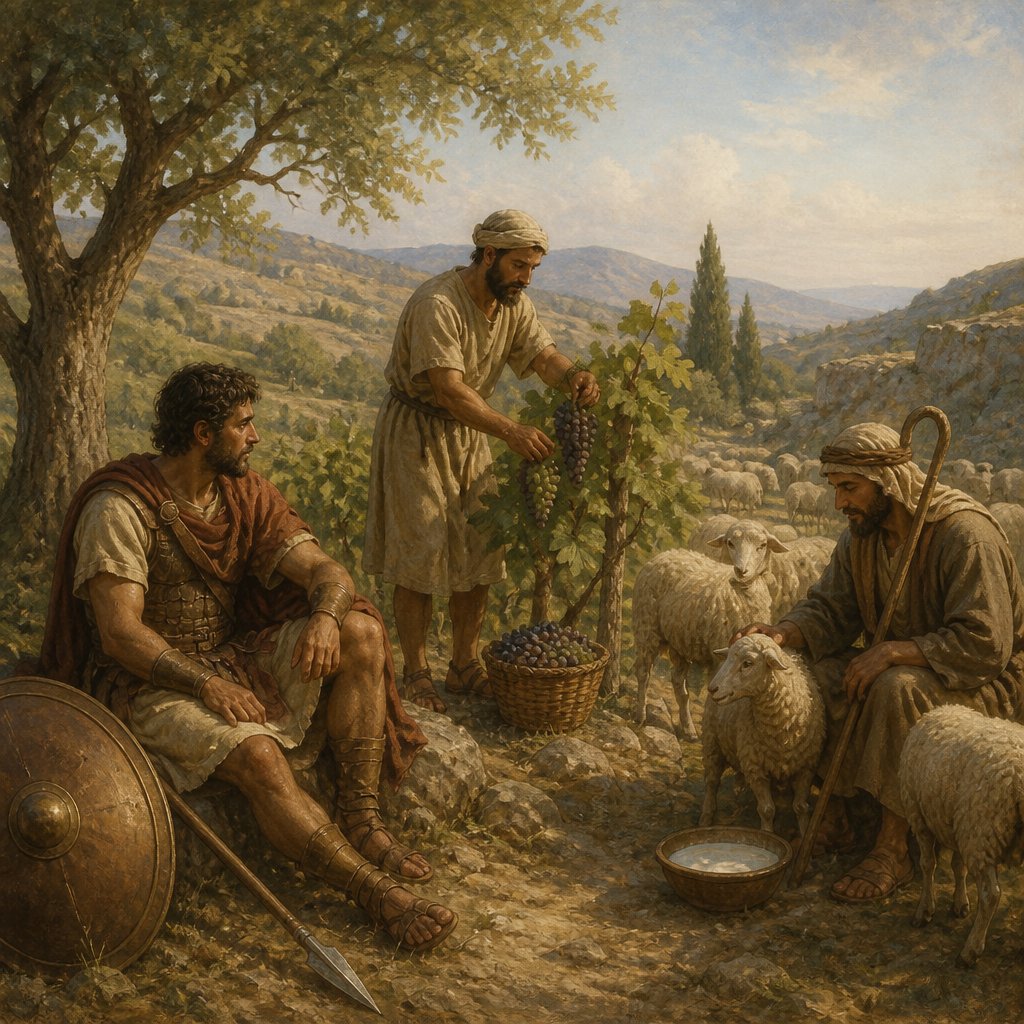
In 1 Corinthians 9:7, the Apostle Paul poses a thought-provoking question: "Who goeth a warfare any time at his own charges? who planteth a vineyard, and eateth not of the fruit thereof? or who feedeth a flock, and eateth not of the milk of the flock?" This scripture resonates deeply with those who seek to understand the nature of spiritual warfare, service in God’s kingdom, and the rightful expectation of those who commit their lives to the call of God.
Paul's rhetorical questions highlight the principles of investment, sacrifice, and expectation. Just as no soldier would enlist in an army, only to bear the cost of their warfare alone—sustaining themselves while risking their lives—neither should ministers bear the burden of their calling without support. Paul refers to the soldier not merely as a figure of physical warfare but equivalently as a metaphor for the spiritual battles that every believer encounters. The original Greek word used for warfare, "stratēgō," underlines the strategic efforts and the sustenance needed for service in the battlefield of faith.
The analogy extends to the vineyard planter, showcasing God's overarching laws of reciprocity and reward. When one plants a vineyard, they rightfully expect to partake of its fruits. In the same way, God encourages us to recognize the fruits of our labor in spiritual endeavors. When we serve God with sincerity and diligence, we will reap the spiritual harvest. Galatians 6:7-9 reminds us that "whatsoever a man soweth, that shall he also reap." This speaks deeply to the expectation every believer should carry within their hearts: that our divine labor is never lost or unnoticed by God.
Additionally, the reference to the shepherd who feeds the flock and consumes the milk is a touching reminder of God’s provision for those who lead and guide others in their spiritual journeys. The imagery of feeding the flock eloquently symbolizes not only pastoral care but also the nurturing of faith in our communities. Just as a shepherd cares for their flock, so are leaders expected to be nurtured by the community they serve.
The implications of this verse are profound for us as followers of Christ. To partake of the blessings of the Kingdom, we must recognize our role in both giving and receiving within the tapestry of the Church. Paul is illustrating that true service is not a one-sided affair but a collaborative symbiosis where all benefit.
In our daily lives, it is vital to reflect on how we support those entrusted with spiritual leadership. Are we nurturing the ministers and servants of God in ways that are tangible? It’s easy to take for granted those who labor in word and doctrine, whether in our churches, communities, or on missions. We can become like the Israelite tribes that were commanded to provide for the Levites, who dedicated their lives to God’s service. 1 Peter 5:2-3 implores church leaders to shepherd willingly and eagerly, not for dishonest gain but out of a heart of service.
Furthermore, the core message of Paul’s words reaches into our call to the wider community to engage in not just passive reception of spiritual blessings, but active participation in encouraging and supporting each other's spiritual growth. Your service, however small it may seem, bears significance in the Kingdom of God. Whether it’s through prayer, financial support, acts of kindness, or simply uplifting those who lead us, we are all called to contribute.
In conclusion, the questions posed by Paul serve as a reminder for the balance of giving and receiving in our Christian walk. As we reflect on this passage, let us adjust our perspective—the charge of each believer is to engage in God’s service wholeheartedly, nurturing both ourselves and others and supporting those who lead. Let this understanding inspire us to be more intentional in our discipleship, recognizing the importance of mutual support and harvest in the faith community as we continue to advance God’s Kingdom.
Get our apps


Artwork for 1 Corinthians 9:7

1 Corinthians 9:7 - "Who goeth a warfare any time at his own charges? who planteth a vineyard, and eateth not of the fruit thereof? or who feedeth a flock, and eateth not of the milk of the flock?"

1 Corinthians 9:7-14 - "Who serves as a soldier at his own expense? Who plants a vineyard and does not eat its grapes? Who tends a flock and does not drink the milk? Do I say this merely on human authority? Doesn’t the Law say the same thing? For it is written in the Law of Moses: “Do not muzzle an ox while it is treading out the grain.” Is it about oxen that God is concerned? Surely he says this for us, doesn’t he? Yes, this was written for us, because whoever plows and threshes should be able to do so in the hope of sharing in the harvest. If we have sown spiritual seed among you, is it too much if we reap a material harvest from you? If others have this right of support from you, shouldn’t we have it all the more? But we did not use this right. On the contrary, we put up with anything rather than hinder the gospel of Christ. Don’t you know that those who serve in the temple get their food from the temple, and that those who serve at the altar share in what is offered on the altar? In the same way, the Lord has commanded that those who preach the gospel should receive their living from the gospel."
"Who goeth a warfare any time at his own charges? who planteth a vineyard, and eateth not of the fruit thereof? or who feedeth a flock, and eateth not of the milk of the flock?" - 1 Corinthians 9:7
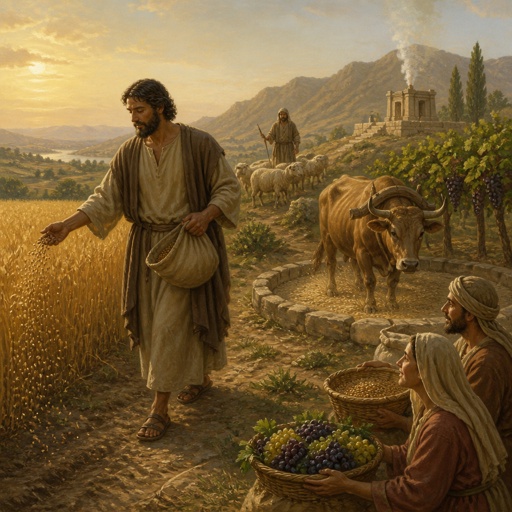
"Who serves as a soldier at his own expense? Who plants a vineyard and does not eat its grapes? Who tends a flock and does not drink the milk? Do I say this merely on human authority? Doesn’t the Law say the same thing? For it is written in the Law of Moses: “Do not muzzle an ox while it is treading out the grain.” Is it about oxen that God is concerned? Surely he says this for us, doesn’t he? Yes, this was written for us, because whoever plows and threshes should be able to do so in the hope of sharing in the harvest. If we have sown spiritual seed among you, is it too much if we reap a material harvest from you? If others have this right of support from you, shouldn’t we have it all the more? But we did not use this right. On the contrary, we put up with anything rather than hinder the gospel of Christ. Don’t you know that those who serve in the temple get their food from the temple, and that those who serve at the altar share in what is offered on the altar? In the same way, the Lord has commanded that those who preach the gospel should receive their living from the gospel." - 1 Corinthians 9:7-14
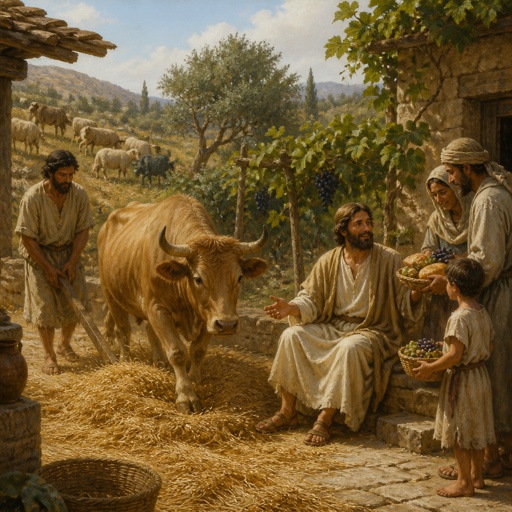
"Who serves as a soldier at his own expense? Who plants a vineyard and does not eat its grapes? Who tends a flock and does not drink the milk? Do I say this merely on human authority? Doesn’t the Law say the same thing? For it is written in the Law of Moses: “Do not muzzle an ox while it is treading out the grain.” Is it about oxen that God is concerned? Surely he says this for us, doesn’t he? Yes, this was written for us, because whoever plows and threshes should be able to do so in the hope of sharing in the harvest. If we have sown spiritual seed among you, is it too much if we reap a material harvest from you? If others have this right of support from you, shouldn’t we have it all the more? But we did not use this right. On the contrary, we put up with anything rather than hinder the gospel of Christ. Don’t you know that those who serve in the temple get their food from the temple, and that those who serve at the altar share in what is offered on the altar? In the same way, the Lord has commanded that those who preach the gospel should receive their living from the gospel." - 1 Corinthians 9:7-14

1 Corinthians 7:9 - "But if they cannot contain, let them marry: for it is better to marry than to burn."

Corinthians 9:6-7

1 Corinthians 9:25-27

1 Corinthians 9:25-27

"But if they cannot contain, let them marry: for it is better to marry than to burn." - 1 Corinthians 7:9

1 Corinthians 9:25-27

1 Corinthians 9:25-27

Corinthians 9:6-7 for Christmas card with little kids.

2 Corinthians 9:7 - "Every man according as he purposeth in his heart, so let him give; not grudgingly, or of necessity: for God loveth a cheerful giver."

Eternal Victor's Crown: 1 Corinthians 9:25

1 Corinthians 9:4 - "Have we not power to eat and to drink?"

1 Corinthians 7:6 - "But I speak this by permission, and not of commandment."

1 Corinthians 13:4-7

1 Corinthians 13:9 - "For we know in part, and we prophesy in part."

1 Corinthians 13:4-7

1 Corinthians 13:4-7

1 Corinthians 13:4-7

1 Corinthians 11:9 - "Neither was the man created for the woman; but the woman for the man."

1 Corinthians 9:3 - "Mine answer to them that do examine me is this,"

1 Corinthians 15:7 - "After that, he was seen of James; then of all the apostles."

1 Corinthians 7:23 - "Ye are bought with a price; be not ye the servants of men."

2 Corinthians 9:1 - "For as touching the ministering to the saints, it is superfluous for me to write to you:"

1 Corinthians 5:9 - "I wrote unto you in an epistle not to company with fornicators:"

A heartfelt Christmas card scene inspired by Corinthians 9:6-7, drawn by a 7 year old kid with color pencil, crayons and watercolour.

A heartfelt Christmas card scene inspired by Corinthians 9:6-7, drawn by a 7 year old kid with color pencil, crayons and watercolour.