The Consequences of Self-Promotion: A Lesson from Adonijah
“And Adonijah slew sheep and oxen and fat cattle by the stone of Zoheleth, which is by En-rogel, and called all his brethren the king’s sons, and all the men of Judah the king’s servants:” — 1 Kings 1:9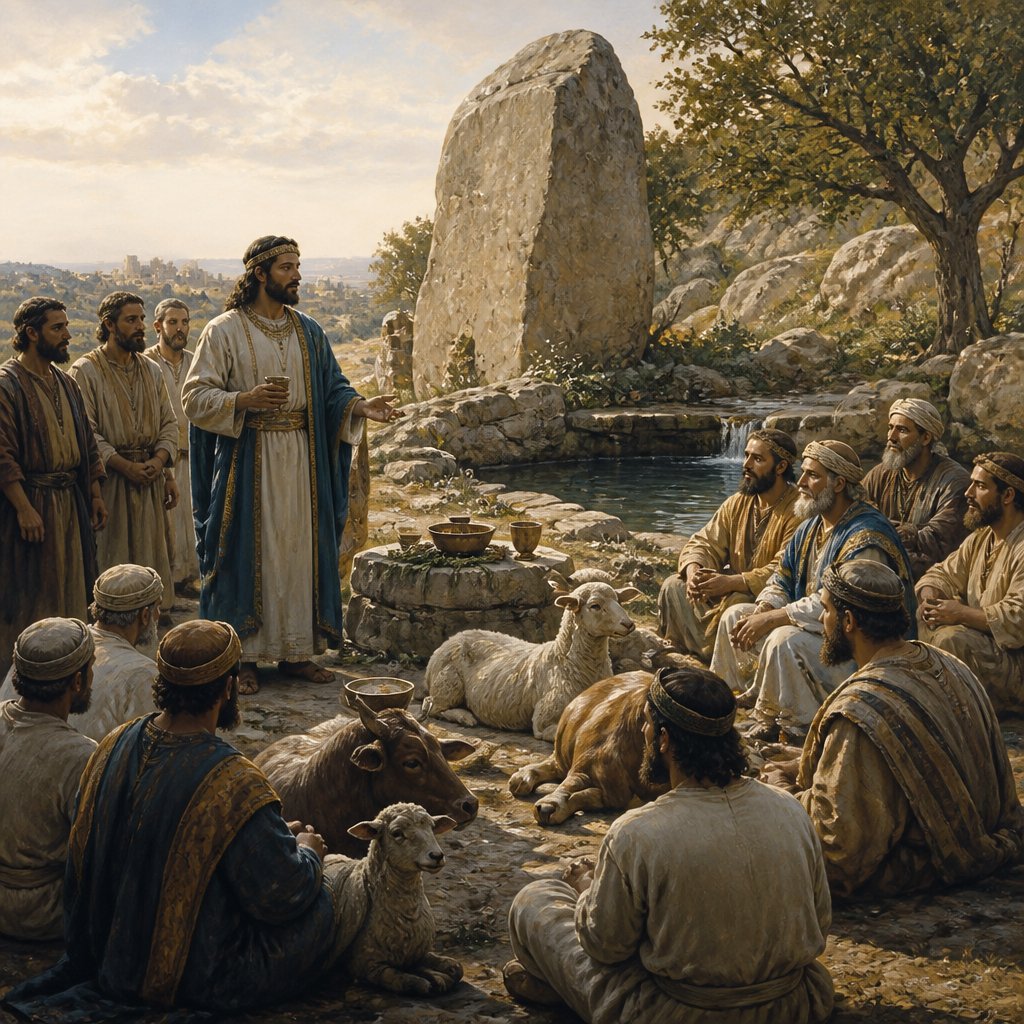
In the turbulent narrative of 1 Kings, we encounter a profound lesson through the actions of Adonijah. The verse states, "And Adonijah slew sheep and oxen and fat cattle by the stone of Zoheleth, which is by En-rogel, and called all his brethren the king's sons, and all the men of Judah the king's servants" (1 Kings 1:9, KJV). This moment in scripture is more than a historical account; it serves as a powerful reminder of the dangers of seeking power and recognition through one's own means rather than surrendering to God’s divine order.
Adonijah, the fourth son of King David, found himself in a delicate position after the reign of his father was nearing its end. Rather than waiting for the rightful succession which had been promised to Solomon, he took it upon himself to proclaim himself king. His actions were deliberate and strategic. By sacrificing sheep, oxen, and fat cattle in a public assembly, Adonijah was attempting to assert his claim and gather support from potential allies. The phrase "by the stone of Zoheleth" signifies a premeditated choice of location, aiming to host a lavish feast that would elevate his status. Here, his motivation boiled down to ambition and self-promotion, which stands in stark contrast to the humility and obedience that God desires from His followers.
This gathering at En-rogel had deeper implications. By inviting "all his brethren the king's sons" and "all the men of Judah the king's servants," Adonijah reached out to those within the royal sphere, seemingly to solidify his claim to the throne and garner loyalty. In doing so, he emphasizes a crucial point in human behavior—the tendency to leverage connections and cultivate alliances when pursuing personal agendas. In our daily lives, how often do we find ourselves trying to ascend the ranks through similar means? Perhaps through our work, relationships, or social standing, we may sometimes forget that true elevation comes from God rather than our own efforts.
The implications of Adonijah's actions extend beyond mere ambition; they delve into the theme of divine kingship. God, whose plans exceed human understanding, had chosen Solomon to succeed David. Adonijah's self-appointment showcased a blatant disregard for divine authority. In the pursuit of our aspirations, it is vital to assess whether our intentions align with God's will. Do we, like Adonijah, sometimes prioritize our goals and ambitions over God’s calling in our lives?
Moreover, Adonijah’s banquet was not merely a celebration; it carried the weight of rebellion against God's chosen line. Every sacrifice he made could not purchase legitimacy. God’s favor cannot be bargained or manipulated through worldly means. Adonijah’s actions turned a significant moment into a catalyst of division and conflict, reinforcing the lesson that unyielding ambition without the divine purpose can lead to destruction.
The story of Adonijah calls for introspection about our pursuits in life. Are we willing to bow in humility before God, accepting His timing and objectives for our lives? James 4:10 teaches us to "Humble yourselves in the sight of the Lord, and he shall lift you up" (KJV). It is a promise that defies the worldly approach to success—a gentle reminder that true exaltation is rooted in surrender to God.
In closing, Adonijah's bold claims and elaborate feasts serve as warnings for us as we navigate our spiritual journeys. May we cultivate a heart that seeks God first and foremost, allowing Him to direct our paths rather than forcing our own agenda. Let us pray for discernment as we face decisions and the temptations of self-promotion, acknowledging that the most substantial victories in life come not through our power but through His grace.
Get our apps


Artwork for 1 Kings 1:9

1 Kings 1:9 - "And Adonijah slew sheep and oxen and fat cattle by the stone of Zoheleth, which is by En-rogel, and called all his brethren the king's sons, and all the men of Judah the king's servants:"
"And Adonijah slew sheep and oxen and fat cattle by the stone of Zoheleth, which is by En-rogel, and called all his brethren the king's sons, and all the men of Judah the king's servants:" - 1 Kings 1:9

1 Kings 3:9

1 Kings 9:18 - "And Baalath, and Tadmor in the wilderness, in the land,"

1 Kings 9:14 - "And Hiram sent to the king sixscore talents of gold."

1 Kings 9:17 - "And Solomon built Gezer, and Beth-horon the nether,"

1 Kings 15:9 - "¶ And in the twentieth year of Jeroboam king of Israel reigned Asa over Judah."

1 Kings 9:1 - "And it came to pass, when Solomon had finished the building of the house of the LORD, and the king's house, and all Solomon's desire which he was pleased to do,"

1 Kings 22:9 - "Then the king of Israel called an officer, and said, Hasten hither Micaiah the son of Imlah."

1 Kings 4:9 - "The son of Dekar, in Makaz, and in Shaalbim, and Beth-shemesh, and Elon-beth-hanan:"

1 Kings 6:9 - "So he built the house, and finished it; and covered the house with beams and boards of cedar."

1 Chronicles 9:1 - "So all Israel were reckoned by genealogies; and, behold, they were written in the book of the kings of Israel and Judah, who were carried away to Babylon for their transgression."

"And Baalath, and Tadmor in the wilderness, in the land," - 1 Kings 9:18

1 Kings 9:2 - "That the LORD appeared to Solomon the second time, as he had appeared unto him at Gibeon."

1 Kings 21:9 - "And she wrote in the letters, saying, Proclaim a fast, and set Naboth on high among the people:"

1 Kings 9:27 - "And Hiram sent in the navy his servants, shipmen that had knowledge of the sea, with the servants of Solomon."

1 Kings 9:28 - "And they came to Ophir, and fetched from thence gold, four hundred and twenty talents, and brought it to king Solomon."

1 Kings 9:20 - "And all the people that were left of the Amorites, Hittites, Perizzites, Hivites, and Jebusites, which were not of the children of Israel,"

1 Kings 9:10 - "¶ And it came to pass at the end of twenty years, when Solomon had built the two houses, the house of the LORD, and the king's house,"

"And Hiram sent to the king sixscore talents of gold." - 1 Kings 9:14

1 Kings 9:26 - "¶ And king Solomon made a navy of ships in Ezion-geber, which is beside Eloth, on the shore of the Red sea, in the land of Edom."
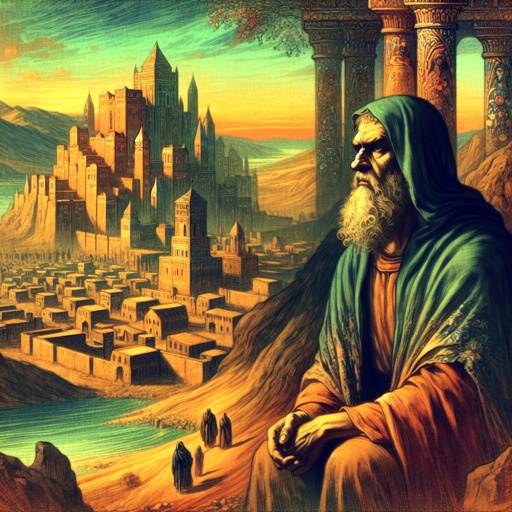
1 Kings 9:12 - "And Hiram came out from Tyre to see the cities which Solomon had given him; and they pleased him not."

"And Solomon built Gezer, and Beth-horon the nether," - 1 Kings 9:17

1 Kings 18:9 - "And he said, What have I sinned, that thou wouldest deliver thy servant into the hand of Ahab, to slay me?"

1 Kings 17:9 - "Arise, get thee to Zarephath, which belongeth to Zidon, and dwell there: behold, I have commanded a widow woman there to sustain thee."

1 Chronicles 19:9 - "And the children of Ammon came out, and put the battle in array before the gate of the city: and the kings that were come were by themselves in the field."

1 Kings 9:15 - "¶ And this is the reason of the levy which king Solomon raised; for to build the house of the LORD, and his own house, and Millo, and the wall of Jerusalem, and Hazor, and Megiddo, and Gezer."

1 Kings 11:9 - "¶ And the LORD was angry with Solomon, because his heart was turned from the LORD God of Israel, which had appeared unto him twice,"

1 Kings 9:23 - "These were the chief of the officers that were over Solomon's work, five hundred and fifty, which bare rule over the people that wrought in the work."

1 Kings 9:13 - "And he said, What cities are these which thou hast given me, my brother? And he called them the land of Cabul unto this day."