The Refuge of Egypt: A Lesson on Trusting God's Timing and Protection
“Solomon sought therefore to kill Jeroboam. And Jeroboam arose, and fled into Egypt, unto Shishak king of Egypt, and was in Egypt until the death of Solomon.” — 1 Kings 11:40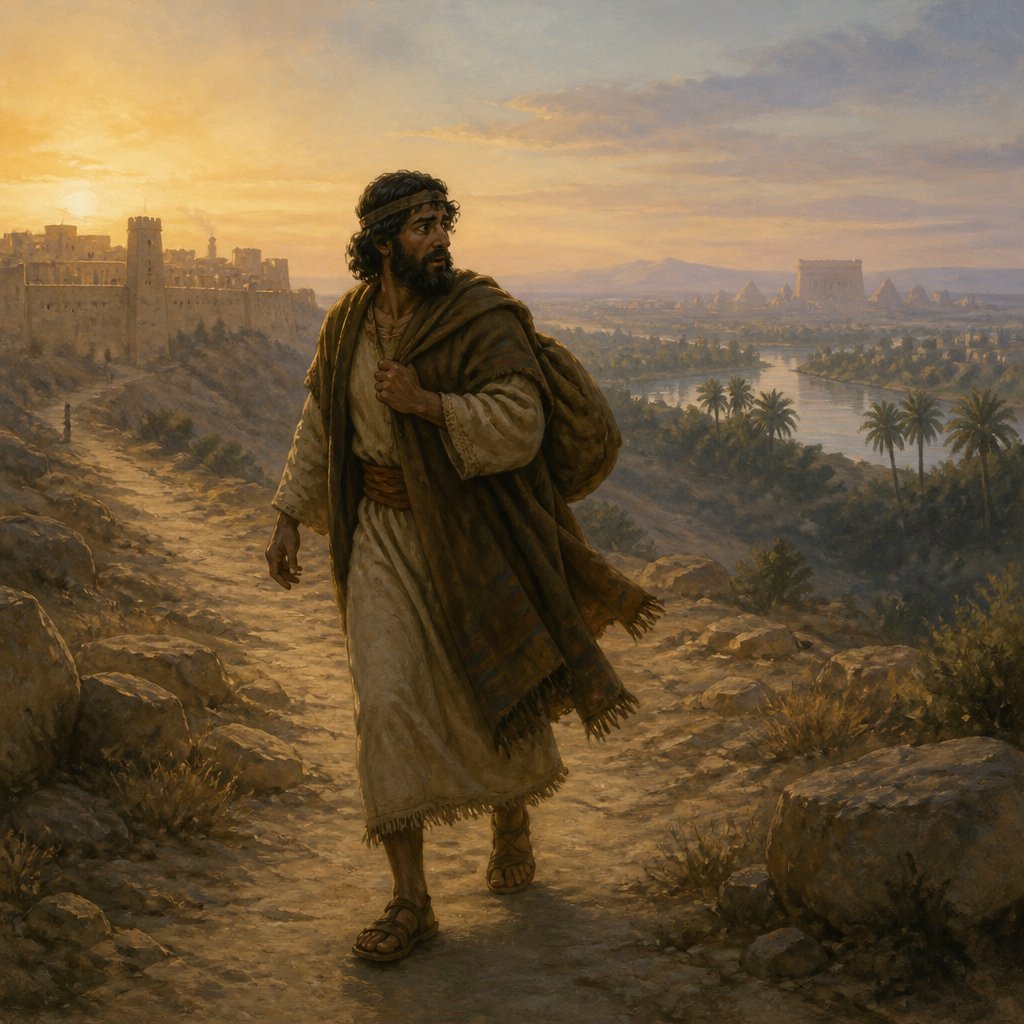
In 1 Kings 11:40, we find a deeply layered narrative that illustrates the complex interplay of power, fear, and divine providence within God’s unfolding plan for Israel. The verse states, "Solomon sought therefore to kill Jeroboam. And Jeroboam arose, and fled into Egypt, unto Shishak king of Egypt, and was in Egypt until the death of Solomon." It invites us to reflect not only on the historical events but also on our own lives, where the themes of danger, flight, safety, and divine timing come to the forefront.
To fully grasp the weight of this moment, we need to understand the context of Solomon’s reign and the rivalry that was brewing between him and Jeroboam. Solomon, renowned for his wisdom and wealth, had begun to stray from the path God had laid out for him. His later actions led to the erosion of the kingdom’s unity and faithfulness to Yahweh. In a moment of desperation and fear, Solomon perceived Jeroboam—a leader among the tribes—as a threat to his throne. This fear was not unfounded; God had spoken through the prophet Ahijah, prophesying Jeroboam's rise as a future leader of ten tribes due to Solomon's idolatry and disobedience.
Jeroboam’s response to Solomon’s threat was immediate: he fled to Egypt. This act of fleeing is significant in both a physical and spiritual sense. On a physical level, Egypt represents a region of refuge, a place where Jeroboam could escape the deadly wrath of Solomon. Spiritually, Egypt can symbolize a place of isolation from God’s people, a temporary dwelling place where reliance on human powers (in this case, the king of Egypt) may obscure trust in God’s ultimate plan.
Jeroboam’s refuge in Egypt is a poignant reminder for us today. How often do we find ourselves fleeing from trials, seeking solace in familiar places or relationships that may not align with God’s will? The immediate choice of safety can cause us to momentarily lose sight of our path. Jeroboam was led to look outward for security, yet it was God who had assured him a future. This teaches us that when faced with adversity, our instinct may be to run; however, we must determine whether we are seeking God's will or simply attempting to evade the challenges He allows in our lives.
While Jeroboam rested in Egypt, Solomon's rule continued until his death. This interval raises questions about God’s timing. Perhaps, during this period, God was not only protecting Jeroboam but also allowing Solomon to reach the end of his disobedient reign. God’s silence in times of trouble can be unsettling, but it often serves a purpose. The delay in Jeroboam’s ascent wasn’t God’s negligence but a preparation period for the unfolding of His promises.
In our lives, waiting can be the most challenging aspect of faith. Whether it's waiting for clarity on a decision, healing from a wound, or fulfillment of a promise we feel was made to us—each moment of waiting can feel like an eternity. But we must remember that waiting is not wasted time; it is often a time of preparation and reliance on God’s ultimate wisdom. As Solomon’s reign came to an end, God’s plan for Jeroboam was set to unfold in His perfect timing.
In looking at this verse, let us ask ourselves if there are areas in our lives where we seek refuge outside of God’s design. Are we turning to inadequate solutions when faced with threats or challenges? Moreover, can we trust the process of waiting, knowing that God is in control and that He is working out His plan—even in the tumultuous events of life?
As we meditate on this scripture, may we commit to seeking the Lord above all else, trusting Him with our safety and our future, even when we find ourselves in the uncomfortable waiting period between promise and fulfillment. Let us believe that just as God secured Jeroboam’s future in His time, He, too, is orchestrating our lives for His glory.
Get our apps


Artwork for 1 Kings 11:40

1 Kings 11:40 - "Solomon sought therefore to kill Jeroboam. And Jeroboam arose, and fled into Egypt, unto Shishak king of Egypt, and was in Egypt until the death of Solomon."
"Solomon sought therefore to kill Jeroboam. And Jeroboam arose, and fled into Egypt, unto Shishak king of Egypt, and was in Egypt until the death of Solomon." - 1 Kings 11:40

Psalms 40: 1:-11

1 Chronicles 11:40 - "Ira the Ithrite, Gareb the Ithrite,"

1 Kings 11:11

1 Kings 22:40 - "So Ahab slept with his fathers; and Ahaziah his son reigned in his stead."

1 Kings 11:11

1 Kings 11:11

1 Kings 11:11

1 Kings 11:13

1 Kings 11:5

1 Kings 11:13

1 Kings 1:40 - "And all the people came up after him, and the people piped with pipes, and rejoiced with great joy, so that the earth rent with the sound of them."

1 Kings 11:11

"Ira the Ithrite, Gareb the Ithrite," - 1 Chronicles 11:40

1 Kings 8:40 - "That they may fear thee all the days that they live in the land which thou gavest unto our fathers."

1 kings 11:11-13

1 Kings 11:11-13

1 Kings 11:29-32

1 Kings 11:11-13

1 Kings 11:1-5

1 Kings 11:30-31

1 Kings 11:30-31

1 Kings 11:30-31

1 Kings 20:40 - "And as thy servant was busy here and there, he was gone. And the king of Israel said unto him, So shall thy judgment be; thyself hast decided it."

1 Kings 7:40 - "¶ And Hiram made the lavers, and the shovels, and the basons. So Hiram made an end of doing all the work that he made king Solomon for the house of the LORD:"

1 Kings 2:40 - "And Shimei arose, and saddled his ass, and went to Gath to Achish to seek his servants: and Shimei went, and brought his servants from Gath."

1 Kings 12:11

1 Kings 12:11

1 Kings 12:11