The Battle for Unity: Lessons from Rehoboam's Choice
“And when Rehoboam was come to Jerusalem, he assembled all the house of Judah, with the tribe of Benjamin, an hundred and fourscore thousand chosen men, which were warriors, to fight against the house of Israel, to bring the kingdom again to Rehoboam the son of Solomon.” — 1 Kings 12:21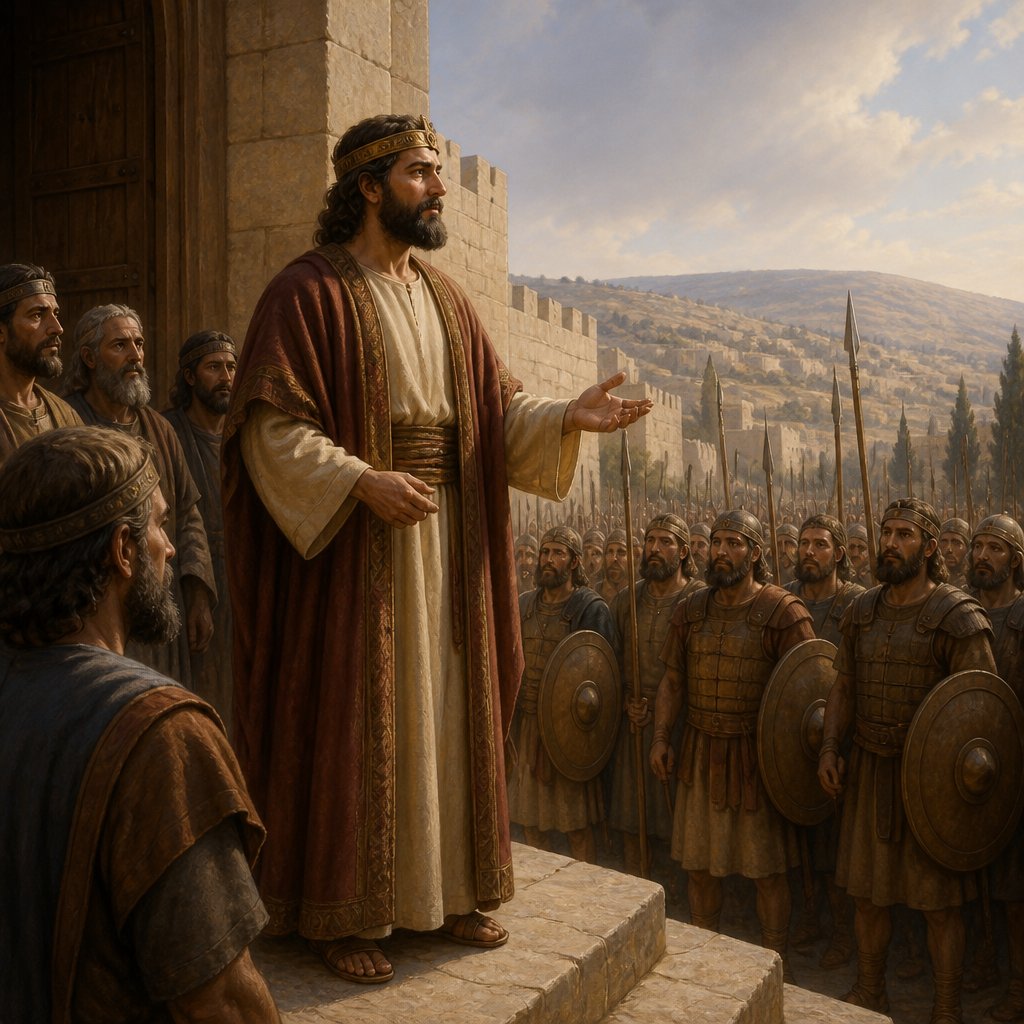
In the book of 1 Kings, we encounter a pivotal moment in Israel’s history: Rehoboam’s decision to confront the divided kingdom. The verse, "And when Rehoboam was come to Jerusalem, he assembled all the house of Judah, with the tribe of Benjamin, an hundred and fourscore thousand chosen men, which were warriors, to fight against the house of Israel, to bring the kingdom again to Rehoboam the son of Solomon," (1 Kings 12:21, KJV) serves as a wake-up call for all believers.
When Rehoboam ascended to the throne following his father Solomon's reign, he inherited a kingdom filled with potential but also underlying tension. Solomon's reign brought prosperity, but it was also characterized by heavy taxation and forced labor, which led to unrest among the people. This unrest manifested as a direct challenge to Rehoboam as he was faced with the choice of how to respond.
His immediate reaction—gathering a large army to fight against Israel—speaks volumes not just about his leadership but about human nature in general. The desire to reclaim territory and power is a natural instinct, but it is crucial to consider whether our choices stem from a place of wisdom or pride.
Rehoboam was young and inexperienced, and rather than seeking counsel from the elders who had served alongside his father, he turned to his peers. This choice reveals the tendency of many leaders, especially those who find themselves in positions of power for the first time: they can easily lean towards ego over experience. His misjudgment set the stage for greater conflict and division.
Reflecting on Rehoboam's choice encourages us to ask ourselves: are we quick to assemble our 'warriors'—those who affirm our desires—or do we seek wisdom and understanding? In times of conflict or decision-making, it is vital to surround ourselves with wise counsel that can guide our paths according to God’s will rather than our own ambitions.
Rehoboam's decision also serves as a reflection of the battles we face as individuals and as members of the body of Christ today. The church often contends with divisions—be it doctrinal disputes, varying visions for ministry, or differences in leadership styles. Just as Rehoboam chose to fight rather than seek reconciliation, there is a tendency within us to choose separation, arguments, or even contempt over the difficult path of unity and love.
Jesus, in John 17:20-23, prayed for unity among His followers. He understood that the world would recognize His followers by their love for one another. This call to unity is not about conformity, but about being unified in purpose and mission. It is a challenging undertaking that often requires humility and the willingness to listen to one another, putting aside personal grievances for the greater good of the body.
As we meditate on Rehoboam’s actions, let us be reminded that conflicts do not need to end in war. Instead, we must seek the Spirit’s guidance to address our disputes through diplomacy and understanding. The Apostle Paul instructs us in Ephesians 4:3 to endeavor to keep the unity of the Spirit in the bond of peace.
Rehoboam’s saga teaches us the importance of seeking peace over conflict, the wisdom of listening to seasoned voices, and the call to unity amid diversity. It reminds us that while it is easy to gather warriors for battle, it takes true courage to extend the hand of reconciliation and to work towards the peace that surpasses all understanding. May we choose wisely in our battles and, above all, may we choose love.
In conclusion, as we reflect on this pivotal moment in history, let us ask God for the discernment to choose actions that reflect His heart—a heart that longs for unity rather than division, reconciliation instead of war, and ultimately, a kingdom that honors Him.
Get our apps


Artwork for 1 Kings 12:21

1 Kings 12:21 - "¶ And when Rehoboam was come to Jerusalem, he assembled all the house of Judah, with the tribe of Benjamin, an hundred and fourscore thousand chosen men, which were warriors, to fight against the house of Israel, to bring the kingdom again to Rehoboam the son of Solomon."
"¶ And when Rehoboam was come to Jerusalem, he assembled all the house of Judah, with the tribe of Benjamin, an hundred and fourscore thousand chosen men, which were warriors, to fight against the house of Israel, to bring the kingdom again to Rehoboam the son of Solomon." - 1 Kings 12:21

1 Kings 21:12 - "They proclaimed a fast, and set Naboth on high among the people."

"They proclaimed a fast, and set Naboth on high among the people." - 1 Kings 21:12

Matthew 2:1-2

Genesis 2:1-2

Genesis 2:1-2

1 Kings 12:11

1 Kings 12:11

1 Kings 12:10

1 Kings 12:10

1 Kings 12:10

1 Kings 12:11

1 Kings 12:10
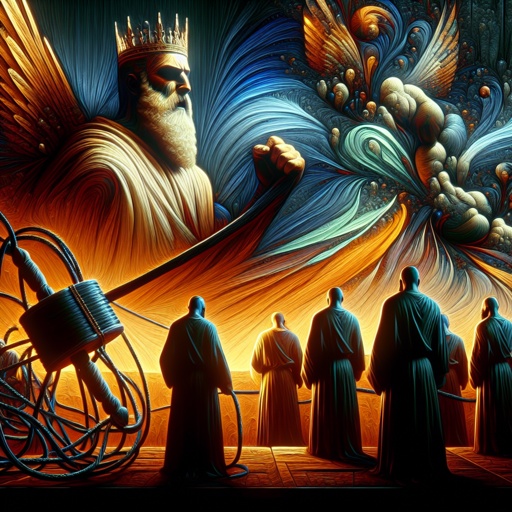
1 Kings 12:11

1 Kings 12:14

1 Kings 12:14

1 Kings 12:11

1 Kings 8:21

1 Kings 8:21

1 Kings 8:21

1 Kings 8:21

Revelation 21:12

1 kings 3:12

1 Kings 21:14 - "Then they sent to Jezebel, saying, Naboth is stoned, and is dead."

1 Kings 21:28 - "And the word of the LORD came to Elijah the Tishbite, saying,"

1 Kings 21:17 - "¶ And the word of the LORD came to Elijah the Tishbite, saying,"

1 Kings 12:1 - "And Rehoboam went to Shechem: for all Israel were come to Shechem to make him king."

1 Kings 21:1 - "And it came to pass after these things, that Naboth the Jezreelite had a vineyard, which was in Jezreel, hard by the palace of Ahab king of Samaria."

1 Kings 20:21 - "And the king of Israel went out, and smote the horses and chariots, and slew the Syrians with a great slaughter."