The Weight of Leadership: A Call for Compassion and Understanding
“Thy father made our yoke grievous: now therefore make thou the grievous service of thy father, and his heavy yoke which he put upon us, lighter, and we will serve thee.” — 1 Kings 12:4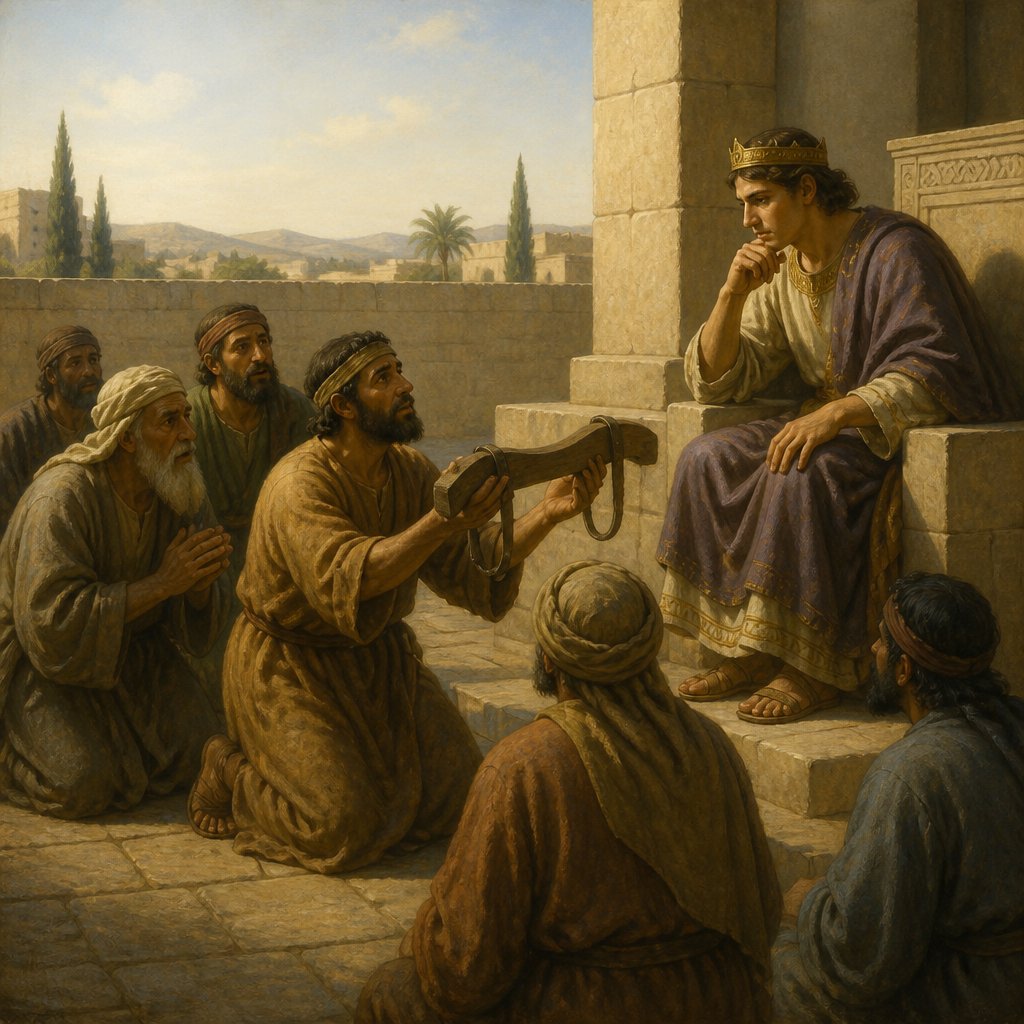
In 1 Kings 12:4, a momentous decision looms as the people of Israel approach King Rehoboam, the son of Solomon, with a poignant plea: "Thy father made our yoke grievous: now therefore make thou the grievous service of thy father, and his heavy yoke which he put upon us, lighter, and we will serve thee." This passage is not just a simple exchange; it is a profound look into the dynamics of leadership, service, and the human experience of suffering.
King Solomon, known for his wisdom in governance, had also imposed significant demands on the people of Israel. The verse reveals the weight of the burdens they were enduring during his reign. Solomon’s extensive building projects and lavish lifestyles may have been admirable from a distance, yet they came at a price. The laborers toiled under heavy loads, and the people felt oppressed under the yoke of their king’s ambitions. Now, as these burdens continued, the people turned to Rehoboam with a hope that their new king would offer a reprieve.
This scenario captures the essence of our human experience – the need for understanding and compassion from our leaders and the desire for lighter burdens. The request made by the people serves as a reminder to leaders in all realms of life, whether in the family, community, or workplace. Leadership should not entail the imposition of excessive burdens upon those we lead but should reflect a servant's heart.
The request to make the yoke lighter highlights the prophetic nature of the collective human plea throughout history. Just as the Israelites yearned for relief from their hardships, so do we in times of distress. It is crucial to examine how we respond to the needs and struggles of those around us. Are we like Solomon, burdening others with more than they can bear, or are we like the shepherds described in the Bible, who guide their flocks with care and attention?
Furthermore, the people’s statement serves as a powerful reminder that service should be borne out of willingness rather than compulsion. "And we will serve thee," they say, imparting that there is an underlying desire for loyalty and cooperation that hinges upon tangible compassion. They are, in essence, affirming that servitude is a privilege extended towards those who uphold justice, equity, and relief from suffering.
When we consider our roles in leadership – whether in our homes, workplaces, churches, or communities – we must reflect on how our actions may impact others' lives. Are we quick to act in our own interests, or do we genuinely consider the struggles of those whom our decisions affect? The call of Rehoboam was to learn fromhis father's reign, to recognize the struggles of the people, and to pivot towards a more empathetic approach.
In today’s world, we encounter both leaders who impose heavy yokes and those who actively seek to lift burdens. The choice lies with us: to lean towards understanding, to listen to the cries for help, and to act with wisdom and compassion. It is also a reminder that the burdens we carry or impose can either create community and solidarity or division and resentment.
Ultimately, God calls us to be leaders who emulate Christ's love and humility, a Savior who said, "Come unto Me, all ye that labour and are heavy laden, and I will give you rest" (Matthew 11:28). This verse resonates with the intent behind the Israelites’ plea – a longing for relief. May we strive to be instruments of His peace, lifting the burdens of others while cultivating an environment of grace, understanding, and service.
In conclusion, Rehoboam’s decision could have set a different path for Israel, one that either perpetuated their suffering or brought them solace. As we walk in our roles today, let us remember the weight of leadership. Let us lead with empathy and be attentive to the cries around us, creating pathways for a burdensome yoke to become lighter. In doing so, we reflect Christ's love, and we move towards a community rooted in mutual care.
Let us pray for wisdom and compassion in our leadership roles, knowing the weight of each decision impacts lives deeply.
Get our apps


Artwork for 1 Kings 12:4

1 Kings 12:4 - "Thy father made our yoke grievous: now therefore make thou the grievous service of thy father, and his heavy yoke which he put upon us, lighter, and we will serve thee."
"Thy father made our yoke grievous: now therefore make thou the grievous service of thy father, and his heavy yoke which he put upon us, lighter, and we will serve thee." - 1 Kings 12:4

1 Kings 12:11

1 Kings 12:11

1 Kings 12:10

1 Kings 12:10

1 Kings 12:10

1 Kings 12:11

1 Kings 12:10

1 Kings 12:11

1 Kings 12:14

1 Kings 12:14

1 Kings 12:11

1 Kings 4:12 - "Baana the son of Ahilud; to him pertained Taanach and Megiddo, and all Beth-shean, which is by Zartanah beneath Jezreel, from Beth-shean to Abel-meholah, even unto the place that is beyond Jokneam:"

1 kings 3:12

1 Kings 4:1 - "So king Solomon was king over all Israel."

1 Kings 12:1 - "And Rehoboam went to Shechem: for all Israel were come to Shechem to make him king."

1 Samuel 4:12

1 Kings 4:4 - "And Benaiah the son of Jehoiada was over the host: and Zadok and Abiathar were the priests:"

1 Kings 1:4 - "And the damsel was very fair, and cherished the king, and ministered to him: but the king knew her not."

Lamentations 4:12 - "The kings of the earth, and all the inhabitants of the world, would not have believed that the adversary and the enemy should have entered into the gates of Jerusalem."

1 Kings 4:18 - "Shimei the son of Elah, in Benjamin:"

1 Kings 12:19 - "So Israel rebelled against the house of David unto this day."

1 Kings 4:17 - "Jehoshaphat the son of Paruah, in Issachar:"

1 Kings 21:12 - "They proclaimed a fast, and set Naboth on high among the people."

1 Kings 12:12 - "¶ So Jeroboam and all the people came to Rehoboam the third day, as the king had appointed, saying, Come to me again the third day."

1 Kings 4:8 - "And these are their names: The son of Hur, in mount Ephraim:"

1 Kings 4:14 - "Ahinadab the son of Iddo had Mahanaim:"

1 Kings 12:22 - "But the word of God came unto Shemaiah the man of God, saying,"

1 Kings 4:16 - "Baanah the son of Hushai was in Asher and in Aloth:"