The Weight of Leadership: A Reflection on 1 Kings 16:11
“And it came to pass, when he began to reign, as soon as he sat on his throne, that he slew all the house of Baasha: he left him not one that pisseth against a wall, neither of his kinsfolks, nor of his friends.” — 1 Kings 16:11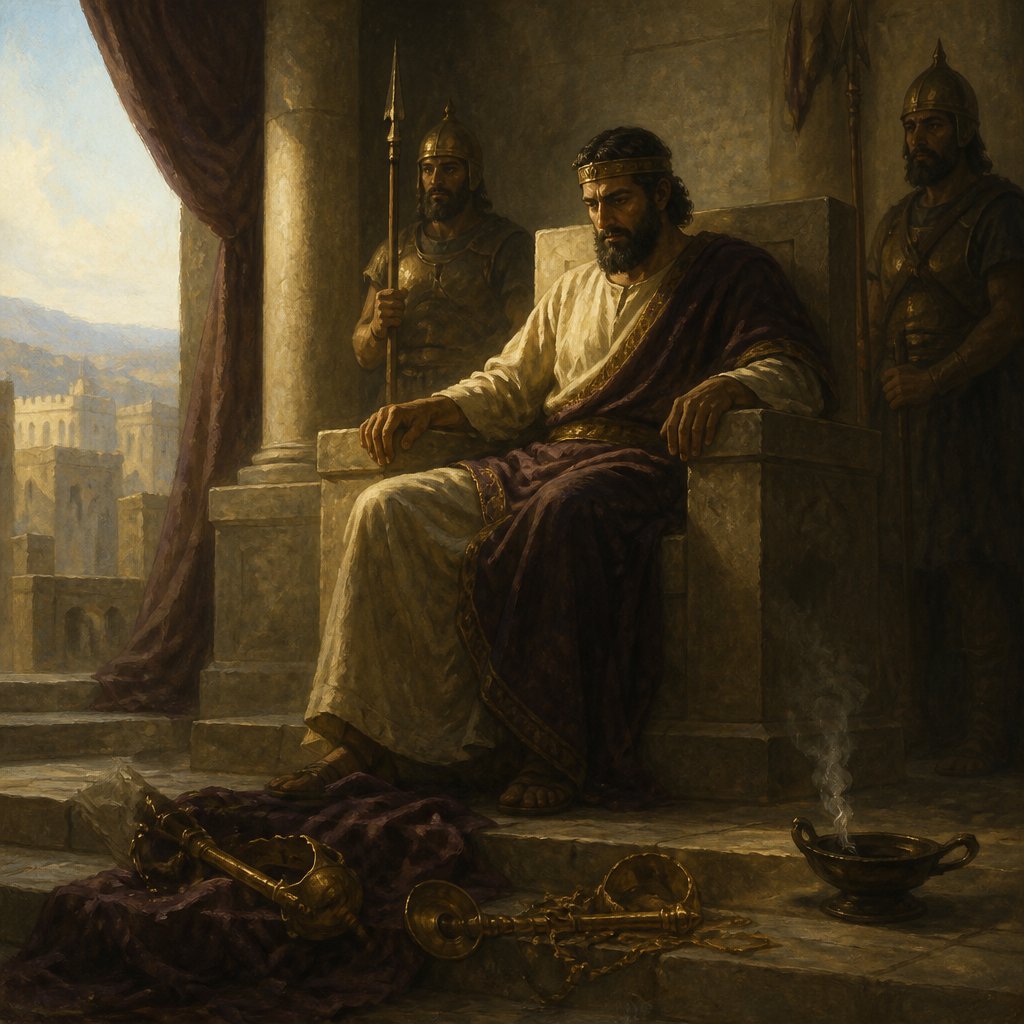
When examining the complexities of leadership, we often look to the scriptures for guidance and wisdom. In 1 Kings 16:11, we encounter a moment rife with implications. The passage brings forth the stark reality of King Zimri's ascent to power: "And it came to pass, when he began to reign, as soon as he sat on his throne, that he slew all the house of Baasha: he left him not one that pisseth against a wall, neither of his kinsfolks, nor of his friends."
This verse lays bare the harshness often intertwined with the political maneuvers of kings and leaders in ancient Israel. Baasha's dynasty came to a violent end in the hands of Zimri, illustrating not just the ruthlessness required to claim and maintain power, but also the weight of the decisions made in the shadow of a throne.
Zimri’s swift execution of Baasha's lineage was not merely a political act; it was a calculated move to solidify his authority. In the context of the Israelite monarchy, the kingdom was rife with conflict and strife, and the elimination of the previous ruler's family was a common practice meant to prevent any uprising. Yet, as followers of Christ, these actions call us to question the ethics of our decisions—both in leadership and in everyday life.
In the Biblical narrative, the act of "leaving not one that pisseth against a wall" could be interpreted as a metaphor for eradicating any potential threats to his reign. This phrase, seemingly crude, emphasizes a complete annihilation of opposition. The implications of such brutality extend beyond just political gain; they challenge us to consider the ways in which we might 'slay' old ideas, behaviors, and relationships in our lives.
When we start a new phase in our lives—whether it be a new job, a new community, or a new personal goal—what are we willing to leave behind? Are we willing to cut off toxic relationships, habits, or past mistakes that weigh us down, or do we hang onto them out of fear of the unknown? Zimri's actions, while certainly harsh, remind us of the need for decisiveness in moving forward.
Moreover, this verse has deeper implications about the nature of leadership itself. It serves as a reminder that with leadership comes responsibility. The right actions can establish a just reign, while wrong decisions can lead to destruction. As we consider our own roles—whether as parents, managers, community leaders, or friends—we must reflect on how our decisions impact those around us. Are we leading with wisdom, compassion, integrity, and grace, or are we following the path treaded by Zimri, where power is maintained through fear?
It also leads us toward the contemplation of the legacy we leave behind. Zimri’s approach ensured a short reign; he would not ultimately be remembered in history for greatness. His violent tactics resulted in a swift judgment, mirroring the fate of many who seek control through ruthless means. Instead, let us strive to lead lives that inspire others, filled with humility, love, and forgiveness.
The weight of leadership compels us to remember, as followers of Christ, that while we may be called to make tough decisions, we do so with a heart aligned to God’s will. In our own reliance on the Spirit, we can navigate the complexities of life and leadership that reflect the character of Christ—one who leads with grace and truth.
Thus, this verse not only recounts a historical event but beckons us into a deeper understanding of what it means to lead. Let us approach our call with reverence, wisdom, and a determination to reflect God’s love in every action we take.
Get our apps


Artwork for 1 Kings 16:11
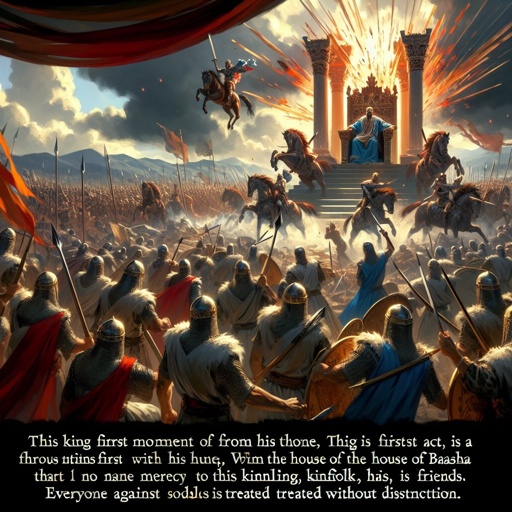
1 Kings 16:11 - "¶ And it came to pass, when he began to reign, as soon as he sat on his throne, that he slew all the house of Baasha: he left him not one that pisseth against a wall, neither of his kinsfolks, nor of his friends."
"¶ And it came to pass, when he began to reign, as soon as he sat on his throne, that he slew all the house of Baasha: he left him not one that pisseth against a wall, neither of his kinsfolks, nor of his friends." - 1 Kings 16:11

1 Kings 11:16 - "(For six months did Joab remain there with all Israel, until he had cut off every male in Edom:)"

1 Kings 11:11

1 Kings 11:11

1 Kings 11:11

1 Kings 11:11

1 Kings 11:11

1 kings 11:11-13

1 Kings 11:11-13

1 Kings 11:11-13

2 Chronicles 16:11 - "¶ And, behold, the acts of Asa, first and last, lo, they are written in the book of the kings of Judah and Israel."

2 Kings 11:16 - "And they laid hands on her; and she went by the way by the which the horses came into the king's house: and there was she slain."

1 Kings 11:1-5

1 Kings 12:11

1 Kings 11:13

1 Kings 12:11

1 Kings 11:5

1 Kings 11:13

1 Kings 12:11

1 Kings 12:11

1 Kings 12:11

1 Kings 20:16 - "And they went out at noon. But Ben-hadad was drinking himself drunk in the pavilions, he and the kings, the thirty and two kings that helped him."

1 Kings 16:14 - "Now the rest of the acts of Elah, and all that he did, are they not written in the book of the chronicles of the kings of Israel?"

1 Kings 1:16 - "And Bath-sheba bowed, and did obeisance unto the king. And the king said, What wouldest thou?"

1 Kings 4:16 - "Baanah the son of Hushai was in Asher and in Aloth:"

1 Kings 16:1 - "Then the word of the LORD came to Jehu the son of Hanani against Baasha, saying,"

2 Kings 16:11 - "And Urijah the priest built an altar according to all that king Ahaz had sent from Damascus: so Urijah the priest made it against king Ahaz came from Damascus."

1 Kings 16:20 - "Now the rest of the acts of Zimri, and his treason that he wrought, are they not written in the book of the chronicles of the kings of Israel?"

1 Kings 16:5 - "Now the rest of the acts of Baasha, and what he did, and his might, are they not written in the book of the chronicles of the kings of Israel?"