The Reign of Ahab: A Study in Choices and Consequences
“And in the thirty and eighth year of Asa king of Judah began Ahab the son of Omri to reign over Israel: and Ahab the son of Omri reigned over Israel in Samaria twenty and two years.” — 1 Kings 16:29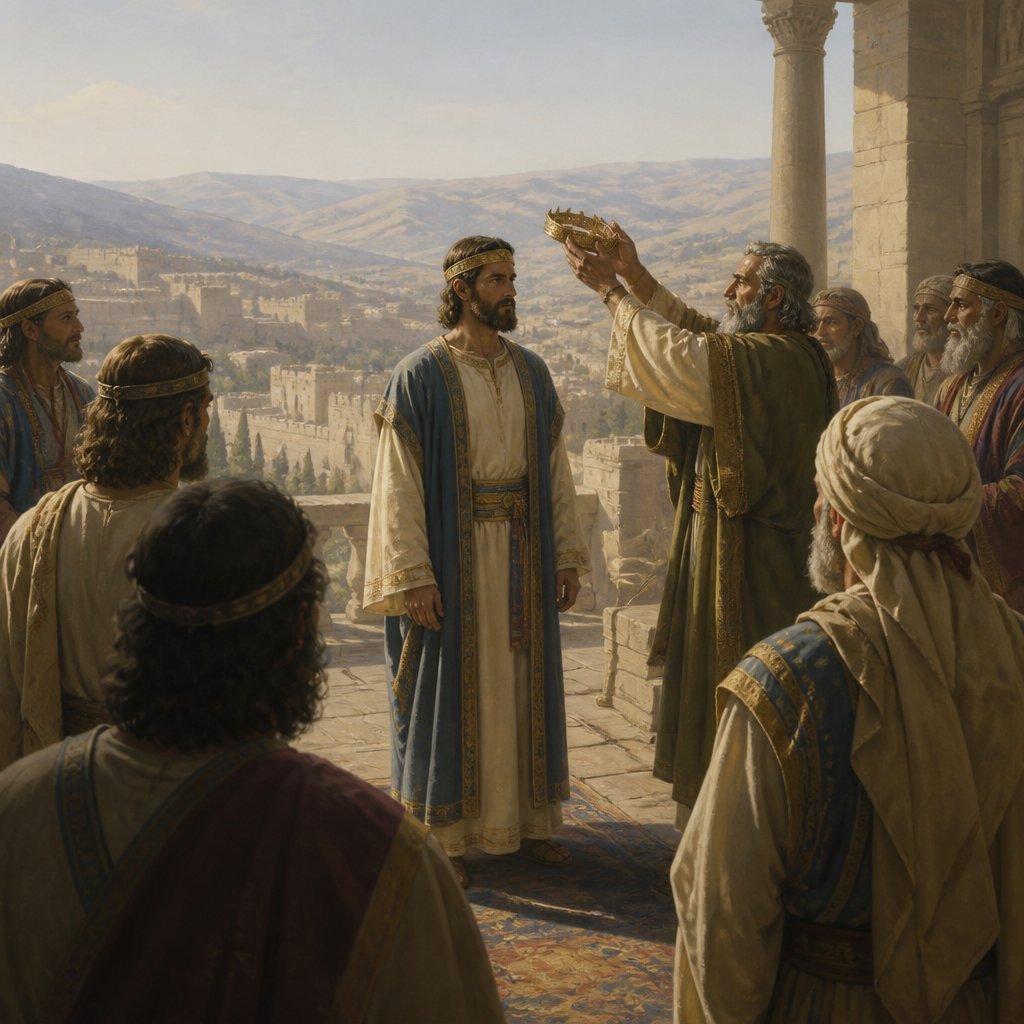
When we delve into the lineage of Israel's kings, particularly focusing on Ahab son of Omri, as outlined in 1 Kings 16:29, we encounter powerful lessons in leadership, morality, and divine retribution. The verse states, "And in the thirty and eighth year of Asa king of Judah began Ahab the son of Omri to reign over Israel: and Ahab the son of Omri reigned over Israel in Samaria twenty and two years." Here, we recognize the contextual framework of Ahab's reign—he ascends to the throne during a turbulent period for Israel, amidst the backdrop of a divided kingdom, fluctuating allegiances, and profound spiritual crisis.
As we consider Ahab's reign, it is notably marked by a stark contrast between the righteous secretions of Asa in Judah and Ahab’s largely corrupt leadership in Israel. This juxtaposition serves as a vivid reminder that one's decisions as a leader can have far-reaching implications. Ahab's reign signifies a pivotal moment in Israel's history, symbolizing a departure from worship of Yahweh towards the worship of Baal. Under Ahab’s influence, the nation strayed profoundly from its covenant obligations, leading them into idolatry and moral decay.
One might wonder, what made Ahab choose the paths that he did? As we reflect on Ahab’s decisions, it’s crucial to consider his environment and upbringing. Son of Omri, Ahab inherited the throne and the aspirations that came with it, including the desire to consolidate power and influence over Israel's numerous factions. However, rather than submitting to God, Ahab sought alliances that seemed politically wise but spiritually disastrous. His marriage to Jezebel, a Sidonian princess devoted to Baal worship, stands as a prime example of how Ahab's covenant with God was compromised by personal ambition and misguided love.
Scripture recounts Ahab's notable achievements alongside his grave failures. During his reign, Israel experienced periods of prosperity; however, prosperity obtained outside of God’s design often leads to spiritual downfall, which eventually became evident. In pursuing national prosperity, Ahab neglected the well-being of his people's spiritual state. In the narrative following Ahab’s reign, we see stunning accounts of Elijah confronting Ahab, which reveal God’s unwavering stance against idolatry and the consequences of Ahab’s choices.
The very essence of Ahab’s reign encapsulates the spiritual and moral decay of a king who had the opportunity for greatness but fell prey to the seductive allure of secular power. It invites serious contemplation among believers today about how we navigate our own choices in leadership, be it in community, workplace, or families. Are we prioritizing godly principles in pursuit of success? Are we allowing outside influences to dilute our commitment to spiritual integrity?
Reflect on the legacy Ahab left behind. His reign, though long—twenty-two years—did not reflect righteousness or faithfulness to God but stood in stark opposition to it. Ahab’s story is a chilling reminder of the prophetic warnings that came through Elijah, emphasizing that choices made in pursuit of worldly success without God's guidance lead ultimately to destruction (1 Kings 21:20-29).
In this moment of reflection, let us be inspired to make daily choices that honor God and seek His direction in all that we do. In our roles, whether visible or hidden, large or small, let us remember that our actions, however seemingly insignificant, contribute to our legacy. Ahab’s reign is one of choices made in a context of power, yet it serves as a phenomenal reminder that our choices resonate far beyond our immediate gratification. May we choose to reflect the character of Christ in our leadership, always striving for righteousness, so that we may leave behind a legacy infused with godliness and integrity, rather than one wrought with idolatry and destruction.
Get our apps


Artwork for 1 Kings 16:29

1 Kings 16:29 - "¶ And in the thirty and eighth year of Asa king of Judah began Ahab the son of Omri to reign over Israel: and Ahab the son of Omri reigned over Israel in Samaria twenty and two years."
"¶ And in the thirty and eighth year of Asa king of Judah began Ahab the son of Omri to reign over Israel: and Ahab the son of Omri reigned over Israel in Samaria twenty and two years." - 1 Kings 16:29

Genesis 29:16-35

1 Kings 11:29-32

1 Kings 14:29 - "¶ Now the rest of the acts of Rehoboam, and all that he did, are they not written in the book of the chronicles of the kings of Judah?"

1 Kings 1:29 - "And the king sware, and said, As the LORD liveth, that hath redeemed my soul out of all distress,"

1 Kings 22:29 - "So the king of Israel and Jehoshaphat the king of Judah went up to Ramoth-gilead."

1 Kings 12:29 - "And he set the one in Beth-el, and the other put he in Dan."

1 Kings 10:29 - "And a chariot came up and went out of Egypt for six hundred shekels of silver, and an horse for an hundred and fifty: and so for all the kings of the Hittites, and for the kings of Syria, did they bring them out by their means."

1 Chronicles 16:29 – "Ascribe to the Lord the glory due his name; bring an offering and come before him."

1 Kings 20:16 - "And they went out at noon. But Ben-hadad was drinking himself drunk in the pavilions, he and the kings, the thirty and two kings that helped him."

1 Kings 16:14 - "Now the rest of the acts of Elah, and all that he did, are they not written in the book of the chronicles of the kings of Israel?"

1 Kings 1:16 - "And Bath-sheba bowed, and did obeisance unto the king. And the king said, What wouldest thou?"

1 Kings 4:16 - "Baanah the son of Hushai was in Asher and in Aloth:"

1 Kings 16:1 - "Then the word of the LORD came to Jehu the son of Hanani against Baasha, saying,"

1 Kings 4:29 - "¶ And God gave Solomon wisdom and understanding exceeding much, and largeness of heart, even as the sand that is on the sea shore."

1 Kings 16:20 - "Now the rest of the acts of Zimri, and his treason that he wrought, are they not written in the book of the chronicles of the kings of Israel?"

1 Kings 16:5 - "Now the rest of the acts of Baasha, and what he did, and his might, are they not written in the book of the chronicles of the kings of Israel?"

1 Timothy 6:15-16 – "God, the blessed and only Ruler, the King of kings and Lord of lords."

1 Timothy 6:15-16 – "God, the blessed and only Ruler, the King of kings and Lord of lords."
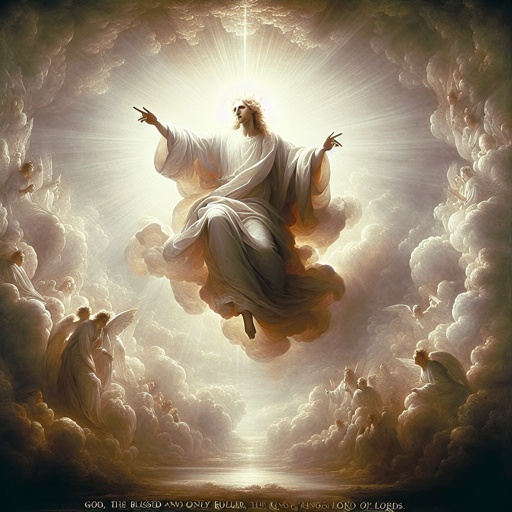
1 Timothy 6:15-16 – "God, the blessed and only Ruler, the King of kings and Lord of lords."

1 Timothy 6:15-16 – "God, the blessed and only Ruler, the King of kings and Lord of lords."

1 Kings 15:16 - "¶ And there was war between Asa and Baasha king of Israel all their days."

1 Timothy 6:15-16 – "God, the blessed and only Ruler, the King of kings and Lord of lords."

1 Kings 3:16 - "¶ Then came there two women, that were harlots, unto the king, and stood before him."

1 Kings 16:27 - "Now the rest of the acts of Omri which he did, and his might that he shewed, are they not written in the book of the chronicles of the kings of Israel?"

1 Kings 6:29 - "And he carved all the walls of the house round about with carved figures of cherubims and palm trees and open flowers, within and without."

1 Kings 16:33 - "And Ahab made a grove; and Ahab did more to provoke the LORD God of Israel to anger than all the kings of Israel that were before him."

"¶ Now the rest of the acts of Rehoboam, and all that he did, are they not written in the book of the chronicles of the kings of Judah?" - 1 Kings 14:29

2 Kings 16:1 - "In the seventeenth year of Pekah the son of Remaliah Ahaz the son of Jotham king of Judah began to reign."