The Voice That Speaks for God: Heeding the Call of Truth
“And Micaiah said, If thou return at all in peace, the LORD hath not spoken by me. And he said, Hearken, O people, every one of you.” — 1 Kings 22:28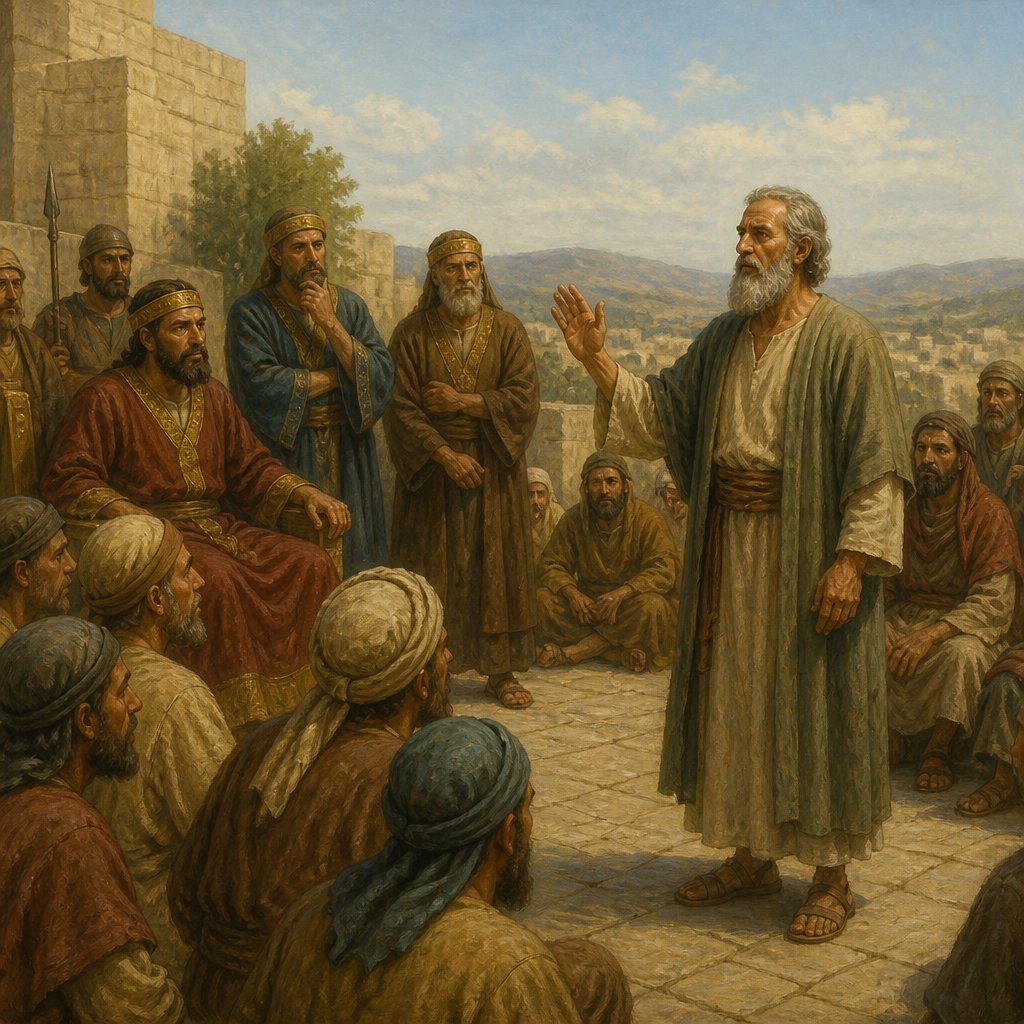
The narrative in 1 Kings 22, particularly around verse 28, unfolds a confrontation rooted in the struggle between divine truth and human inclination. Micaiah, the prophet, dares to stand in stark contrast to the multitude of secular voices clamoring for the king’s favor. 'And Micaiah said, If thou return at all in peace, the LORD hath not spoken by me. And he said, Hearken, O people, every one of you.' (1 Kings 22:28, KJV). This brief yet profound declaration embodies the essence of biblical prophecy and the eternal challenge of discerning God’s voice in a cacophony of opinions.
As we dive deeper into this verse, we must recognize the circumstances that precipitated such a bold statement from Micaiah. King Ahab of Israel had summoned the prophets of his court, none of whom spoke anything but flattering prophecies, echoing Ahab’s desires instead of God's truth. They told the king what he wanted to hear, promoting a false sense of security as they encouraged him to go to war against Ramoth-gilead. But truth is not swayed by popularity or desire; Micaiah emerges as a lone voice of authenticity, declaring what the Lord had truly spoken.
Micaiah’s challenge underscores a critical principle in our relationship with God: the authenticity of His Word. When he declares, 'If thou return at all in peace, the LORD hath not spoken by me,' he unmistakably challenges the narrative presented by the other prophets. His boldness in stating this truth is a reminder of our calling to speak what the Lord has laid upon our hearts, regardless of the potential backlash or isolation we might face in doing so. Micaiah’s reference to peace signifies a profound biblical truth; peace is often a prime indicator of God’s presence and will in our lives. Without divine endorsement, peace is elusive. Micaiah's warning serves as an invitation to reflect: are we truly seeking God's will, or are we merely clamoring for affirmation of our own desires?
In applying this verse to our lives, we must ask ourselves whether we are tuned to the voice of God amidst the noise surrounding us. Society bombards us with opinions, often discordant with the divine messages we are called to uphold. It is our responsibility to distinguish between the hollow declarations of those seeking worldly favor and the profound call of God upon our lives. Micaiah’s subsequent proclamation, 'Hearken, O people, every one of you,' emphasizes the communal aspect of prophecy. Not only did Micaiah speak for himself; he called upon all who were present to hear the truth. This clearly implies that receiving God’s truth is not a solitary venture but a collective undertaking towards righteousness.
Furthermore, Micaiah’s unwavering fidelity to God's truth, despite the risk it carries, speaks volumes about courage. In a culture that often equates truth-telling with being unpopular or despised, Micaiah challenges us to reflect on our own willingness to stand firm in our faith. Jesus Himself warned us that the path to truth can be met with hostility yet said, 'Blessed are they which are persecuted for righteousness’ sake: for theirs is the kingdom of heaven.' (Matthew 5:10, KJV). In light of this, Micaiah becomes not just a figure of ancient rebellion but an archetype of modern faithfulness.
As believers today, we must embrace the spirit of Micaiah. Let us earnestly seek expressions of God’s truth in scripture and prayer, allowing it to guide our decisions and interactions with others. In a world clamoring for validation, we must understand that the Lord’s words are paramount and that He expects us to listen, hold fast to His teachings, and proclaim them fearlessly. May we, like Micaiah, affirm with our lives that the presence of peace in our hearts confirms the speaking of God in our midst.
In conclusion, take courage, dear friends, to stand for truth in your life and community, echoing Micaiah's powerful call to attentiveness to the Lord’s voice. For in the end, it is not human approval that sustains us, but the peace of God which surpasses all understanding, guiding our hearts and minds in Christ Jesus.
Get our apps


Artwork for 1 Kings 22:28

1 Kings 22:28 - "And Micaiah said, If thou return at all in peace, the LORD hath not spoken by me. And he said, Hearken, O people, every one of you."
"And Micaiah said, If thou return at all in peace, the LORD hath not spoken by me. And he said, Hearken, O people, every one of you." - 1 Kings 22:28

Exodus 22:28

Exodus 22:28

Exodus 22:28

Exodus 22:28

Exodus 22:28

Exodus 22:28

Exodus 22:28

Exodus 22:28

Exodus 22:28

Exodus 22:28

Exodus 22:28

1 Kings 6:28 - "And he overlaid the cherubims with gold."

1 kings 22:19

1 Kings 8:22

1 Kings 22:47 - "There was then no king in Edom: a deputy was king."

1 Kings 21:28 - "And the word of the LORD came to Elijah the Tishbite, saying,"

1 Kings 1:28 - "¶ Then king David answered and said, Call me Bath-sheba. And she came into the king's presence, and stood before the king."

1 Kings 22:44 - "And Jehoshaphat made peace with the king of Israel."

1 Kings 22:1 - "And they continued three years without war between Syria and Israel."

1 Kings 1:22 - "¶ And, lo, while she yet talked with the king, Nathan the prophet also came in."

1 Kings 7:28 - "And the work of the bases was on this manner: they had borders, and the borders were between the ledges:"

1 Kings 22:37 - "¶ So the king died, and was brought to Samaria; and they buried the king in Samaria."

"And he overlaid the cherubims with gold." - 1 Kings 6:28

1 Kings 15:28 - "Even in the third year of Asa king of Judah did Baasha slay him, and reigned in his stead."

1 Kings 9:28 - "And they came to Ophir, and fetched from thence gold, four hundred and twenty talents, and brought it to king Solomon."

1 Kings 22:29 - "So the king of Israel and Jehoshaphat the king of Judah went up to Ramoth-gilead."

1 Kings 22:45 - "Now the rest of the acts of Jehoshaphat, and his might that he shewed, and how he warred, are they not written in the book of the chronicles of the kings of Judah?"

1 Kings 12:22 - "But the word of God came unto Shemaiah the man of God, saying,"