A Call to Action: The Grip of Inertia
“And the king of Israel said unto his servants, Know ye that Ramoth in Gilead is ours, and we be still, and take it not out of the hand of the king of Syria?” — 1 Kings 22:3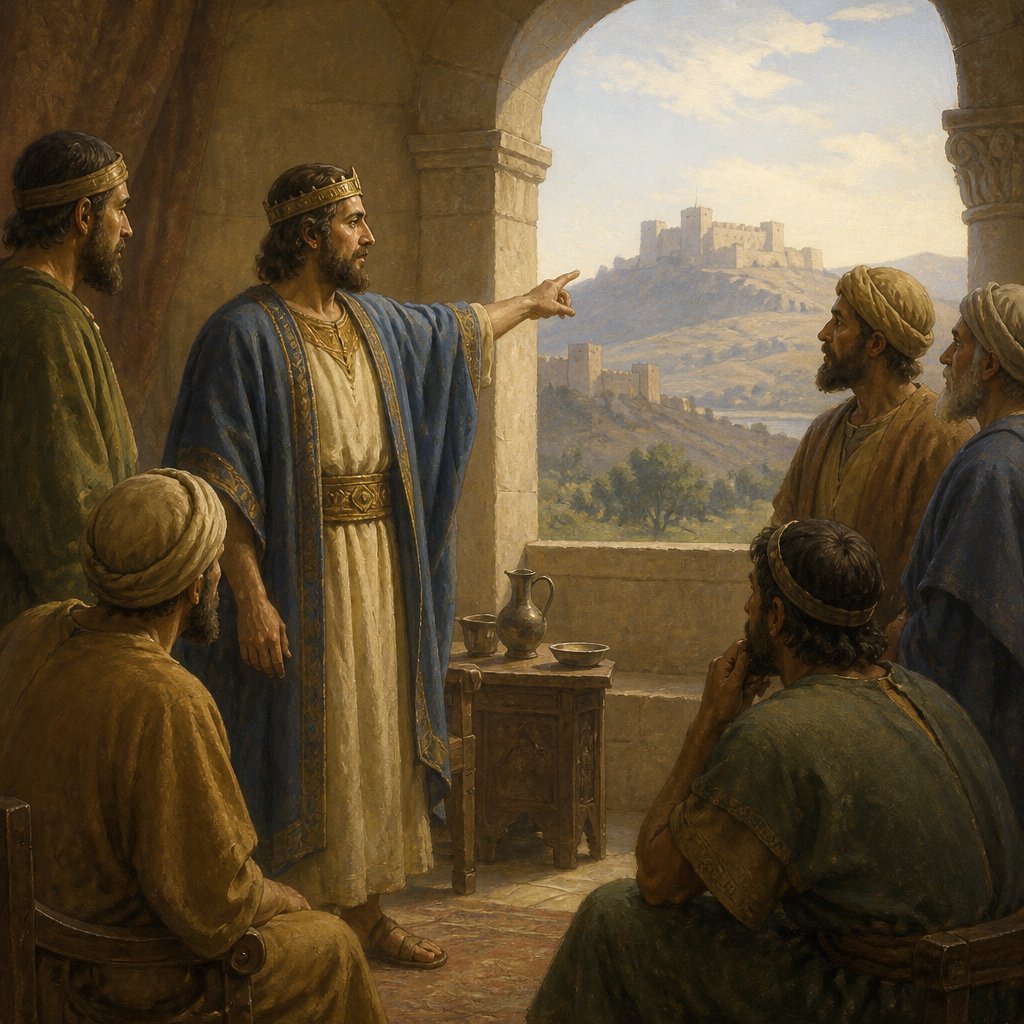
As we delve into the intricacies of 1 Kings 22:3, we encounter a poignant question that arises in the midst of political turmoil and personal responsibility. The verse reads: "And the king of Israel said unto his servants, Know ye that Ramoth in Gilead is our's, and we be still, and take it not out of the hand of the king of Syria?" This moment in scripture not only emphasizes territorial disputes but also invites us to reflect on our own spiritual territories—the areas of our lives that God desires us to reclaim for His glory.
At this juncture in Israel's history, King Ahab is confronted with a pressing issue: the need to recover Ramoth in Gilead, a city of significant strategic importance, which was under the control of the king of Syria. His inquiry, "Know ye that Ramoth in Gilead is our's," implies a remembered promise, a claim to land that was rightfully theirs. Yet notably, he poses a rhetorical question regarding their inaction: "and we be still, and take it not out of the hand of the king of Syria?" Here, Ahab reveals a hesitance that is all too familiar—a paralysis of action in the face of rightful possession.
Let us pause for a moment and consider the implications of inertia in our spiritual walk. How often do we recognize that certain blessings or callings are meant for us, yet we choose to remain still? There are many areas in our lives—dreams, giftedness, or even relationships—that are claimed for us by divine promise. Yet, out of fear, complacency, or simple apathy, we find ourselves inactive, allowing the 'kings' of this world to hold dominion over what God has intended for us.
The challenge presented by Ahab's words serves as a clarion call. Ahab wasn't merely lamenting the loss of Ramoth—he was highlighting the absurdity of being passive when a rightful claim should incite action. Similarly, our quietude in spiritual matters can lead to stagnation, where we sit idly by as the enemy roams freely in the areas that we ought to reclaim. The king's call to his servants resonates with God's challenge to us: to awaken from our spiritual slumber and to take hold of the promises laid before us.
Consider what Ramoth in Gilead represents in your life. Is it a promise of healing? Is it a calling to serve? Is it a dream to be fulfilled? Identifying these territories within context helps us understand the significance of acting upon our faith. Acts of faith often require courage to move forward, to take back what rightfully belongs to us, despite the obstacles that lie before us.
Moreover, we are reminded that this call to action is not undertaken alone. Ahab’s conversation with his servants emphasizes the importance of community in reclaiming spiritual ground. As believers, we are part of a larger body—the body of Christ. We are encouraged to spur one another on in love and good deeds (Hebrews 10:24), to engage with fellow warriors who can stand with us as we seek what God has for us.
Finally, Ahab’s plight leads us to prayer—asking the Lord to reveal where our ‘Ramoth’ lies and what steps we must take to reclaim it. It calls us to evaluate our lives honestly: Are there areas where we have simply accepted defeat rather than act in faith?
As we conclude our reflection, let us not forget the implications of our decisions—for our inaction may allow unholy influences to persist. It is a divine mandate to pursue our rightful positions with fervor and intention. With every spiritual Ramoth we reclaim, we further expand the Kingdom of God, step into our God-given authority, and stir the world around us. Let us respond to the call, believing that with God on our side, we can take back what has been lost.
Get our apps


Artwork for 1 Kings 22:3

1 Kings 22:3 - "And the king of Israel said unto his servants, Know ye that Ramoth in Gilead is our's, and we be still, and take it not out of the hand of the king of Syria?"
"And the king of Israel said unto his servants, Know ye that Ramoth in Gilead is our's, and we be still, and take it not out of the hand of the king of Syria?" - 1 Kings 22:3

1 Kings 3:22 - "And the other woman said, Nay; but the living is my son, and the dead is thy son. And this said, No; but the dead is thy son, and the living is my son. Thus they spake before the king."

1 kings 22:19

1 Kings 8:22

1 Kings 22:47 - "There was then no king in Edom: a deputy was king."

1 Kings 22:44 - "And Jehoshaphat made peace with the king of Israel."

1 Kings 22:1 - "And they continued three years without war between Syria and Israel."

1 Kings 1:22 - "¶ And, lo, while she yet talked with the king, Nathan the prophet also came in."

1 Kings 22:37 - "¶ So the king died, and was brought to Samaria; and they buried the king in Samaria."

revelations 22:1-3

2 Kings 22:3 - "¶ And it came to pass in the eighteenth year of king Josiah, that the king sent Shaphan the son of Azaliah, the son of Meshullam, the scribe, to the house of the LORD, saying,"

2 Kings 3:22 - "And they rose up early in the morning, and the sun shone upon the water, and the Moabites saw the water on the other side as red as blood:"

1 Kings 22:29 - "So the king of Israel and Jehoshaphat the king of Judah went up to Ramoth-gilead."

1 Kings 22:45 - "Now the rest of the acts of Jehoshaphat, and his might that he shewed, and how he warred, are they not written in the book of the chronicles of the kings of Judah?"

1 Kings 12:22 - "But the word of God came unto Shemaiah the man of God, saying,"

"There was then no king in Edom: a deputy was king." - 1 Kings 22:47

1 Kings 22:9 - "Then the king of Israel called an officer, and said, Hasten hither Micaiah the son of Imlah."

1 Kings 3:9

1 kings 3:15

1 Kings 22:2 - "And it came to pass in the third year, that Jehoshaphat the king of Judah came down to the king of Israel."

1 kings 3:15

1 kings 3:12

1 Kings 7:22 - "And upon the top of the pillars was lily work: so was the work of the pillars finished."

1 Kings 22:39 - "Now the rest of the acts of Ahab, and all that he did, and the ivory house which he made, and all the cities that he built, are they not written in the book of the chronicles of the kings of Israel?"

1 Kings 22:21 - "And there came forth a spirit, and stood before the LORD, and said, I will persuade him."

1 Kings 22:7 - "And Jehoshaphat said, Is there not here a prophet of the LORD besides, that we might enquire of him?"

1 Kings 22:5 - "And Jehoshaphat said unto the king of Israel, Enquire, I pray thee, at the word of the LORD to day."

1 Kings 22:41 - "¶ And Jehoshaphat the son of Asa began to reign over Judah in the fourth year of Ahab king of Israel."

"And Jehoshaphat made peace with the king of Israel." - 1 Kings 22:44