Walking in the Footsteps of Faith: Lessons from 1 Kings 22:43
“And he walked in all the ways of Asa his father; he turned not aside from it, doing that which was right in the eyes of the LORD: nevertheless the high places were not taken away; for the people offered and burnt incense yet in the high places.” — 1 Kings 22:43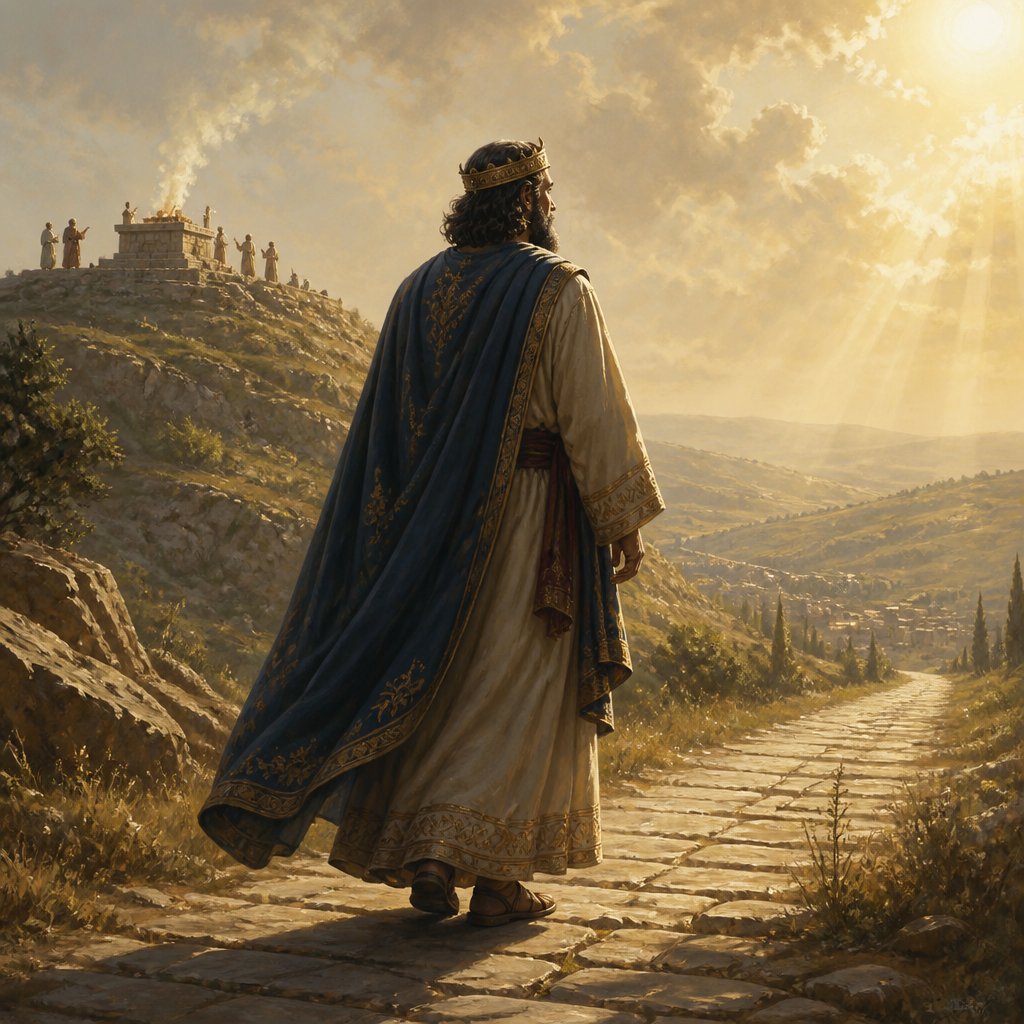
In the annals of biblical history, the kings of Israel and Judah are often remembered for their adherence to or deviation from the ways of the Lord. 1 Kings 22:43 provides a poignant glimpse into the reign of King Jehoshaphat of Judah. The verse states, "And he walked in all the ways of Asa his father; he turned not aside from it, doing that which was right in the eyes of the LORD: nevertheless the high places were not taken away; for the people offered and burnt incense yet in the high places."
To fully appreciate this verse, we must first understand the context within which Jehoshaphat ruled. His father, Asa, had been a king who initiated reforms and sought to rid the land of idolatry, turning the hearts of the people back to worshiping Yahweh alone. Jehoshaphat followed his father’s footsteps with a commitment to righteousness. He did what was right in the eyes of the Lord, a critical detail illustrating his fidelity to God’s commands.
We find a dual theme within Jehoshaphat’s reign. While he was faithful and walked in the ways of Asa, it is crucial to note the contrast highlighted in the verse: "nevertheless the high places were not taken away." The high places were locations outside of the temple where people continued to offer sacrifices and incense—a practice that often led to syncretism, blending the worship of Yahweh with pagan rituals. This detail is not merely historical; it serves as a spiritual cautionary tale.
As believers, we can draw meaningful insights from Jehoshaphat’s legacy. His dedication and good deeds do not exempt him from accountability to remove the remnants of idolatry in his kingdom. It raises an essential question for our lives: Are there high places in our hearts or lives that we need to confront and eliminate?
High places often represent those areas in our lives where we may still cling to habits, attitudes, or practices that detract from our full devotion to God. They symbolize anything we elevate above our relationship with Him—be it career ambitions, unhealthy relationships, or even recurring sins. Just as Jehoshaphat managed to align himself with God’s righteousness while overlooking significant sins, we too can fall into the trap of complacency, doing what seems right while ignoring deeper issues.
The narrative of Jehoshaphat speaks to the need for holistic obedience. It's not enough just to perform righteous acts; we must also be willing to root out everything that stands against God’s glory in our lives. In our modern walk of faith, we need to ask ourselves: Where have we settled for partial obedience? What ‘high places’ have we accepted that dampen our spiritual vibrancy?
Moreover, the lack of direct intervention against these high places can lead to lasting consequences. The people in Judah continued their practices of offering incense, which suggests a deeper cultural issue of idolatry that Jehoshaphat neglected to confront. Similarly, when we fail to address our high places, we allow space for a diluted faith to thrive within us, distancing ourselves from the fullness of God's presence and blessings.
In conclusion, 1 Kings 22:43 implores us not only to walk in the ways of God but to be vigilant in examining our lives for high places—those stubborn remnants of sin that hinder our relationship with Him. Let us take proactive steps in our spiritual lives, allowing the Holy Spirit to shine a light on those areas where we must act. Total devotion to Christ requires a courageous heart willing to remove every idol, ensuring our worship is unencumbered and wholly directed toward the Lord. Just as Jehoshaphat’s choices impacted a nation, so too can our obedience and faith in God influence those around us, drawing them closer to Him in a world craving authenticity and truth.
Get our apps


Artwork for 1 Kings 22:43

1 Kings 22:43 - "And he walked in all the ways of Asa his father; he turned not aside from it, doing that which was right in the eyes of the LORD: nevertheless the high places were not taken away; for the people offered and burnt incense yet in the high places."
"And he walked in all the ways of Asa his father; he turned not aside from it, doing that which was right in the eyes of the LORD: nevertheless the high places were not taken away; for the people offered and burnt incense yet in the high places." - 1 Kings 22:43

1 Kings 7:43 - "And the ten bases, and ten lavers on the bases;"

1 Kings 20:43 - "And the king of Israel went to his house heavy and displeased, and came to Samaria."

1 Kings 1:43 - "And Jonathan answered and said to Adonijah, Verily our lord king David hath made Solomon king."

1 Kings 2:43 - "Why then hast thou not kept the oath of the LORD, and the commandment that I have charged thee with?"

"And the ten bases, and ten lavers on the bases;" - 1 Kings 7:43

1 Chronicles 1:43 - "¶ Now these are the kings that reigned in the land of Edom before any king reigned over the children of Israel; Bela the son of Beor: and the name of his city was Dinhabah."

1 Kings 11:43 - "And Solomon slept with his fathers, and was buried in the city of David his father: and Rehoboam his son reigned in his stead."

1 kings 22:19

1 Kings 8:22

1 Kings 22:47 - "There was then no king in Edom: a deputy was king."

1 Kings 22:44 - "And Jehoshaphat made peace with the king of Israel."

"And the king of Israel went to his house heavy and displeased, and came to Samaria." - 1 Kings 20:43

1 Kings 22:1 - "And they continued three years without war between Syria and Israel."

1 Kings 1:22 - "¶ And, lo, while she yet talked with the king, Nathan the prophet also came in."

1 Kings 18:43 - "And said to his servant, Go up now, look toward the sea. And he went up, and looked, and said, There is nothing. And he said, Go again seven times."

1 Kings 22:37 - "¶ So the king died, and was brought to Samaria; and they buried the king in Samaria."

"And Jonathan answered and said to Adonijah, Verily our lord king David hath made Solomon king." - 1 Kings 1:43

Luke 22:43 - "And there appeared an angel unto him from heaven, strengthening him."

1 Kings 22:29 - "So the king of Israel and Jehoshaphat the king of Judah went up to Ramoth-gilead."

1 Kings 22:45 - "Now the rest of the acts of Jehoshaphat, and his might that he shewed, and how he warred, are they not written in the book of the chronicles of the kings of Judah?"

1 Kings 12:22 - "But the word of God came unto Shemaiah the man of God, saying,"

"There was then no king in Edom: a deputy was king." - 1 Kings 22:47

1 Kings 22:9 - "Then the king of Israel called an officer, and said, Hasten hither Micaiah the son of Imlah."

"Why then hast thou not kept the oath of the LORD, and the commandment that I have charged thee with?" - 1 Kings 2:43

1 Kings 22:2 - "And it came to pass in the third year, that Jehoshaphat the king of Judah came down to the king of Israel."

1 Kings 7:22 - "And upon the top of the pillars was lily work: so was the work of the pillars finished."

Matthew 22:43 - "He saith unto them, How then doth David in spirit call him Lord, saying,"

1 Kings 22:39 - "Now the rest of the acts of Ahab, and all that he did, and the ivory house which he made, and all the cities that he built, are they not written in the book of the chronicles of the kings of Israel?"