The Legacy of Service: Lessons from Solomon's Laborers
“And Solomon had threescore and ten thousand that bare burdens, and fourscore thousand hewers in the mountains;” — 1 Kings 5:15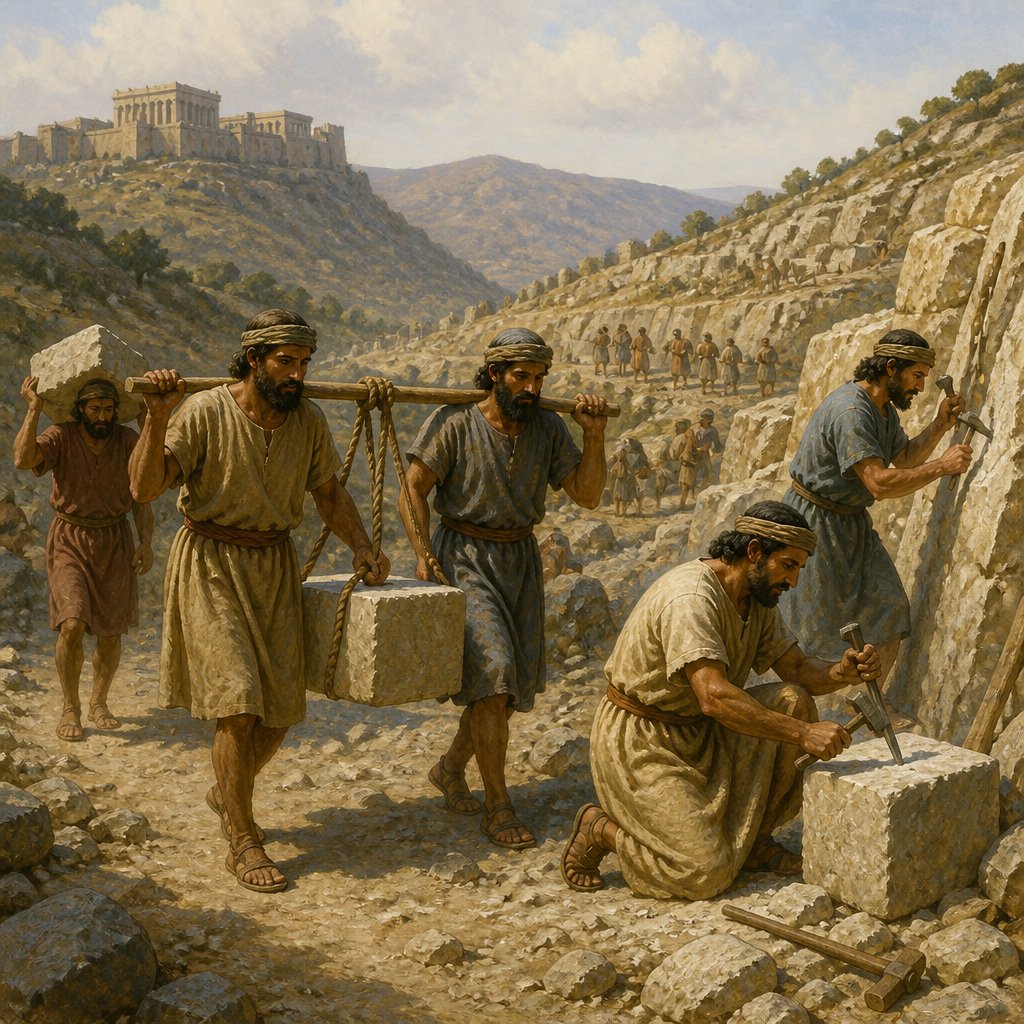
In the majestic narrative of King Solomon's reign, we find a moment that, while often overlooked, bears profound implications for our understanding of service, purpose, and divine provision. The verse from 1 Kings 5:15 states, "And Solomon had threescore and ten thousand that bare burdens, and fourscore thousand hewers in the mountains." This brief account of Solomon's workforce illustrates not just the scale of his ambitious building projects but also the principles of unity, diligence, and the need for shared responsibility in achieving God’s purpose.
As we dive deeper into this verse, it is essential to understand the context. Solomon, the son of David, had a monumental vision: to build a temple for the Lord, a place where the presence of God would dwell among His people. This vision was grand, and it required not just wisdom but also a considerable amount of manpower. Solomon organized a vast workforce, consisting of those who bore burdens and those who labored as hewers – workers who would extract and shape stone from the mountains. This operation reflects the beauty of teamwork and interdependence in fulfilling a great vision.
The mention of "threescore and ten thousand that bare burdens" brings to light the importance of those who carry the load behind the scenes. In our spiritual journeys, we often overlook the unsung heroes in our communities and churches, those who serve selflessly without recognition. These may be the prayer warriors interceding for us, the volunteers preparing meals, or those who clean the premises so that others may worship freely. Jesus Himself honored such service; in Mark 9:35, He said, "If any man desire to be first, the same shall be last of all, and servant of all." Each role is essential in the Kingdom of God.
Furthermore, the division of labor Solomon implemented – with an astonishing 80,000 hewers to take on the physically demanding work – teaches us the significance of specialization and unity of purpose. Paul emphasizes this principle in 1 Corinthians 12:12-14, where he compares the body of Christ to a human body, illustrating that each member, while distinct, is vital to the functioning of the whole. As a body, we are called to serve in different capacities, doing our part to build up the church and community around us.
Solomon's preparation for the temple wasn't just about the physical building; it was a symbol of dedication, commitment, and the worship of God with our work. When we dedicate our endeavors—be it in the workplace, community, or home—to God and operate with the attitude of excellence, we are engaging in a form of worship. Colossians 3:23-24 reminds us, "And whatsoever ye do, do it heartily, as to the Lord, and not unto men; Knowing that of the Lord ye shall receive the reward of the inheritance: for ye serve the Lord Christ."
As we reflect on this verse, let us consider our roles in the greater narrative of God's plan. We may not be hewers of stone or burdens bearers in a physical sense, but in our everyday lives, our actions can reflect God’s character. How are we serving in our families, workplaces, and communities? Are we willing to take on burdens, to pick up tools, or to sacrifice personal gain for the sake of building God’s kingdom?
Lastly, let us not forget that just as Solomon built with the help of others, we too can reach incredible heights when we work together toward a common goal. In Christ, we find our alignment, purpose, and strength. May we be inspired by Solomon's workforce, motivated to serve faithfully, and believe in the promise that our labor for the Lord will not be in vain (1 Corinthians 15:58).
Let us go forth, armed with the knowledge that every act of service, no matter how small, contributes to the Kingdom of God and brings glory to His name.
Get our apps


Artwork for 1 Kings 5:15

1 Kings 5:15 - "And Solomon had threescore and ten thousand that bare burdens, and fourscore thousand hewers in the mountains;"
"And Solomon had threescore and ten thousand that bare burdens, and fourscore thousand hewers in the mountains;" - 1 Kings 5:15

2 King 5:15

1 Kings 15:5 - "Because David did that which was right in the eyes of the LORD, and turned not aside from any thing that he commanded him all the days of his life, save only in the matter of Uriah the Hittite."

1 kings 3:15

1 kings 3:15

1 Kings 11:1-5

1 Kings 5:2 - "And Solomon sent to Hiram, saying,"

John 15:5

1 Kings 11:5

"And Solomon sent to Hiram, saying," - 1 Kings 5:2

1 Kings 15:31 - "¶ Now the rest of the acts of Nadab, and all that he did, are they not written in the book of the chronicles of the kings of Israel?"

1 Kings 10:15 - "Beside that he had of the merchantmen, and of the traffick of the spice merchants, and of all the kings of Arabia, and of the governors of the country."

1 Kings 15:1 - "Now in the eighteenth year of king Jeroboam the son of Nebat reigned Abijam over Judah."

Colossians 3:5-15

1 Timothy 6:15-16 – "God, the blessed and only Ruler, the King of kings and Lord of lords."

1 Kings 15:32 - "And there was war between Asa and Baasha king of Israel all their days."

1 Kings 15:16 - "¶ And there was war between Asa and Baasha king of Israel all their days."

1 Timothy 6:15-16 – "God, the blessed and only Ruler, the King of kings and Lord of lords."

1 Timothy 6:15-16 – "God, the blessed and only Ruler, the King of kings and Lord of lords."
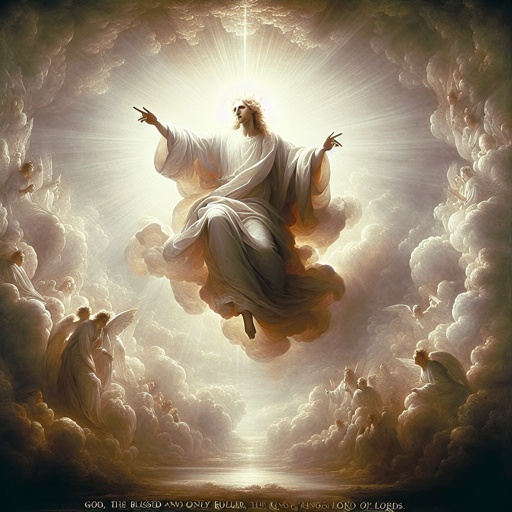
1 Timothy 6:15-16 – "God, the blessed and only Ruler, the King of kings and Lord of lords."

1 Kings 1:15 - "¶ And Bath-sheba went in unto the king into the chamber: and the king was very old; and Abishag the Shunammite ministered unto the king."

1 Corinthians 15:5 - "And that he was seen of Cephas, then of the twelve:"

1 Kings 15:9 - "¶ And in the twentieth year of Jeroboam king of Israel reigned Asa over Judah."

1 Timothy 6:15-16 – "God, the blessed and only Ruler, the King of kings and Lord of lords."

1 Kings 15:7 - "Now the rest of the acts of Abijam, and all that he did, are they not written in the book of the chronicles of the kings of Judah? And there was war between Abijam and Jeroboam."

2 Kings 15:5 - "¶ And the LORD smote the king, so that he was a leper unto the day of his death, and dwelt in a several house. And Jotham the king's son was over the house, judging the people of the land."

1 Kings 15:6 - "And there was war between Rehoboam and Jeroboam all the days of his life."

1 Kings 16:5 - "Now the rest of the acts of Baasha, and what he did, and his might, are they not written in the book of the chronicles of the kings of Israel?"

1 Kings 13:15 - "Then he said unto him, Come home with me, and eat bread."