Unity in Purpose: The Divine Architecture of Service
“Beside the chief of Solomon’s officers which were over the work, three thousand and three hundred, which ruled over the people that wrought in the work.” — 1 Kings 5:16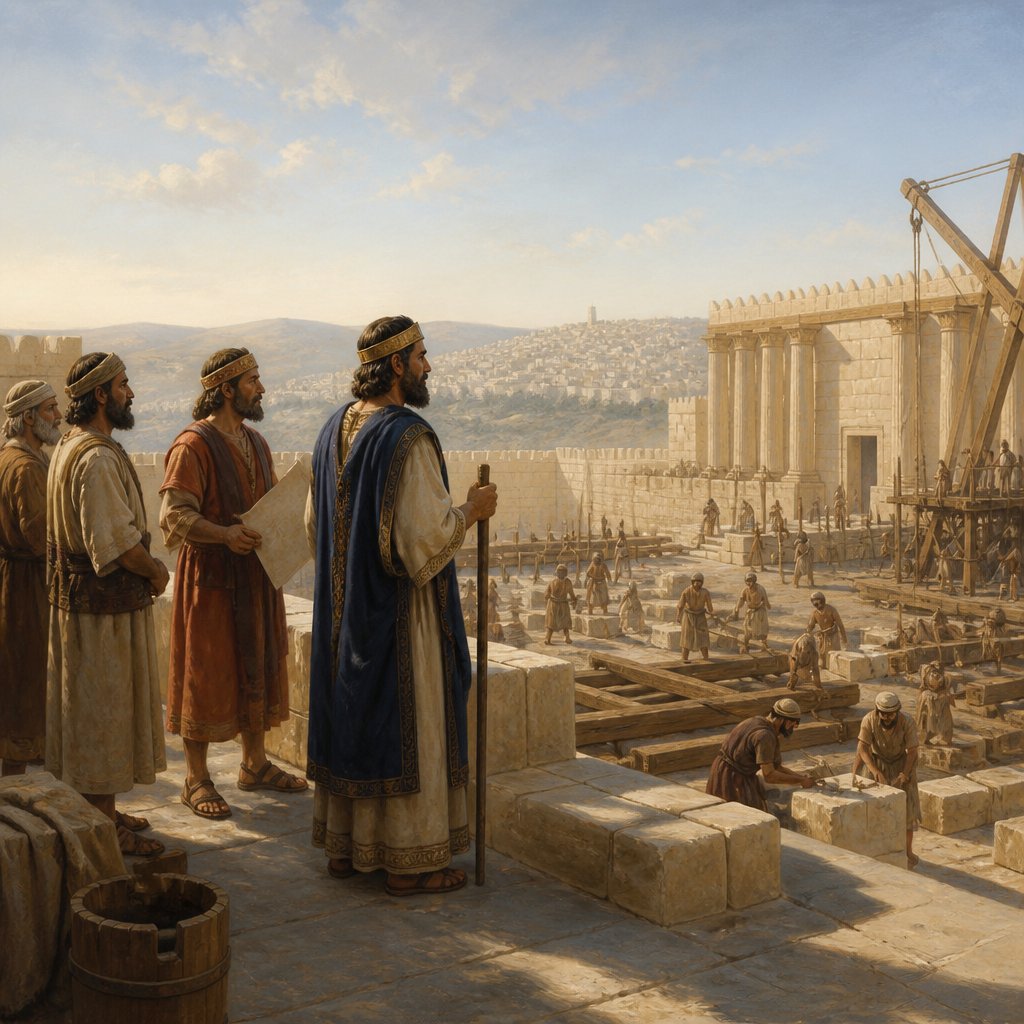
The verse from 1 Kings 5:16, "Beside the chief of Solomon's officers which were over the work, three thousand and three hundred, which ruled over the people that wrought in the work," offers us profound insight into the nature of work, service, and leadership in the biblical narrative. In this contextual moment, we see Solomon preparing to undertake one of the most ambitious projects of his reign: the building of the Temple. This monumental task required not only divine guidance and inspiration, but also human collaboration and organization.
As we delve into the significance of this scripture, it is essential to consider the scale and scope of Solomon's construction efforts. The Temple was not just a building; it was a dwelling place for the presence of God among His people, set apart for worship and sacrifice. Thus, every aspect of its creation had to be conducted with the utmost care and reverence, reflecting not only skill but also the unity of purpose among those involved in the work.
The mention of Solomon’s officers—who were specifically tasked with overseeing the efforts of those who labored—illustrates the divine order within the workforce. God is a God of order, not chaos, and this principle extends to His Kingdom's work. The organization of "three thousand and three hundred" individuals suggests a significant commitment to structure and efficiency. This was not simply a workforce haphazardly assembled; it was a carefully selected group of leaders who were chosen to manage and direct others to ensure that the project met the highest standards of excellence and adherence to divine vision.
In our lives, we can draw an invaluable lesson from the leadership model demonstrated here. Every individual has a role within a community or a team—whether in church, family, or workplace—and understanding how to collaborate effectively can lead to success far beyond individual capabilities. Just as Solomon’s officers had authority and responsibility, each of us is called to recognize and embrace our roles, whether we’re leading or following, managing or laboring. When we see our work as part of a collective effort towards a divine purpose, it transforms our motivation and perspective.
Furthermore, the work was not solely about erecting physical structures. It represented life, dedication, and a commitment to the shared faith and identity of the Israelite people. Each person who contributed to the construction was vital, just as each member of the body of Christ is necessary for the functioning of the whole (1 Corinthians 12:12-27). When we actively engage in service unto the Lord, whether in the church or the community, we participate in a grander narrative that stretches beyond our immediate circumstances.
As we reflect on our own lives, we must ask ourselves: What role are we fulfilling in the work of God? Are we actively participating in that divine architecture through our service, our giving, and our attitudes? How can we better support those who oversee the work in our churches and communities? Are we united in purpose, working for His glory, and striving to present our efforts as an offering unto God?
It is also important to recognize the human element of this scripture. The work was physically demanding, and there were likely many challenges that arose. Just like the workers in Solomon's day, we too face difficulties in carrying out God's commission. Yet, the promise of God's presence and strength encourages us to persevere within our challenges, knowing that we are not alone in our labor (Philippians 4:13).
In conclusion, let us learn from the example of Solomon's organization and leadership. May we embrace our unique roles within the Body of Christ and pursue our collective mission with diligence, unity, and heartfelt service. As we do this, we honor not just the physical work before us, but the sacred calling that undergirds it—one that aims to render glory to our Heavenly Father.
Get our apps


Artwork for 1 Kings 5:16

1 Kings 5:16 - "Beside the chief of Solomon's officers which were over the work, three thousand and three hundred, which ruled over the people that wrought in the work."
"Beside the chief of Solomon's officers which were over the work, three thousand and three hundred, which ruled over the people that wrought in the work." - 1 Kings 5:16

1 Kings 16:5 - "Now the rest of the acts of Baasha, and what he did, and his might, are they not written in the book of the chronicles of the kings of Israel?"

"Now the rest of the acts of Baasha, and what he did, and his might, are they not written in the book of the chronicles of the kings of Israel?" - 1 Kings 16:5

2 Kings 5:16 - "But he said, As the LORD liveth, before whom I stand, I will receive none. And he urged him to take it; but he refused."

1 Kings 11:1-5

1 Kings 5:2 - "And Solomon sent to Hiram, saying,"

1 Kings 11:5

1 Kings 20:16 - "And they went out at noon. But Ben-hadad was drinking himself drunk in the pavilions, he and the kings, the thirty and two kings that helped him."

1 Thessalonians 5:16 - "Rejoice evermore."

"And Solomon sent to Hiram, saying," - 1 Kings 5:2

1 Kings 16:14 - "Now the rest of the acts of Elah, and all that he did, are they not written in the book of the chronicles of the kings of Israel?"

1 Kings 1:16 - "And Bath-sheba bowed, and did obeisance unto the king. And the king said, What wouldest thou?"

Juan 5, 1-16

1 Kings 4:16 - "Baanah the son of Hushai was in Asher and in Aloth:"

1 Kings 16:1 - "Then the word of the LORD came to Jehu the son of Hanani against Baasha, saying,"

1 Kings 16:20 - "Now the rest of the acts of Zimri, and his treason that he wrought, are they not written in the book of the chronicles of the kings of Israel?"

1 Timothy 6:15-16 – "God, the blessed and only Ruler, the King of kings and Lord of lords."

1 Timothy 6:15-16 – "God, the blessed and only Ruler, the King of kings and Lord of lords."
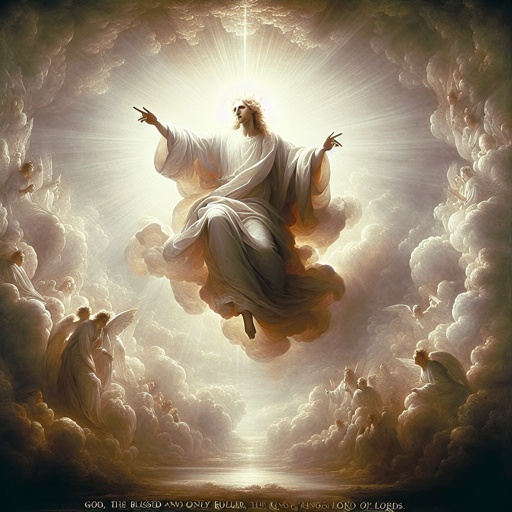
1 Timothy 6:15-16 – "God, the blessed and only Ruler, the King of kings and Lord of lords."

2 Kings 16:5 - "¶ Then Rezin king of Syria and Pekah son of Remaliah king of Israel came up to Jerusalem to war: and they besieged Ahaz, but could not overcome him."

1 Timothy 6:15-16 – "God, the blessed and only Ruler, the King of kings and Lord of lords."

1 Kings 15:16 - "¶ And there was war between Asa and Baasha king of Israel all their days."

1 Timothy 6:15-16 – "God, the blessed and only Ruler, the King of kings and Lord of lords."

1 Kings 3:16 - "¶ Then came there two women, that were harlots, unto the king, and stood before him."

1 Kings 16:27 - "Now the rest of the acts of Omri which he did, and his might that he shewed, are they not written in the book of the chronicles of the kings of Israel?"

1 Kings 16:33 - "And Ahab made a grove; and Ahab did more to provoke the LORD God of Israel to anger than all the kings of Israel that were before him."

"Rejoice evermore." - 1 Thessalonians 5:16

2 Kings 16:1 - "In the seventeenth year of Pekah the son of Remaliah Ahaz the son of Jotham king of Judah began to reign."

1 Kings 16:17 - "And Omri went up from Gibbethon, and all Israel with him, and they besieged Tirzah."