The Art of Preparation: Lessons from Hiram’s Work for Solomon
“And Hiram made the lavers, and the shovels, and the basons. So Hiram made an end of doing all the work that he made king Solomon for the house of the LORD:” — 1 Kings 7:40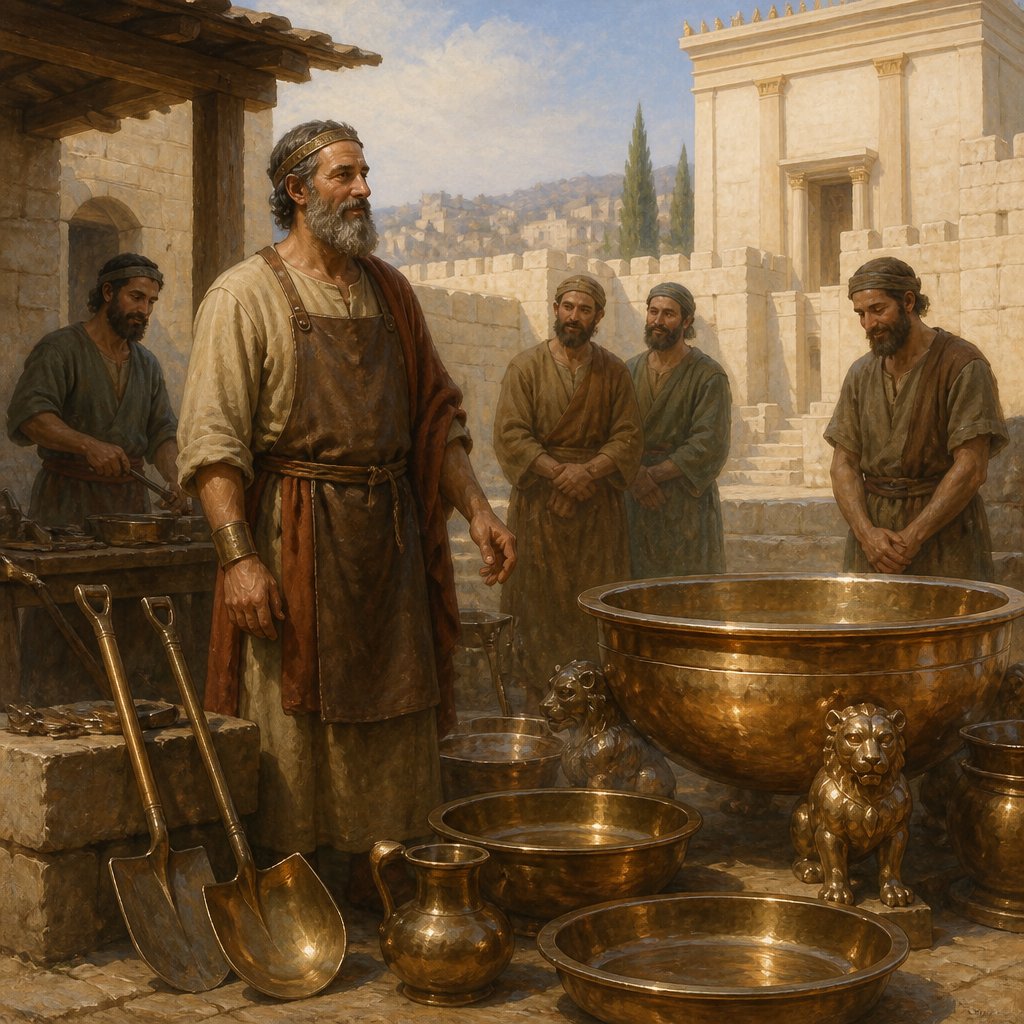
As we delve into the historical tapestry of 1 Kings 7:40, we encounter a craftsman whose toil would be enshrined in the annals of sacred architecture. The verse reads: "And Hiram made the lavers, and the shovels, and the basons. So Hiram made an end of doing all the work that he made king Solomon for the house of the LORD." In these few words, we find profound truths about dedication, service, and the importance of preparation in our worship of God.
Hiram, a skilled craftsman of Tyre, is introduced in 1 Kings with the remarkable task of constructing monumental works for King Solomon, notably the temple—a place where God’s presence was to dwell among His people. As we reflect upon Hiram's work, we note not only the grandeur of the temple itself but also the significance of the smaller, seemingly less critical items that he created: the lavers, shovels, and basons. Each item, while utilitarian in nature, played an essential role in the temple's function and the worship practices of the Israelite community.
Let us first consider the lavers. In Scripture, these vessels of water had a dual purpose: they were used for ritual purification and for washing the hands and feet of the priests before service. This act of cleansing symbolizes the necessity of purity and holiness as we approach God. Hiram’s commitment to crafting these lavers highlights an important principle: that preparation—both physical and spiritual—is vital as we approach sacred tasks. In our lives, are we taking the time to purify ourselves, to examine our hearts before engaging in worship or service? As we desire to serve in God’s house, let us be diligent in applying the lessons of purity that these vessels represent.
Next, we find the shovels, implements that carried the ashes from the altar, a critical component in the maintenance of worship. The act of removing ashes can seem mundane, yet it symbolizes the removal of the remnants of sacrifice—a necessary step to prepare for fresh offerings and encounters with the Lord. This aspect invites us to consider how we regularly cleanse our spiritual lives from residual sin and old burdens that could hinder our relationship with God. Just as the shovels allowed the priests to continue their work without the distraction of waste, so too must we be attentive to removing distractions and weighs from our lives to draw closer to our Creator.
The basons also hold significance; they were used to catch the blood of sacrifices, serving a vital role in the sacrificial system. Blood signifies life (Leviticus 17:11), pointing to the importance of the sacrifices made to atone for sin. Hiram's production of these essential vessels serves as a reminder of the gravity of sacrifice and the preciousness of Christ’s ultimate sacrifice for our sins. It compels us to ponder how we honor the sacrifices made for our sake and whether we fully grasp the implications of the ultimate gift of Jesus Christ. Are we living as living sacrifices, holy and acceptable unto God (Romans 12:1)?
Finally, it is crucial to consider the conclusion of the verse: "So Hiram made an end of doing all the work that he made king Solomon for the house of the LORD." Hiram’s dedication to completing his work reflects a key attribute of service: perseverance. The tasks we undertake in our spiritual lives and service to God should not be lived out half-heartedly or sporadically. Amidst distractions and challenges, let us commit to seeing our responsibilities through to the end, both in our personal walk of faith and in our communal responsibilities.
As we meditate on the craftsmanship of Hiram for the house of the LORD, let us find encouragement to diligently prepare ourselves for God’s service. In our lives, whether it be through prayer, guidance, acts of service, or worship, let everything we do be a reflection of our commitment to Him. May we strive for excellence as we serve, knowing that every task—big or small—matters to the Kingdom of God. Let our hearts and hands be devoted to His purpose, just as Hiram’s were to Solomon’s call.
Get our apps


Artwork for 1 Kings 7:40

1 Kings 7:40 - "¶ And Hiram made the lavers, and the shovels, and the basons. So Hiram made an end of doing all the work that he made king Solomon for the house of the LORD:"
"¶ And Hiram made the lavers, and the shovels, and the basons. So Hiram made an end of doing all the work that he made king Solomon for the house of the LORD:" - 1 Kings 7:40

1 Kings 22:40 - "So Ahab slept with his fathers; and Ahaziah his son reigned in his stead."

1 Kings 1:40 - "And all the people came up after him, and the people piped with pipes, and rejoiced with great joy, so that the earth rent with the sound of them."

1 Kings 8:40 - "That they may fear thee all the days that they live in the land which thou gavest unto our fathers."
1 kings 7:8

1 Kings 7:27-38

1 Kings 11:40 - "Solomon sought therefore to kill Jeroboam. And Jeroboam arose, and fled into Egypt, unto Shishak king of Egypt, and was in Egypt until the death of Solomon."

1 Kings 7:27-38

1 Kings 20:40 - "And as thy servant was busy here and there, he was gone. And the king of Israel said unto him, So shall thy judgment be; thyself hast decided it."

1 Kings 2:40 - "And Shimei arose, and saddled his ass, and went to Gath to Achish to seek his servants: and Shimei went, and brought his servants from Gath."

1 Corinthians 7:40 - "But she is happier if she so abide, after my judgment: and I think also that I have the Spirit of God."

1 kings 8:7

1 kings 8:7

1 Kings 8:7

1 Kings 18:40 - "And Elijah said unto them, Take the prophets of Baal; let not one of them escape. And they took them: and Elijah brought them down to the brook Kishon, and slew them there."

1 Kings 7:43 - "And the ten bases, and ten lavers on the bases;"

1 Kings 7:13 - "¶ And king Solomon sent and fetched Hiram out of Tyre."

2 Kings 17:40 - "Howbeit they did not hearken, but they did after their former manner."

Numbers 7:40 - "One kid of the goats for a sin offering:"

1 Kings 7:44 - "And one sea, and twelve oxen under the sea;"

"So Ahab slept with his fathers; and Ahaziah his son reigned in his stead." - 1 Kings 22:40

Nehemiah 7:40 - "The children of Immer, a thousand fifty and two."
1 Kings 1:7 - "And he conferred with Joab the son of Zeruiah, and with Abiathar the priest: and they following Adonijah helped him."

1 Kings 7:1 - "But Solomon was building his own house thirteen years, and he finished all his house."

1 Kings 15:7 - "Now the rest of the acts of Abijam, and all that he did, are they not written in the book of the chronicles of the kings of Judah? And there was war between Abijam and Jeroboam."

1 King 19:8

1 Kings 7:22 - "And upon the top of the pillars was lily work: so was the work of the pillars finished."

1 Kings 7:11 - "And above were costly stones, after the measures of hewed stones, and cedars."

1 Kings 7:28 - "And the work of the bases was on this manner: they had borders, and the borders were between the ledges:"