The Gifts We Overlook: Lessons from Cabul
“And he said, What cities are these which thou hast given me, my brother? And he called them the land of Cabul unto this day.” — 1 Kings 9:13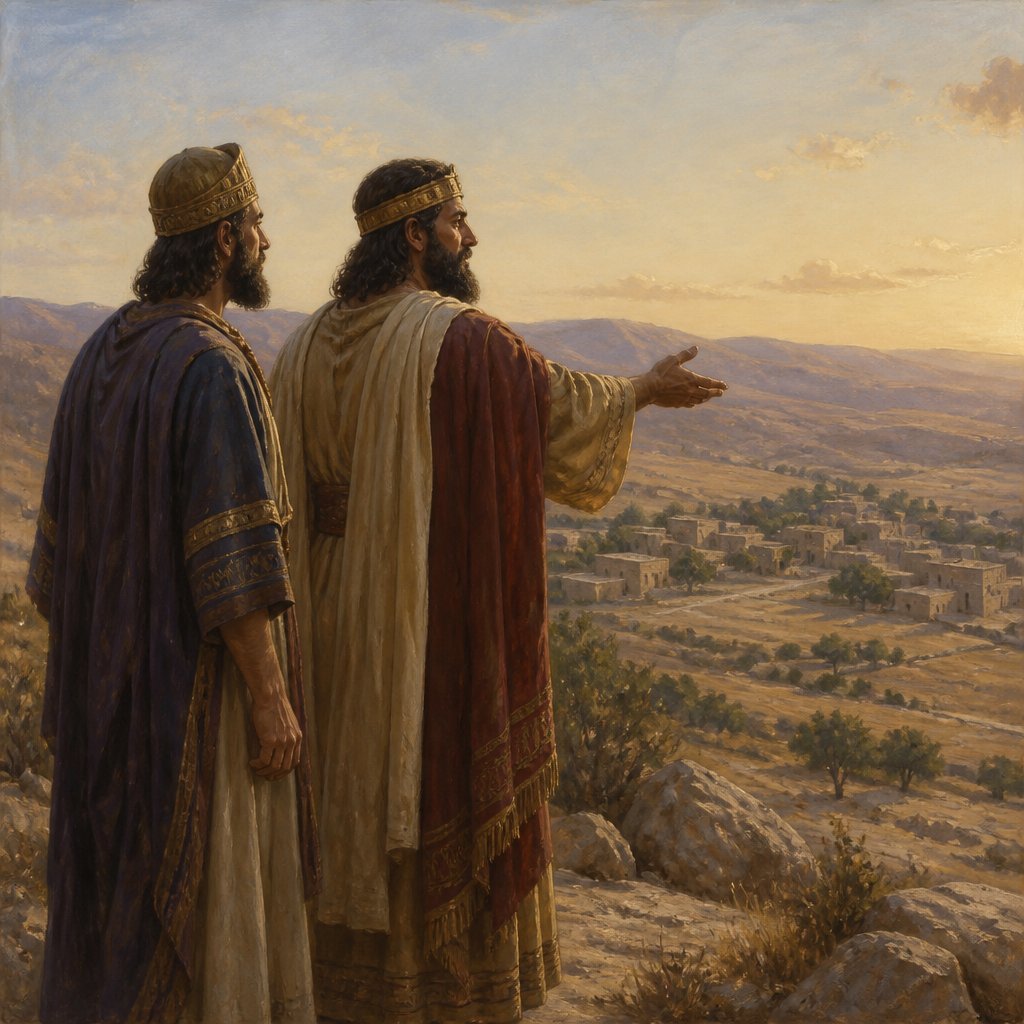
As we turn to the book of 1 Kings 9:13, the words resonate with a sense of reflection and realization: "And he said, What cities are these which thou hast given me, my brother? And he called them the land of Cabul unto this day." This moment captures a dialogue between King Solomon and Hiram, King of Tyre, regarding the cities that Solomon had received as a gift.
At first glance, it seems that these cities, given to Solomon, were not what he expected. The term "Cabul" is interpreted to mean "good for nothing" or “worthless.” Thus, we encounter Solomon’s disappointment as he contemplates what he has been handed. This Scripture provides us an opportunity to delve deeper into the themes of expectations versus reality, perception, and the concept of gifts from God.
### Understanding Our Gifts
In our lives, we often receive gifts cloaked in ordinary wrappings—relationships, responsibilities, challenges, and resources. Like Solomon, we may sometimes question the value of what has been entrusted to us. It’s commonplace to evaluate our circumstances and find ourselves wanting. We look at our “cities” and, instead of seeing their potential, we focus on their imperfections and shortcomings.
In reflecting on the land of Cabul, we must recognize that every gift from God, even those that seem inadequate or undeveloped, holds the potential for greatness. Consider how Solomon, with God’s wisdom, was able to transform what he initially viewed as worthless into something of value, as later readings in Kings reveal his monumental accomplishments in building the Temple and strengthening Israel.
### The Dangers of Comparison
What teaches us most from Solomon’s lament is the caution against comparison and judgment of worth based on appearances. In a society that values productivity and success, it can be easy to dismiss what we have received in our lives. Other people’s gifts and experiences can cause us to devalue our own if we let them. The truth is, each person's journey is distinctive, and God has a purpose for each gift.
If we view our 'Cabul' through the eyes of faith, we begin to appreciate their unique alignment with God’s plan for our lives. For instance, the seemingly mundane tasks we possess may be the very foundation upon which God builds something extraordinary in us or through us.
### Embracing Our Current Circumstances
Adamantly yearning for more or something different can lead us to a perpetual state of discontent. Solomon’s choice to call the cities of Cabul by that name reveals an emotional hurdle we often encounter: disappointment. Yet, God encourages us to embrace where we are, learning to be content and to seek out blessings within our current situations. Paul emphasizes in Philippians 4:11, “Not that I speak in respect of want: for I have learned, in whatsoever state I am, therewith to be content.” Contentment is not passivity; it is an active pursuit of the good and precious things in front of us, whether they shine or are shrouded in obscurity.
### The Path to Transformation
The land of Cabul ultimately teaches us the power of transformation, much like God’s work in our hearts. Jesus often spoke about how the Kingdom of God starts as a small seed but grows into something immense (Mark 4:30-32).
Thus, as we position ourselves to see the value within our "Cabul" moments, we invite God's presence to reshape and refine those gifts. When we ask, "What cities are these?" let it prompt us to engage in faithful stewardship, recognizing our God-given potential and allowing it to flourish into something beautiful.
### Conclusion
In conclusion, let us faithfully embrace the gifts we have been given, even if they initially appear disappointing or “worthless.” The land of Cabul serves as a reminder that even our most discouraging gifts can become channels of blessing and transformative power, if we heed the call to nurture and grow them with intentionality. May we, like Solomon, take stock of what has been given to us, and with God’s guidance, seek to transform our 'Cabul' into containers of divine purpose and glory.
Let us pray: "Lord, help me to see the value in what I have received and to nurture it for Your glory. Teach me to trust in Your plans for me and to find joy in the gifts that seem unworthy. Amen."
Get our apps


Artwork for 1 Kings 9:13

1 Kings 9:13 - "And he said, What cities are these which thou hast given me, my brother? And he called them the land of Cabul unto this day."
"And he said, What cities are these which thou hast given me, my brother? And he called them the land of Cabul unto this day." - 1 Kings 9:13

1 Kings 13:9 - "For so was it charged me by the word of the LORD, saying, Eat no bread, nor drink water, nor turn again by the same way that thou camest."

2 Kings 9:13 - "Then they hasted, and took every man his garment, and put it under him on the top of the stairs, and blew with trumpets, saying, Jehu is king."

1 Kings 11:13

1 Kings 11:13

1 Kings 3:9

2 Kings 13:9 - "And Jehoahaz slept with his fathers; and they buried him in Samaria: and Joash his son reigned in his stead."

1 Kings 6:11-13

1 kings 11:11-13

1 Kings 11:11-13

1 Kings 6:11-13

1 Kings 6:11-13

1 Kings 6:11-13

1 Kings 6:11-13

1 Kings 11:11-13

1 Kings 9:18 - "And Baalath, and Tadmor in the wilderness, in the land,"

1 Kings 7:13 - "¶ And king Solomon sent and fetched Hiram out of Tyre."

1 Kings 9:14 - "And Hiram sent to the king sixscore talents of gold."

1 Kings 9:17 - "And Solomon built Gezer, and Beth-horon the nether,"

1 Kings 13:13 - "And he said unto his sons, Saddle me the ass. So they saddled him the ass: and he rode thereon,"

1 Kings 12:13 - "And the king answered the people roughly, and forsook the old men's counsel that they gave him;"

1 Kings 15:9 - "¶ And in the twentieth year of Jeroboam king of Israel reigned Asa over Judah."

1 Corinthians 13:9 - "For we know in part, and we prophesy in part."

1 Kings 6:13 - "And I will dwell among the children of Israel, and will not forsake my people Israel."

1 Kings 5:13 - "¶ And king Solomon raised a levy out of all Israel; and the levy was thirty thousand men."

1 Kings 22:9 - "Then the king of Israel called an officer, and said, Hasten hither Micaiah the son of Imlah."

1 Kings 13:15 - "Then he said unto him, Come home with me, and eat bread."

1 Kings 13:27 - "And he spake to his sons, saying, Saddle me the ass. And they saddled him."

1 Kings 4:9 - "The son of Dekar, in Makaz, and in Shaalbim, and Beth-shemesh, and Elon-beth-hanan:"