Servants of the King: Embracing Our Noble Position in Christ
“But of the children of Israel did Solomon make no bondmen: but they were men of war, and his servants, and his princes, and his captains, and rulers of his chariots, and his horsemen.” — 1 Kings 9:22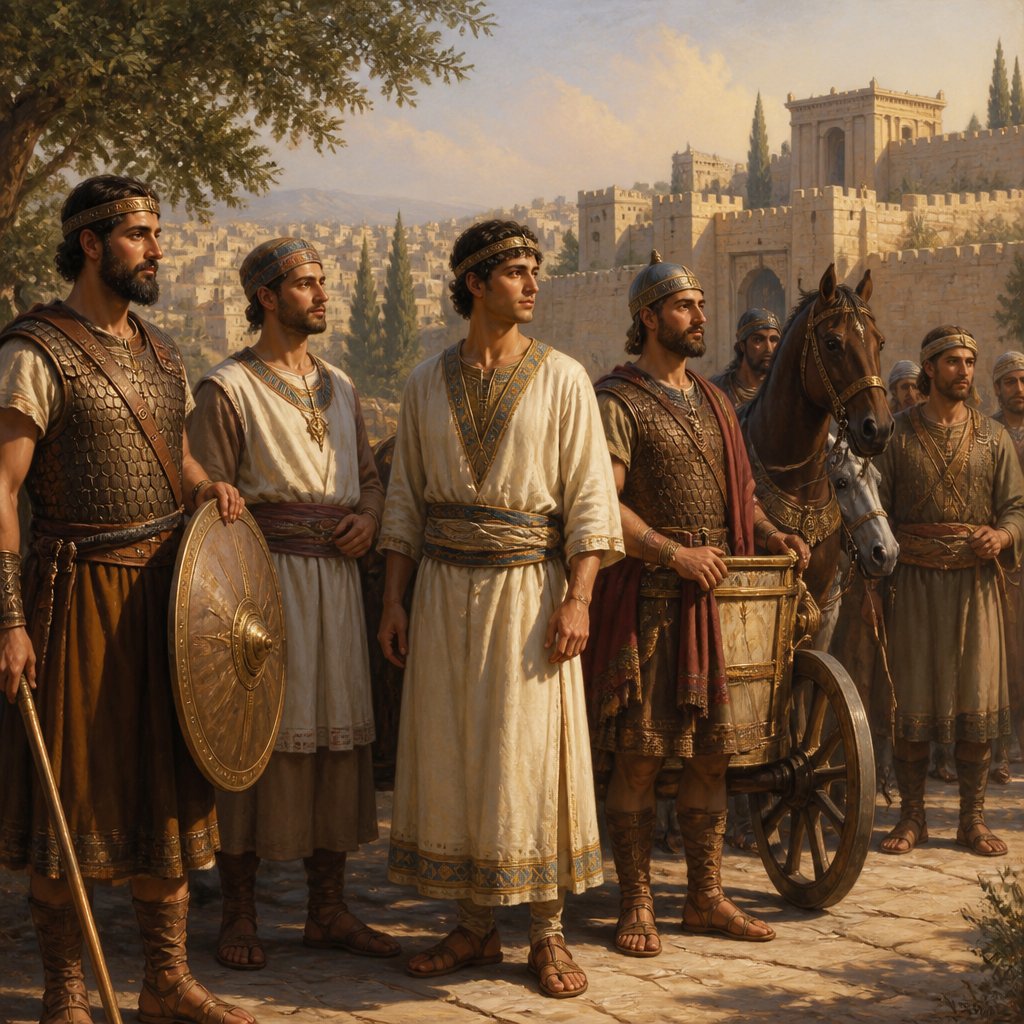
In 1 Kings 9:22, we discover an intriguing aspect of Solomon’s reign: "But of the children of Israel did Solomon make no bondmen: but they were men of war, and his servants, and his princes, and his captains, and rulers of his chariots, and his horsemen." This verse sheds light on a significant principle about the nature of service and leadership in the Kingdom of God.
At the height of Solomon's greatness, Israel experienced peace and prosperity. The king, known for his wisdom, made a deliberate choice not to enslave his people. This decision reflects a noble approach to leadership, illustrating a profound respect for the dignity and worth of every individual he governed. In stark contrast to many rulers of his time who saw their subjects as mere commodities or laborers, Solomon regarded the Israelites as valued members of his kingdom—men of war, servants, princes, and captains.
As we engage with this passage, let us reflect on our position in the Kingdom of God. Just as Solomon elevated the status of his people, so too are we called to recognize our identity as children of the King. The New Testament affirms that we are not bondmen in a spiritual sense; instead, we are co-heirs with Christ (Romans 8:17). Our status is one of honor and authority. We are not enslaved to the bondage of sin or servitude, but we are enabled to serve in roles of significance, utilizing our God-given gifts for His glory.
The term "men of war" holds great weight. In the spiritual landscape, we are reminded of the nature of the battles we face. Ephesians 6:12 reminds us, "For we wrestle not against flesh and blood, but against principalities, against powers, against the rulers of the darkness of this world, against spiritual wickedness in high places." Similarly, Solomon’s subjects were warriors; they were entrusted with responsibilities that required strength, resilience, and leadership. As followers of Christ, we too are called to be soldiers in the army of the Lord, engaged in the fight against the forces of evil, armed with the armor of God.
Moreover, Solomon’s servants also included princes, captains, rulers of chariots, and horsemen, indicating the diverse roles individuals played in the kingdom. Each position was vital for the success and safety of Israel. In the same way, the body of Christ is made up of many parts, each uniquely gifted and crucial to the work of the Church (1 Corinthians 12:12-27). This diversity strengthens our collective mission and exemplifies God’s creative purpose. We need to embrace our roles, whether they seem significant or mundane, knowing that every task contributes to the larger narrative of God's Kingdom.
Solomon’s decision not to create bondmen also invites us to consider how we treat one another. As a church and community, we should foster environments of respect, encouragement, and empowerment. Each person we encounter should be seen as a fellow heir of the grace of Christ, with intrinsic value bestowed upon them by their Creator. The call to servant leadership echoes through the teachings of Jesus, as He stated, "But he that is greatest among you shall be your servant" (Matthew 23:11). We are encouraged to lead by serving, seeing the potential in others and lifting them to fulfill their divine purpose.
In conclusion, let us embrace our nobility as children of the King. We are equipped for battle, commissioned for service, and empowered to lead. The legacy of Solomon challenges us to live lives that honor not only our calling but also our fellow believers. Let us step forward boldly, not as bondmen, but as dignified servants, warriors, and heirs, engaged in the work of the Kingdom with joy and gratitude in our hearts.
Get our apps


Artwork for 1 Kings 9:22

1 Kings 9:22 - "But of the children of Israel did Solomon make no bondmen: but they were men of war, and his servants, and his princes, and his captains, and rulers of his chariots, and his horsemen."
"But of the children of Israel did Solomon make no bondmen: but they were men of war, and his servants, and his princes, and his captains, and rulers of his chariots, and his horsemen." - 1 Kings 9:22

1 Kings 22:9 - "Then the king of Israel called an officer, and said, Hasten hither Micaiah the son of Imlah."

2 Chronicles 9:22 - "And king Solomon passed all the kings of the earth in riches and wisdom."

"Then the king of Israel called an officer, and said, Hasten hither Micaiah the son of Imlah." - 1 Kings 22:9

1 Kings 8:22

1 Kings 22:47 - "There was then no king in Edom: a deputy was king."

1 kings 22:19

1 Kings 22:44 - "And Jehoshaphat made peace with the king of Israel."

1 Kings 22:1 - "And they continued three years without war between Syria and Israel."

1 Kings 1:22 - "¶ And, lo, while she yet talked with the king, Nathan the prophet also came in."

1 Kings 22:37 - "¶ So the king died, and was brought to Samaria; and they buried the king in Samaria."

1 Kings 3:9

2 Kings 9:22 - "And it came to pass, when Joram saw Jehu, that he said, Is it peace, Jehu? And he answered, What peace, so long as the whoredoms of thy mother Jezebel and her witchcrafts are so many?"

"And king Solomon passed all the kings of the earth in riches and wisdom." - 2 Chronicles 9:22

1 Kings 22:29 - "So the king of Israel and Jehoshaphat the king of Judah went up to Ramoth-gilead."

1 Kings 22:45 - "Now the rest of the acts of Jehoshaphat, and his might that he shewed, and how he warred, are they not written in the book of the chronicles of the kings of Judah?"

1 Kings 12:22 - "But the word of God came unto Shemaiah the man of God, saying,"

1 Kings 9:18 - "And Baalath, and Tadmor in the wilderness, in the land,"

"There was then no king in Edom: a deputy was king." - 1 Kings 22:47

1 Kings 9:14 - "And Hiram sent to the king sixscore talents of gold."

1 Kings 22:2 - "And it came to pass in the third year, that Jehoshaphat the king of Judah came down to the king of Israel."

1 Kings 7:22 - "And upon the top of the pillars was lily work: so was the work of the pillars finished."

1 Kings 22:39 - "Now the rest of the acts of Ahab, and all that he did, and the ivory house which he made, and all the cities that he built, are they not written in the book of the chronicles of the kings of Israel?"

1 Kings 22:21 - "And there came forth a spirit, and stood before the LORD, and said, I will persuade him."

1 Kings 22:7 - "And Jehoshaphat said, Is there not here a prophet of the LORD besides, that we might enquire of him?"

1 Kings 9:17 - "And Solomon built Gezer, and Beth-horon the nether,"

1 Kings 22:5 - "And Jehoshaphat said unto the king of Israel, Enquire, I pray thee, at the word of the LORD to day."

1 Kings 22:41 - "¶ And Jehoshaphat the son of Asa began to reign over Judah in the fourth year of Ahab king of Israel."

"And Jehoshaphat made peace with the king of Israel." - 1 Kings 22:44