Living Beyond Our Past: The Call to Righteousness
“For the time past of our life may suffice us to have wrought the will of the Gentiles, when we walked in lasciviousness, lusts, excess of wine, revellings, banquetings, and abominable idolatries:” — 1 Peter 4:3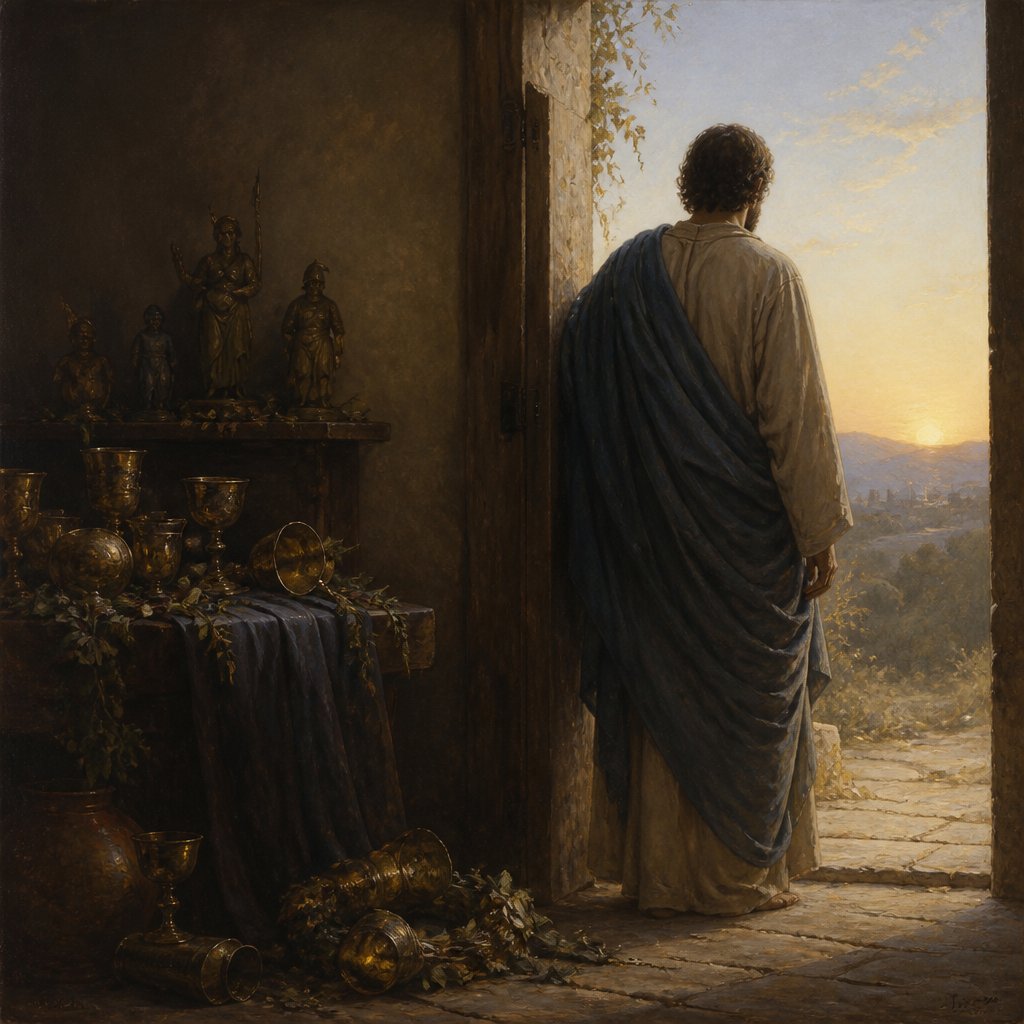
As we ponder the words of 1 Peter 4:3, "For the time past of our life may suffice us to have wrought the will of the Gentiles, when we walked in lasciviousness, lusts, excess of wine, revellings, banquetings, and abominable idolatries," we find a profound invitation and a sobering reminder. The Apostle Peter, writing to an audience of believers scattered throughout Asia Minor, articulated a clear and piercing reflection on the lives they once lived. He spoke to a community that had tasted the fleeting pleasures of a life devoid of God’s purpose, urging them to recognize that their past was sufficient in the realm of sin, and it was time to move forward into a life governed by the righteousness of Christ.
To grasp the magnitude of this verse, we must first consider the key themes that Peter highlights: walking in lasciviousness, lusts, excess of wine, revellings, banquetings, and abominable idolatries. Each of these terms reflect a life lived under the influence of the flesh, a life centered on gratification and self-indulgence. Lasciviousness speaks to a lack of restraint, an abandonment to sensuality and moral decay. Lusts represent desires that run unchecked, longing for what leads to destruction. The excess of wine illustrates the danger of indulgence, while revellings and banquetings paint a picture of debauchery and the culture of feasting that often accompanies unrestrained living. Finally, abominable idolatries point us to the spiritual snares that divert our hearts from the true worship of God.
If we are honest, many of us can reflect on times when we were captive to these very enticements. We may have sought happiness in the approval of others, the pleasure of forbidden encounters, or the fleeting joys of excess. This mirror of our past is not meant to condemn but rather to awaken us to a realization of how deeply we need Christ's grace in our lives. The phrase, "may suffice us," is particularly striking; it implies a conclusion, an acknowledgment that the life we once lived was sufficient in its sinful nature. In understanding this, we can recognize the urgency of choosing differently today.
In a world that often glorifies sin while downplaying the consequences, Peter beckons us to step out of the shadows of our former lives and into the light of Christ’s redemption. This call is not merely about refraining from sinful behaviors; it is about embracing a new identity in Christ. Paul echoes this call in 2 Corinthians 5:17, declaring, "Therefore if any man be in Christ, he is a new creature: old things are passed away; behold, all things are become new." The essence of our past should instill in us a deep longing for holiness, a desire to reflect the character of Christ rather than the world surrounding us.
To live a life that pleases God, we must actively choose to abandon the ways of our past. This choice often requires an intentional effort. It includes constantly surrendering our desires to God, seeking His will, and immersing ourselves in His Word and in community with fellow believers. There is strength in fellowship, accountability, and prayer as we navigate the pressures of a culture that seeks to lead us astray.
Furthermore, embracing our new identity in Christ demands that we also cultivate a heart that pleases God. Let us engage in acts of love, service, and worship that draw us closer to Him while inviting others to experience His love. As we step away from our past, we step into the mission of sharing the gospel and living as beacons of hope and truth in this world.
As this journey unfolds, remember that we are no longer identified by our past mistakes but by our present relationship with Christ. The time for living in sin is over, but the time for living in the freedom of God’s grace is here. Let us then live righteously, abandoning our past so that we may embrace the fullness of life found only in Him.
Get our apps


Artwork for 1 Peter 4:3

1 Peter 4:3 - "For the time past of our life may suffice us to have wrought the will of the Gentiles, when we walked in lasciviousness, lusts, excess of wine, revellings, banquetings, and abominable idolatries:"
"For the time past of our life may suffice us to have wrought the will of the Gentiles, when we walked in lasciviousness, lusts, excess of wine, revellings, banquetings, and abominable idolatries:" - 1 Peter 4:3

1 Peter 4:8

1 Peter 4:10

1 Peter 4:10

1 peter 4:12-19

1 Peter 3:4 - "But let it be the hidden man of the heart, in that which is not corruptible, even the ornament of a meek and quiet spirit, which is in the sight of God of great price."

1 Peter3:3-4

1 Peter 4:9 - "Use hospitality one to another without grudging."

"But let it be the hidden man of the heart, in that which is not corruptible, even the ornament of a meek and quiet spirit, which is in the sight of God of great price." - 1 Peter 3:4

"But let it be the hidden man of the heart, in that which is not corruptible, even the ornament of a meek and quiet spirit, which is in the sight of God of great price." - 1 Peter 3:4

I Peter 1:3

Acts 3:4 - "And Peter, fastening his eyes upon him with John, said, Look on us."

"Use hospitality one to another without grudging." - 1 Peter 4:9

1 Peter 4:18 - "And if the righteous scarcely be saved, where shall the ungodly and the sinner appear?"

1 Peter 1:4 - "To an inheritance incorruptible, and undefiled, and that fadeth not away, reserved in heaven for you,"

Acts 4 Peter before the Sanhedrin

1 Peter 3:3 - "Whose adorning let it not be that outward adorning of plaiting the hair, and of wearing of gold, or of putting on of apparel;"

1 Peter 1:3-4 - "Blessed be the God and Father of our Lord Jesus Christ! According to his great mercy, he has caused us to be born again to a living hope through the resurrection of Jesus Christ from the dead, to an inheritance that is imperishable, undefiled, and unfading, kept in heaven for you."

1 Peter 2:3 - "If so be ye have tasted that the Lord is gracious."

1 Peter 4:5 - "Who shall give account to him that is ready to judge the quick and the dead."

1 Peter 4:4 - "Wherein they think it strange that ye run not with them to the same excess of riot, speaking evil of you:"

1 Peter 4:7 - "But the end of all things is at hand: be ye therefore sober, and watch unto prayer."

1 Peter 4:8 - "And above all things have fervent charity among yourselves: for charity shall cover the multitude of sins."

1 Peter 3:2 - "While they behold your chaste conversation coupled with fear."

1 Peter 3:13 - "And who is he that will harm you, if ye be followers of that which is good?"

1 Peter 3:19 - "By which also he went and preached unto the spirits in prison;"

1 Peter 4:16 - "Yet if any man suffer as a Christian, let him not be ashamed; but let him glorify God on this behalf."

2 Peter 3:4 - "And saying, Where is the promise of his coming? for since the fathers fell asleep, all things continue as they were from the beginning of the creation."

1 Peter 5:3 - "Neither as being lords over God's heritage, but being ensamples to the flock."