The Gift of Samuel: A Testimony of Faith and Prayer
“Wherefore it came to pass, when the time was come about after Hannah had conceived, that she bare a son, and called his name Samuel, saying, Because I have asked him of the LORD.” — 1 Samuel 1:20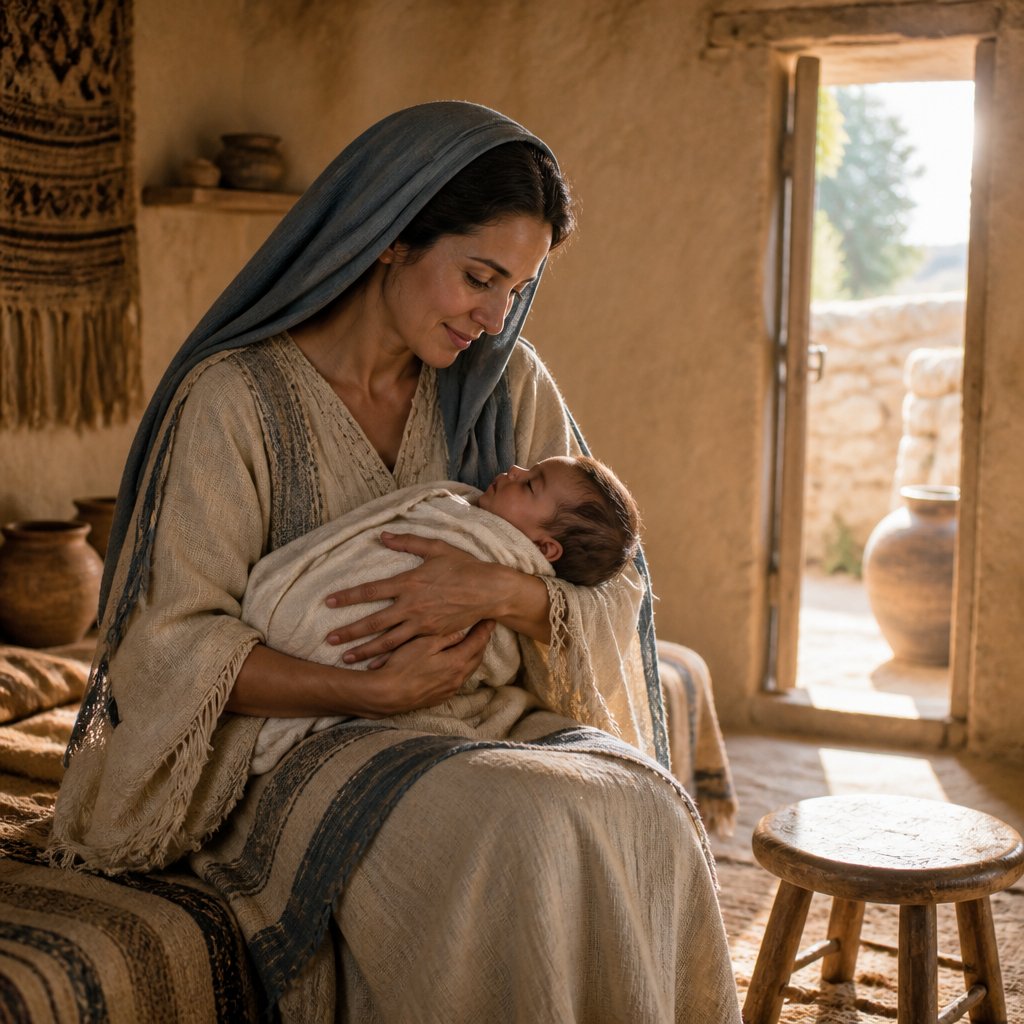
In the quietness of her heart, Hannah cried out to God. Her story is not just one of personal anguish but a profound testament of faith, perseverance, and divine response. The verse we reflect on today, 1 Samuel 1:20, reads: "Wherefore it came to pass, when the time was come about after Hannah had conceived, that she bare a son, and called his name Samuel, saying, Because I have asked him of the LORD (KJV)."
Hannah was a woman deeply troubled by her inability to conceive. In a culture that prized motherhood, her barrenness was not only a personal pain but also a societal burden. Yet, in her desperation, she turned to the only source of hope—her God. She made a vow at the temple, promising that if the Lord granted her a son, she would dedicate him back to the Lord’s service. Hannah's prayers were not mere recitations; they were heartfelt cries borne out of anguish and deep desire.
The first remarkable portion of this verse highlights "when the time was come about." One of the profound truths in Hannah's story is the timing of God.
In our lives, we often find ourselves in seasons where it seems like God is silent or our prayers are unanswered. However, God operates within His perfect time—an idea that is consistently woven throughout the scriptures. Just look at the life of Abraham and Sarah, or the Israelites waiting for their promised land; in each instance, divine timing played a crucial role in God's plan. We must remind ourselves that God sees the end from the beginning. He knows when the right conditions are set for our prayers to be answered. This can be a challenging patience to cultivate, but Hannah's example teaches us to remain steadfast.
The phrase "after Hannah had conceived" signifies the moment when “after” intensified the reality of her prayer. Her conception was a miracle born out of continued faith in a seemingly impossible situation. It is essential to note that prayer is not about forcing God's hands but aligning our hearts with His will. Hannah's deep longing transformed into a faith that penetrated the heavens, showcasing an unyielding belief that the God she servived was capable of miracles. We, too, must approach our prayers with this same conviction, placing our requests before God with the confidence that He hears us.
When Hannah bore a son—her heart's greatest desire—she named him Samuel, which means "asked of God." This acknowledgement of God’s active role in answering her prayers underlines a significant aspect of spiritual life: gratitude and recognition. Naming her son Samuel was a way for her to testify to what God had done in her life. In honoring God through her son’s name, she set the stage for future generations to understand that God not only hears prayers but answers them in His time and in His way.
As we dig deeper into Hannah's actions, we recognize that she was not only a recipient of God’s grace but also a steward of it. Once Samuel was old enough, she honored her vow and brought him back to Eli to serve the Lord. The legacy of faith she instilled in him led ultimately to one of Israel's greatest prophets. Right there lies another truth: what we receive from the Lord is not merely for our consumption but is also intended for His glory and the edification of others. We must consider our blessings and how we can use them to point others back to Christ in gratitude.
In conclusion, Hannah's journey from barrenness to blessing serves as an encouragement for us all. We grapple with our own struggles and longings, yet we must remain faithful in prayer, entrusting our desires to God. As we navigate this world filled with its challenges, may our faith resonate with Hannah's—a faith that believes in the power of asking God. Let us boldly approach His throne, knowing that in our deepest needs lies the blueprint for testimonies that glorify Him.
Get our apps


Artwork for 1 Samuel 1:20

1 Samuel 1:20 - "Wherefore it came to pass, when the time was come about after Hannah had conceived, that she bare a son, and called his name Samuel, saying, Because I have asked him of the LORD."
"Wherefore it came to pass, when the time was come about after Hannah had conceived, that she bare a son, and called his name Samuel, saying, Because I have asked him of the LORD." - 1 Samuel 1:20

1 Samuel 20:20 - "And I will shoot three arrows on the side thereof, as though I shot at a mark."

1 Samuel 28:15-20
1 Samuel 20:27-30

1 Samuel 20:27-29

1 Samuel 10:20 - "And when Samuel had caused all the tribes of Israel to come near, the tribe of Benjamin was taken."

1 Samuel 3:20 - "And all Israel from Dan even to Beer-sheba knew that Samuel was established to be a prophet of the LORD."

1 Samuel 18:20 - "And Michal Saul's daughter loved David: and they told Saul, and the thing pleased him."

1 Samuel 20:39 - "But the lad knew not any thing: only Jonathan and David knew the matter."

1 Samuel 20:28 - "And Jonathan answered Saul, David earnestly asked leave of me to go to Beth-lehem:"

1 Samuel 22:20 - "¶ And one of the sons of Ahimelech the son of Ahitub, named Abiathar, escaped, and fled after David."

1 Samuel 20:4 - "Then said Jonathan unto David, Whatsoever thy soul desireth, I will even do it for thee."

1 Samuel 19:20 - "And Saul sent messengers to take David: and when they saw the company of the prophets prophesying, and Samuel standing as appointed over them, the Spirit of God was upon the messengers of Saul, and they also prophesied."

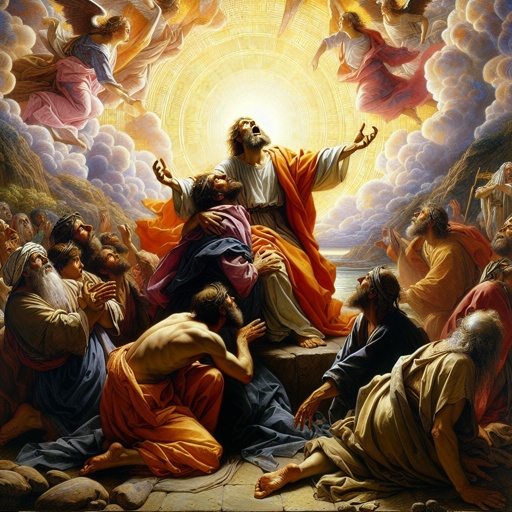
1 Samuel 28:20 - "Then Saul fell straightway all along on the earth, and was sore afraid, because of the words of Samuel: and there was no strength in him; for he had eaten no bread all the day, nor all the night."

1 Samuel 20:33 - "And Saul cast a javelin at him to smite him: whereby Jonathan knew that it was determined of his father to slay David."

1 Samuel 12:20 - "¶ And Samuel said unto the people, Fear not: ye have done all this wickedness: yet turn not aside from following the LORD, but serve the LORD with all your heart;"

1 Samuel 20:35 - "¶ And it came to pass in the morning, that Jonathan went out into the field at the time appointed with David, and a little lad with him."

2 Samuel 1:20 - "Tell it not in Gath, publish it not in the streets of Askelon; lest the daughters of the Philistines rejoice, lest the daughters of the uncircumcised triumph."

1 Samuel 20:18 - "Then Jonathan said to David, To morrow is the new moon: and thou shalt be missed, because thy seat will be empty."

1 Samuel 20:14 - "And thou shalt not only while yet I live shew me the kindness of the LORD, that I die not:"

1 Samuel 20:23 - "And as touching the matter which thou and I have spoken of, behold, the LORD be between thee and me for ever."

1 Samuel 20:10 - "Then said David to Jonathan, Who shall tell me? or what if thy father answer thee roughly?"

1 Samuel 16:20 - "And Jesse took an ass laden with bread, and a bottle of wine, and a kid, and sent them by David his son unto Saul."

1 Samuel 20:16 - "So Jonathan made a covenant with the house of David, saying, Let the LORD even require it at the hand of David's enemies."

1 Samuel 30:20 - "And David took all the flocks and the herds, which they drave before those other cattle, and said, This is David's spoil."

1 Samuel 20:40 - "And Jonathan gave his artillery unto his lad, and said unto him, Go, carry them to the city."

1 Samuel 20:32 - "And Jonathan answered Saul his father, and said unto him, Wherefore shall he be slain? what hath he done?"

1 Samuel 24:20 - "And now, behold, I know well that thou shalt surely be king, and that the kingdom of Israel shall be established in thine hand."

1 Samuel 20:24 - "¶ So David hid himself in the field: and when the new moon was come, the king sat him down to eat meat."