A Sacrifice for a Sacred Promise
“And they slew a bullock, and brought the child to Eli.” — 1 Samuel 1:25
The passage from 1 Samuel 1:25, which states, "And they slew a bullock, and brought the child to Eli," is a profound moment in the narrative of Hannah, Samuel’s mother, and it carries rich implications for our understanding of faith, sacrifice, and divine promise in our lives.
Hannah, a woman deeply troubled by her inability to have children, prayed fervently for a son, vowing that if her prayer was answered, she would dedicate him to the Lord's service. When God answered her prayer and she bore Samuel, her heart was filled with joy and gratitude. However, her joy was not just for the gift received but also for the commitment she had made to God. The act of bringing her son to Eli, along with the sacrifice of a bullock, was more than a ritual; it was an embodiment of her promise to God.
In our own lives, we often find ourselves in Hannah's shoes—desiring something deeply, praying fervently, and when God answers, we may feel compelled to make sacrifices in return. For many, this can come in the form of time, money, effort, or significant life changes. Hannah’s sacrifice of a bullock symbolizes the seriousness and weight of her commitment, indicating that while we may desire blessings, fulfilling our commitments to God carries an equally great significance. It leads us to reflect on how we respond to God’s goodness in our own lives.
When considering the sacrifice of the bullock, as noted in the KJV, we must appreciate the cultural and historical context. In the sacrificial system established in the Old Testament, offerings were made to God as a form of worship and atonement. This act of slaughtering the bullock was both an acknowledgment of God's provision and an act of worship, signaling Hannah's devotion and gratitude.
Today, we might not offer sacrifices of livestock, but what then does it mean for us to bring our own sacrifices to God? Romans 12:1 encourages us to present our bodies as living sacrifices, holy and acceptable to God. What does it mean for us to live in a way that honors the gifts given to us? Are we using our blessings to serve others and glorify God?
Hannah’s act wasn’t merely about the bullock; it was also about her son, Samuel, who was dedicated to serve in the temple under Eli. She willingly released the very thing she had longed for, embodying trust that the God who gave her Samuel would also take care of him. This points us toward an essential aspect of our faith journey: the understanding that everything we have is a gift from God and, ultimately, belongs to Him. The challenge is how we steward those gifts in a world that constantly calls us to cling tightly to our possessions and relationships.
As we meditate on this verse, we should also consider the implications of that moment of surrender. Just as Hannah handed over her son, how are we being called to relinquish control over areas of our lives? In what ways might God be prompting us to offer up not just our material possessions but also our ambitions, our plans, or our relationships? Trusting that God’s plans for us are good—even when it feels hard—is central to our Christian walk.
Though she would miss her son, Hannah’s ultimate desire was for God’s glory and purpose. As we ponder this, may we embrace her spirit of faith and sacrifice. Let us strive to let go of our anxieties, our desires, and our children, if need be, into the hands of the One who knows us fully and loves us deeply. In doing so, we reflect the heart of true worship—a heart that is willing to sacrifice anything to see God’s purpose fulfilled in our lives and the lives of those we love.
In conclusion, let us remember that sacrifice is often tied to the deepest expressions of love and faith. As we enter into a season of reflection, may we consider what God is calling us to sacrifice for His greater glory and purpose. May we surrender our needs, our dreams, and ourselves in faith, trusting in the goodness and faithfulness of the God who hears our prayers and fulfills His promises.
Get our apps


Artwork for 1 Samuel 1:25

1 Samuel 1:25 - "And they slew a bullock, and brought the child to Eli."

"And they slew a bullock, and brought the child to Eli." - 1 Samuel 1:25

1 Samuel 25:1 - "And Samuel died; and all the Israelites were gathered together, and lamented him, and buried him in his house at Ramah. And David arose, and went down to the wilderness of Paran."

1 Samuel 9:25 - "¶ And when they were come down from the high place into the city, Samuel communed with Saul upon the top of the house."

1 Samuel 14:25 - "And all they of the land came to a wood; and there was honey upon the ground."

1 Samuel 25:4 - "¶ And David heard in the wilderness that Nabal did shear his sheep."

1 Samuel 10:25 - "Then Samuel told the people the manner of the kingdom, and wrote it in a book, and laid it up before the LORD. And Samuel sent all the people away, every man to his house."

Nabal becomes like stone in 1 Samuel 25:37

Nabal becomes like stone in 1 Samuel 25:37

1 Samuel 25:43 - "David also took Ahinoam of Jezreel; and they were also both of them his wives."

1 Samuel 25:38 - "And it came to pass about ten days after, that the LORD smote Nabal, that he died."

1 Samuel 30:25 - "And it was so from that day forward, that he made it a statute and an ordinance for Israel unto this day."

1 Samuel 25:44 - "¶ But Saul had given Michal his daughter, David's wife, to Phalti the son of Laish, which was of Gallim."

1 Samuel 12:25 - "But if ye shall still do wickedly, ye shall be consumed, both ye and your king."

1 Samuel 28:25 - "And she brought it before Saul, and before his servants; and they did eat. Then they rose up, and went away that night."

1 Samuel 25:32 - "¶ And David said to Abigail, Blessed be the LORD God of Israel, which sent thee this day to meet me:"

2 Samuel 1:25 - "How are the mighty fallen in the midst of the battle! O Jonathan, thou wast slain in thine high places."

1 Samuel 25:16 - "They were a wall unto us both by night and day, all the while we were with them keeping the sheep."

1 Samuel 25:9 - "And when David's young men came, they spake to Nabal according to all those words in the name of David, and ceased."

1 Samuel 25:12 - "So David's young men turned their way, and went again, and came and told him all those sayings."

1 Samuel 15:25 - "Now therefore, I pray thee, pardon my sin, and turn again with me, that I may worship the LORD."

1 Samuel 25:23 - "And when Abigail saw David, she hasted, and lighted off the ass, and fell before David on her face, and bowed herself to the ground,"

"And all they of the land came to a wood; and there was honey upon the ground." - 1 Samuel 14:25

1 Samuel 25:6 - "And thus shall ye say to him that liveth in prosperity, Peace be both to thee, and peace be to thine house, and peace be unto all that thou hast."
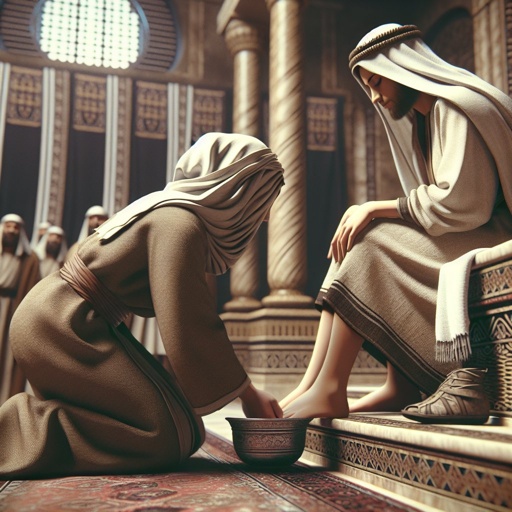
1 Samuel 25:41 - "And she arose, and bowed herself on her face to the earth, and said, Behold, let thine handmaid be a servant to wash the feet of the servants of my lord."
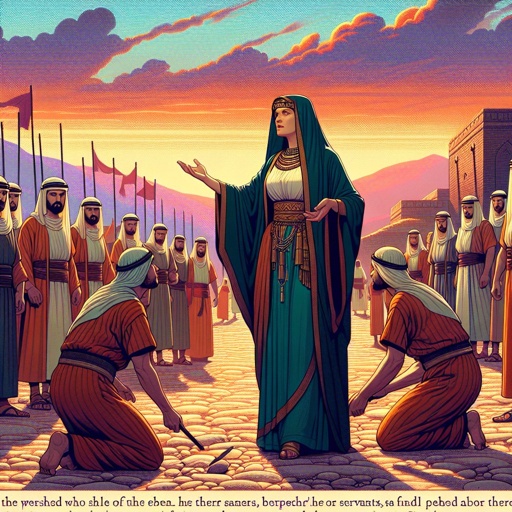
1 Samuel 25:19 - "And she said unto her servants, Go on before me; behold, I come after you. But she told not her husband Nabal."

1 Samuel 25:27 - "And now this blessing which thine handmaid hath brought unto my lord, let it even be given unto the young men that follow my lord."

1 Samuel 25:22 - "So and more also do God unto the enemies of David, if I leave of all that pertain to him by the morning light any that pisseth against the wall."
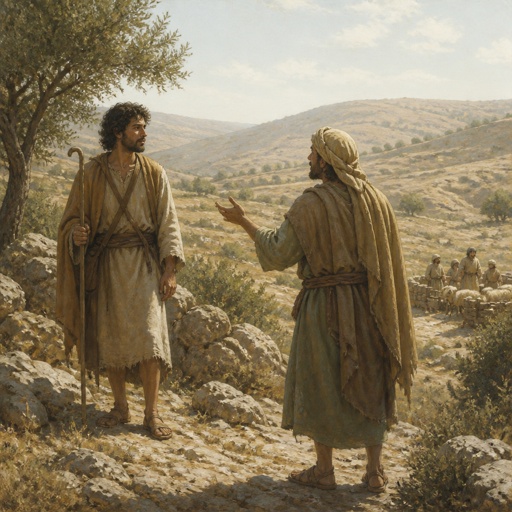
"¶ And David heard in the wilderness that Nabal did shear his sheep." - 1 Samuel 25:4

1 Samuel 25:14 - "¶ But one of the young men told Abigail, Nabal's wife, saying, Behold, David sent messengers out of the wilderness to salute our master; and he railed on them."