Surrendering to the Authority of God: Lessons from Jabesh
“Therefore the men of Jabesh said, To morrow we will come out unto you, and ye shall do with us all that seemeth good unto you.” — 1 Samuel 11:10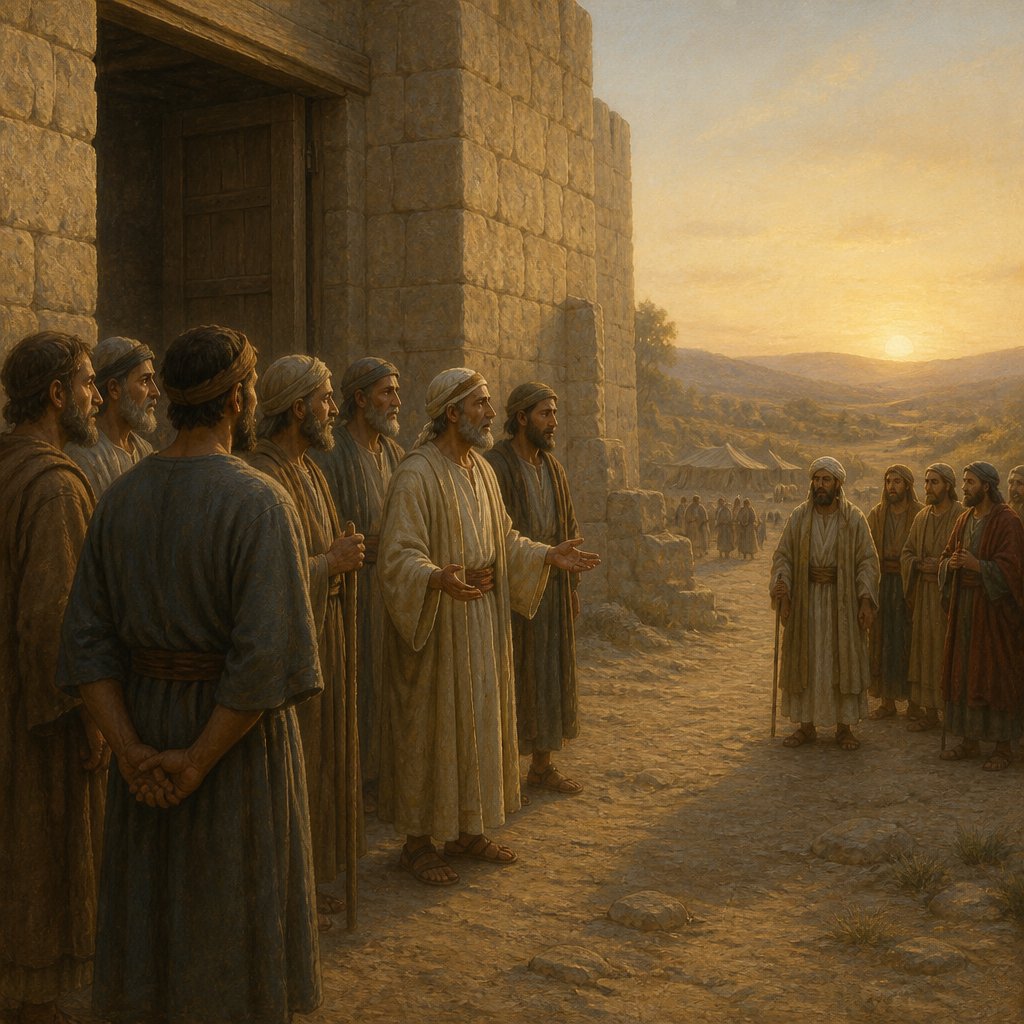
1 Samuel 11:10 states, "Therefore the men of Jabesh said, To morrow we will come out unto you, and ye shall do with us all that seemeth good unto you." These words are spoken by the leaders of Jabesh-Gilead in a moment of desperation, revealing profound truths about authority, surrender, and the heart of God's people in times of crisis.
In the narrative of 1 Samuel, the men of Jabesh are confronted by the Ammonite king Nahash, who threatens to gouge out their right eyes unless they surrender. Caught between a formidable foe and the unknown of what surrender might entail, the leaders of Jabesh choose a path that may, at first glance, seem to reflect fear or despair. They express a willingness to yield: “we will come out unto you, and ye shall do with us all that seemeth good unto you.” This statement opens the door for serious contemplation about the nature of authority and submission in the life of a believer.
The immediate context shows that Jabesh finds itself in a precarious predicament. They are on the verge of being destroyed and are powerless to defend themselves against the cruel demands of Nahash. In a similar sense, how often do we find ourselves feeling overwhelmed by the enemies in our lives – be they external challenges, internal doubts, or spiritual battles? In such moments, we might be tempted to surrender, but the surrender we choose can lead us in two different directions.
Firstly, there’s a surrender that leads to despair. The leaders of Jabesh are willing to submit to Nahash, effectively saying, "Go ahead, do with us what you will.” This reflects a resignation to powerlessness - a misguided belief that anything is better than fighting back. It is akin to giving in to fear, allowing circumstances to dictate our choices rather than seeking God’s guidance.
Secondly, however, there is a surrender that leads to faith. The men of Jabesh would have been well aware of their plight, but they also held a crucial choice – to place their trust in God for deliverance. In their plea for time until the next day indicates that they harbored a flicker of hope. This pivotal moment ignites the question for us: In our moments of weakness and vulnerability, do we surrender to our fears or to God?
True surrender in the biblical sense involves recognizing God’s sovereignty over every situation. It manifests through the activity of faith, wherein we acknowledge our limitations and simultaneously trust in God’s unlimited power. Just as the men of Jabesh reached out for a fleeting chance to be delivered, we, too, can cry out to God in our distress. It is crucial to understand that the story does not end with them emerging before Nahash; rather, God raises Saul as a deliverer who rallies the Israelites to rescue Jabesh, thwarting Nahash’s plot and bringing them salvation.
This illustrates that our cries for deliverance are not in vain. God sees our struggles, hears our pleas, and in His perfect timing, orchestrates a response that often surprises us. Therefore, when faced with seemingly insurmountable obstacles, we must remember that surrender can be a double-edged sword: choosing to submit to our fears can lead to despair, but surrendering to the grace and authority of God leads us toward hope, restoration, and victory.
The takeaway from this verse stretches beyond the immediate context to speak to our lives today – our acts of surrender must be rooted in faith and recognition of God's overarching goodness. When we say, "Lord, you take over; do with me as you will," we are not giving up; instead, we are positioning ourselves to experience His deliverance in a new and powerful way. Just as it happened for the men of Jabesh, your surrender might very well open the door to an unexpected miracle.
In this journey of faith, let us learn to surrender wisely, aligning our hearts with God’s will, where even in our weakest moments, His strength is perfected, leading us from despair to deliverance.
Get our apps


Artwork for 1 Samuel 11:10

1 Samuel 11:10 - "Therefore the men of Jabesh said, To morrow we will come out unto you, and ye shall do with us all that seemeth good unto you."
"Therefore the men of Jabesh said, To morrow we will come out unto you, and ye shall do with us all that seemeth good unto you." - 1 Samuel 11:10

1 Samuel 10:1 Samuel anoniting Saul

1 Samuel 15:10 - "¶ Then came the word of the LORD unto Samuel, saying,"

1 Samuel 10:11 - "And it came to pass, when all that knew him beforetime saw that, behold, he prophesied among the prophets, then the people said one to another, What is this that is come unto the son of Kish? Is Saul also among the prophets?"

1 Samuel 10:17 - "¶ And Samuel called the people together unto the LORD to Mizpeh;"

1 Samuel 3:10 - "And the LORD came, and stood, and called as at other times, Samuel, Samuel. Then Samuel answered, Speak; for thy servant heareth."

1 Samuel 3:1-10
1 Samuel 13:11

1 Samuel 11:14 - "Then said Samuel to the people, Come, and let us go to Gilgal, and renew the kingdom there."

1 Samuel 8:10 - "¶ And Samuel told all the words of the LORD unto the people that asked of him a king."

1 Samuel 16:10 - "Again, Jesse made seven of his sons to pass before Samuel. And Samuel said unto Jesse, The LORD hath not chosen these."

1 Samuel 22:11-13

1 Samuel 10:20 - "And when Samuel had caused all the tribes of Israel to come near, the tribe of Benjamin was taken."

1 Samuel 1:10 - "And she was in bitterness of soul, and prayed unto the LORD, and wept sore."

1 Samuel 21:10-15

1 Samuel 10:15 - "And Saul's uncle said, Tell me, I pray thee, what Samuel said unto you."

1 Samuel 10:1 - "Then Samuel took a vial of oil, and poured it upon his head, and kissed him, and said, Is it not because the LORD hath anointed thee to be captain over his inheritance?"

1 Samuel 28:11 - "Then said the woman, Whom shall I bring up unto thee? And he said, Bring me up Samuel."

1 Samuel 10:25 - "Then Samuel told the people the manner of the kingdom, and wrote it in a book, and laid it up before the LORD. And Samuel sent all the people away, every man to his house."

1 Samuel 3:11 - "¶ And the LORD said to Samuel, Behold, I will do a thing in Israel, at which both the ears of every one that heareth it shall tingle."

"¶ Then came the word of the LORD unto Samuel, saying," - 1 Samuel 15:10

Ezekiel 1:10-11

1 Samuel 12:11 - "And the LORD sent Jerubbaal, and Bedan, and Jephthah, and Samuel, and delivered you out of the hand of your enemies on every side, and ye dwelled safe."

1 Samuel 11:12 - "¶ And the people said unto Samuel, Who is he that said, Shall Saul reign over us? bring the men, that we may put them to death."

1 Samuel 31:11 - "¶ And when the inhabitants of Jabesh-gilead heard of that which the Philistines had done to Saul;"

2 Samuel 10:11 - "And he said, If the Syrians be too strong for me, then thou shalt help me: but if the children of Ammon be too strong for thee, then I will come and help thee."

1 Samuel 21:10 - "¶ And David arose, and fled that day for fear of Saul, and went to Achish the king of Gath."

"¶ And Samuel called the people together unto the LORD to Mizpeh;" - 1 Samuel 10:17

1 Samuel 10:16 - "And Saul said unto his uncle, He told us plainly that the asses were found. But of the matter of the kingdom, whereof Samuel spake, he told him not."