The Sweetness of Obedience: Lessons from Jonathan's Encounter with Honey
“But Jonathan heard not when his father charged the people with the oath: wherefore he put forth the end of the rod that was in his hand, and dipped it in an honeycomb, and put his hand to his mouth; and his eyes were enlightened.” — 1 Samuel 14:27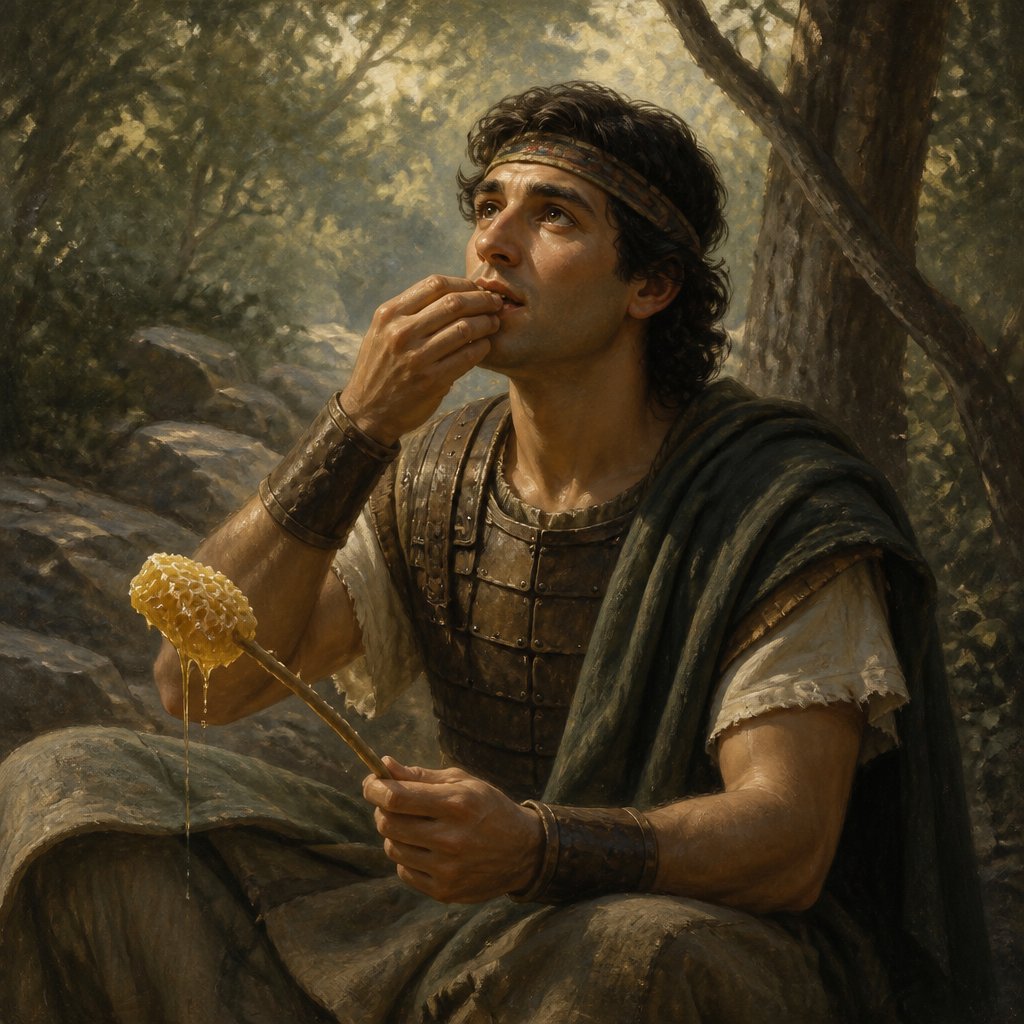
In 1 Samuel 14:27, we find a snapshot of a seemingly simple moment that reveals profound truths about obedience, the effects of our choices, and the transformative power of grace. The verse states: "But Jonathan heard not when his father charged the people with the oath: wherefore he put forth the end of the rod that was in his hand, and dipped it in an honeycomb, and put his hand to his mouth; and his eyes were enlightened."
To grasp the significance of Jonathan's actions, we must first understand the context. Saul, Jonathan's father, had placed an oath upon his troops that no one should eat until evening, in an attempt to ensure they remained strong and focused during battle. However, the oath was made in the heat of the moment, born from Saul’s anxiety and desire for control. Jonathan, unbeknownst to the oath his father had declared, encountered a honeycomb during the pursuit and instinctively tasted the honey. This act, though seemingly trivial, stirred a cascade of thought about the nature of authority, obedience, and the interplay between vision and clarity.
Jonathan’s decision to taste the honey is enlightening in several ways. First, it highlights the subjective nature of obedience. Jonathan, who was out fighting for Israel, did not hear the command of his father; his actions were not rooted in rebellion, but in ignorance. This raises a question for us today: how often do we act without complete understanding of the constraints or rules put upon us? In our lives, such as at work, in community, or even in spiritual matters, we may find ourselves blindly adhering to rules or commands without grasping their full intent – much like Jonathan. Thus, we must seek discernment and understanding before making choices and following commands.
Secondly, Jonathan’s experience reflects a deeper truth about spiritual hunger. When he dipped his rod into the honeycomb and tasted its sweetness, he experienced immediate enlightenment, both physically and spiritually. The honey in Scripture often symbolizes divine provision, sweetness, and the pleasures found in God’s blessings. Consider what Jonathan felt as the honey touched his lips: the sweetness stirred his spirit and imparted clarity to his mind. His ‘eyes were enlightened,’ which serves as a metaphor for revelation and insight. How often do we find that when we engage with God’s Word or partake of His blessings, our spirits are uplifted, and our understanding deepens? Just as honey refreshes, so does the sustenance found in God’s presence.
Additionally, this scenario brings attention to leadership and its repercussions. Saul’s oath could be seen as a moment of paternal care for his men, but it also illustrates how ill-conceived leadership can lead to unintended consequences. The heavy burden of the oath left the men famished and weary, constraining them from acting in ways that could lead to victory. In stark contrast, Jonathan, upon tasting the honey, broke through the bond of Saul’s oath and was invigorated to continue the fight. This situation conveys a powerful lesson: sometimes, constraints imposed by leaders can hinder the progress and strength of a community. It implores those in leadership to consider the long-term effects of their decisions and to ensure that their commands foster growth rather than stifle it.
Finally, through this moment, we gather the eternal truth about grace. Jonathan was a man of integrity and a warrior chosen by God. Despite the oath of his father, he was not condemned for his actions; instead, he was revitalized by the honey. In our walk with Christ, we often find ourselves in dilemma where we unknowingly step away from the directives of God or church, yet God’s grace allows room for our ignorance. In times of confusion, turning to God can restore our sight and clarity, just as the honey illuminated Jonathan’s understanding.
In conclusion, Jonathan’s encounter with the honeycomb invites us to explore themes of obedience, the joys of discovering God’s provisions, and the nature of leadership and grace. As we reflect on this passage, let us seek not only to obey, but to understand fully; to savor the sweetness of God’s blessings, and to lead with wisdom in our personal and communal pursuits, remembering that true enlightenment comes from the Lord.
Get our apps


Artwork for 1 Samuel 14:27

1 Samuel 14:27

1 Samuel 14:27 - "But Jonathan heard not when his father charged the people with the oath: wherefore he put forth the end of the rod that was in his hand, and dipped it in an honeycomb, and put his hand to his mouth; and his eyes were enlightened."
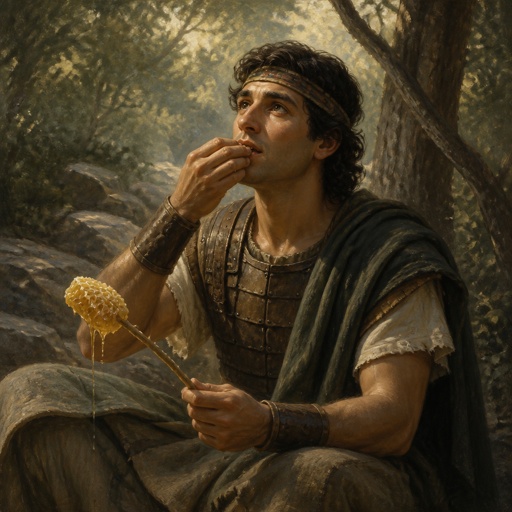
"But Jonathan heard not when his father charged the people with the oath: wherefore he put forth the end of the rod that was in his hand, and dipped it in an honeycomb, and put his hand to his mouth; and his eyes were enlightened." - 1 Samuel 14:27

1 Samuel 20:27-29
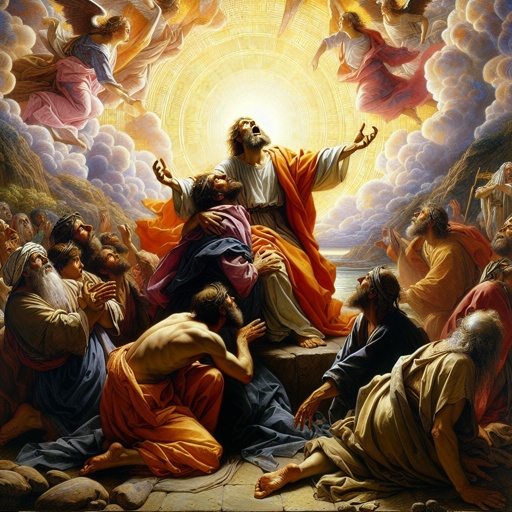
1 Samuel 20:27-30

2 Samuel 1. 17-27

2 Samuel 14:27 - "And unto Absalom there were born three sons, and one daughter, whose name was Tamar: she was a woman of a fair countenance."

Psalm 27:13-14

1 Samuel 15:27 - "And as Samuel turned about to go away, he laid hold upon the skirt of his mantle, and it rent."

1 Samuel 14:6

2 Samuel 1:27 - "How are the mighty fallen, and the weapons of war perished!"

1 Samuel 14:7

1 Samuel 27:4 - "And it was told Saul that David was fled to Gath: and he sought no more again for him."
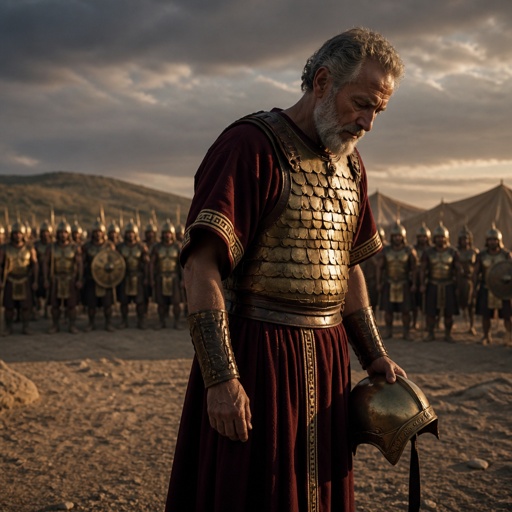
1 Samuel 13:14

2 Samuel 6:14

1 Samuel 1:27 - "For this child I prayed; and the LORD hath given me my petition which I asked of him:"

1 Samuel 11:14 - "Then said Samuel to the people, Come, and let us go to Gilgal, and renew the kingdom there."

1 Samuel 27:7 - "And the time that David dwelt in the country of the Philistines was a full year and four months."
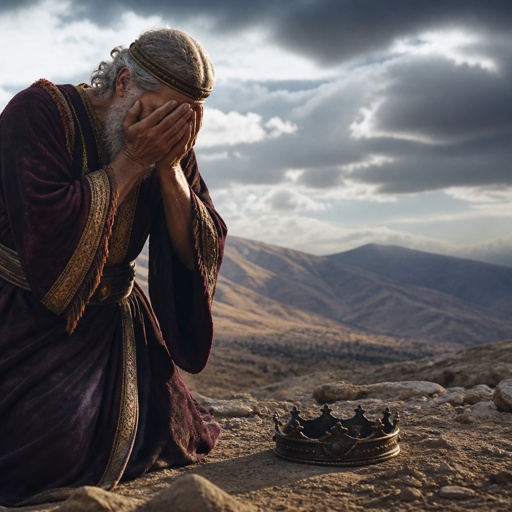
1 Samuel 13:13-14

1 Samuel 17:14 - "And David was the youngest: and the three eldest followed Saul."

1 Samuel 4:14-16

1 Samuel 23:27 - "¶ But there came a messenger unto Saul, saying, Haste thee, and come; for the Philistines have invaded the land."

1 Samuel 15:14 - "And Samuel said, What meaneth then this bleating of the sheep in mine ears, and the lowing of the oxen which I hear?"

1 Samuel 17:27 - "And the people answered him after this manner, saying, So shall it be done to the man that killeth him."

1 Samuel 14:51 - "And Kish was the father of Saul; and Ner the father of Abner was the son of Abiel."

1 Samuel 27:6 - "Then Achish gave him Ziklag that day: wherefore Ziklag pertaineth unto the kings of Judah unto this day."

1 Samuel 14:25 - "And all they of the land came to a wood; and there was honey upon the ground."

1 Samuel 9:27 - "And as they were going down to the end of the city, Samuel said to Saul, Bid the servant pass on before us, (and he passed on,) but stand thou still a while, that I may shew thee the word of God."

1 Samuel 30:27 - "To them which were in Beth-el, and to them which were in south Ramoth, and to them which were in Jattir,"

1 Samuel 9:14 - "And they went up into the city: and when they were come into the city, behold, Samuel came out against them, for to go up to the high place."