The Head of the Giant: Triumph and Testimony
“And David took the head of the Philistine, and brought it to Jerusalem; but he put his armour in his tent.” — 1 Samuel 17:54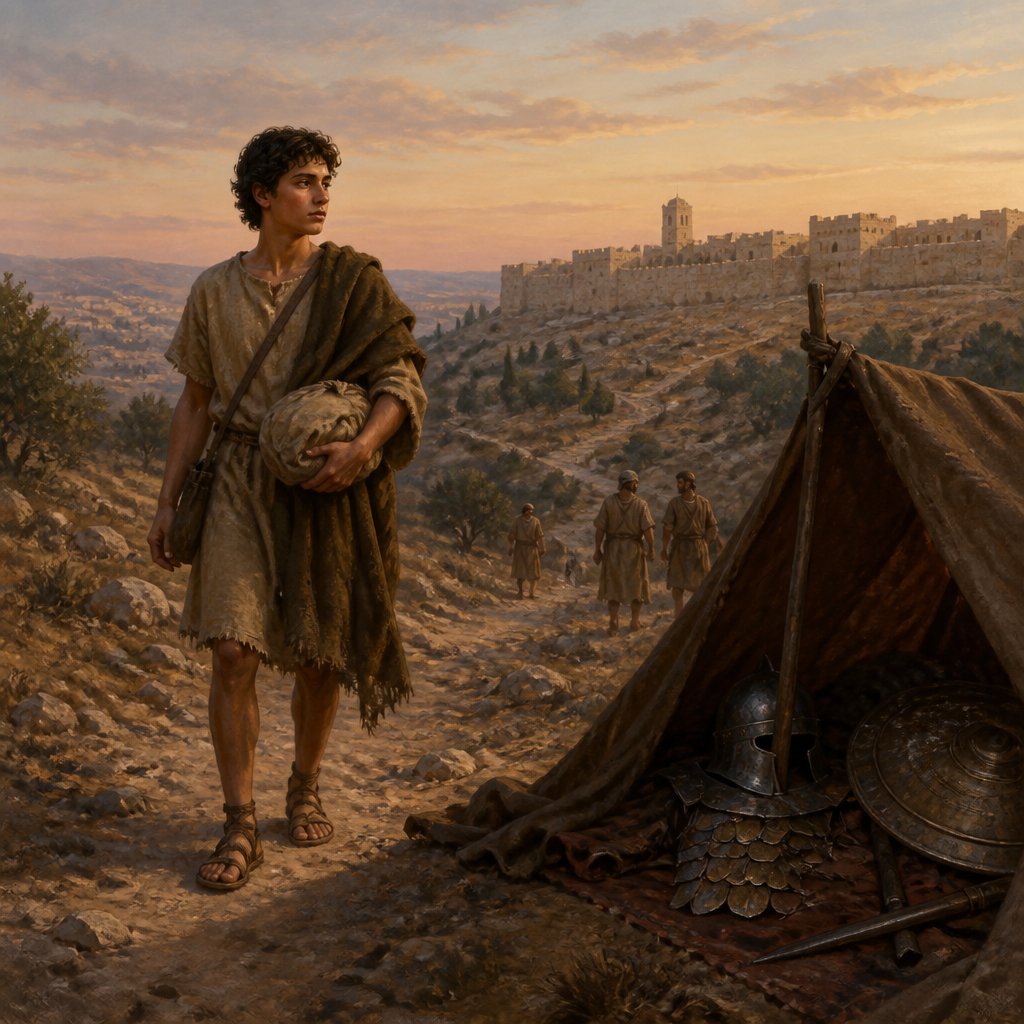
In the unfolding drama of 1 Samuel 17, we witness one of the most astounding tales of faith and courage found in the Scriptures. The verse, "And David took the head of the Philistine, and brought it to Jerusalem; but he put his armour in his tent" (1 Samuel 17:54, KJV), encapsulates not just a moment of victory, but a profound theological truth about preparation, testimony, and the glory of God.
To fully grasp the significance of this moment, we must revisit the context of the battle between David and Goliath. David, a shepherd boy, armed only with a sling and a handful of smooth stones, faced a seasoned warrior, a behemoth of a man towering above him. The odds were stacked against him, and yet his faith in God was unwavering. When Goliath taunted the armies of Israel, David’s response was steeped in righteous anger and firm belief in God’s power. "Thou comest to me with a sword, and with a spear, and with a shield: but I come to thee in the name of the Lord of hosts" (1 Samuel 17:45, KJV). This proclamation highlights the essence of David’s faith; he understood that true strength does not lie in physical prowess but in divine backing.
As David defeated Goliath, a pivotal moment transformed not only his path but also that of the entire nation of Israel. In verse 54, the act of bringing the head of Goliath to Jerusalem was more than a display of victory; it was a testament to God’s faithfulness and a foreshadowing of David’s future role as king. By bringing back the trophy of his victory, David was proclaiming to the people that their fears could be conquered through faith in God. It served as a powerful reminder that no giant, regardless of its size, is insurmountable when faced with the assurance of God's presence.
However, what is equally interesting is David's choice to put Goliath's armor in his tent. This is a profound metaphor for the battles we face in life. David did not intend to wear or boast about Goliath’s armor; instead, he put it away, signifying that the weapons of the enemy will not define him. This speaks volumes about our experiences with trials and tribulations. While we may carry the marks of past battles, it is vital to remember where our true strength lies. The armor of the enemy, be it fear, doubt, or despair, has no place in the life of one who walks with God.
As believers, we often face our giants—personal struggles, health challenges, family issues, financial instability, and spiritual doubts. In such moments, we can take a cue from David. When we confront these challenges, it is essential that we bring them to the Lord in prayer. He is our source of strength and guidance. David's conquest teaches us to approach our battles not with our own understanding but with a heart steeped in faith.
Moreover, David's actions beckon us to consider how we declare our victories. Just as David took Goliath's head to Jerusalem, we are called to share our testimonies of God’s faithfulness with others—notice that bringing the head to Jerusalem was public! For our testimonies glorify God and encourage others to seek His strength amid their struggles. It inspires faith and emboldens others to confront their own giants with courage.
In conclusion, 1 Samuel 17:54 serves as an enduring reminder of triumph that arises from faith. When confronting life’s giants, let us take up our armor of God, relying not on our strength but on the Lord’s provision. And as we achieve victories through Christ, may we not shy away from sharing our testimonies, exalting His name and drawing others closer to His infinite power. May we always declare, as David did, that our battles are won in the name of the Lord of Hosts.
Get our apps


Artwork for 1 Samuel 17:54

1 Samuel 17:54 - "And David took the head of the Philistine, and brought it to Jerusalem; but he put his armour in his tent."
"And David took the head of the Philistine, and brought it to Jerusalem; but he put his armour in his tent." - 1 Samuel 17:54

Isaiah 54:17

Isaiah 54:17

1 Samuel 10:17 - "¶ And Samuel called the people together unto the LORD to Mizpeh;"

1 Samuel 17:33

1 Samuel 1:15-17

1 Samuel 17:34-35

1 Samuel 17:49

1 Samuel 17:45

1 Samuel 17:49

1 Samuel 17:45
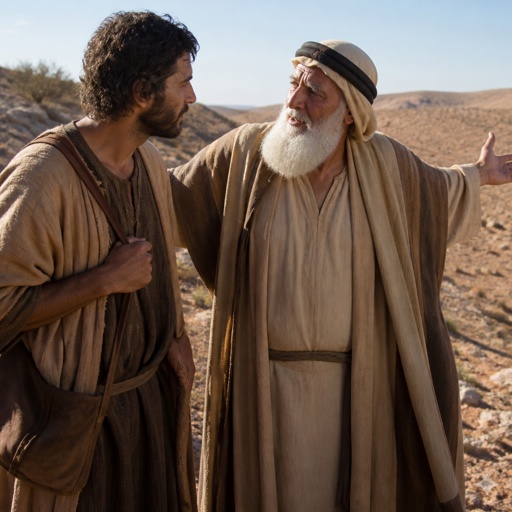
1 Samuel 9:17
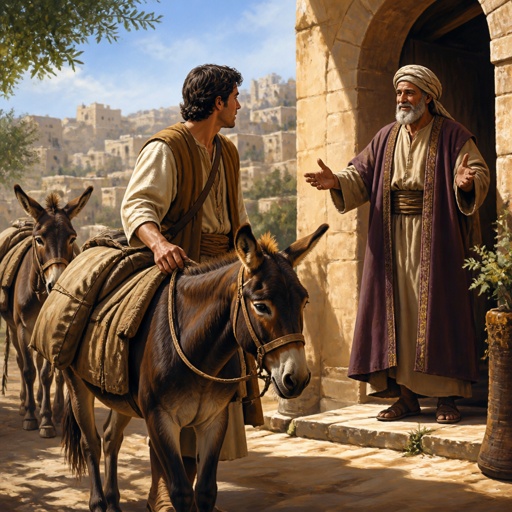
1 Samuel 9:17

1 samuel 17:3

1 Samuel 17:49

1 Samuel 17:45
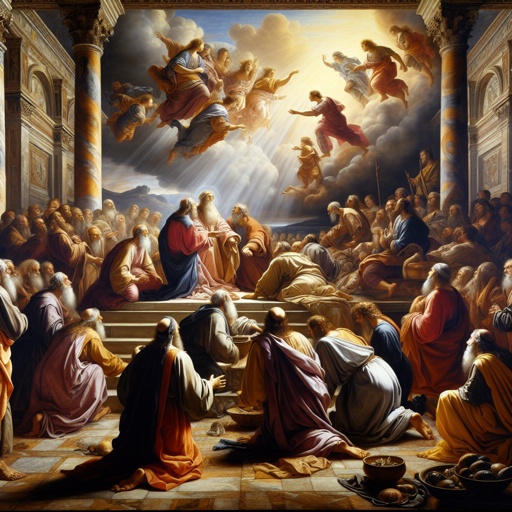
1 Samuel 17:49
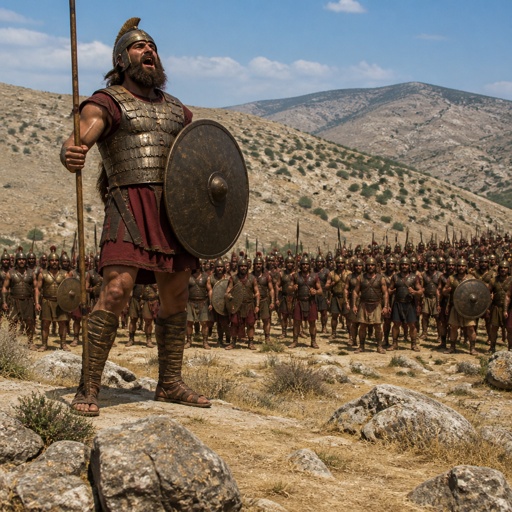
1 Samuel 17:4-8

2 Samuel 1. 17-27

Luke 1:54-55
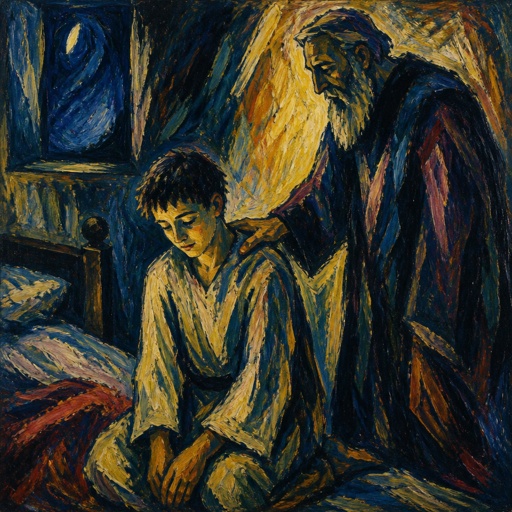
1 Samuel 3:17-18

1 Samuel 17:38-40

1 Samuel 17:14 - "And David was the youngest: and the three eldest followed Saul."

1 Samuel 17:45-49

1 Chronicles 1:54 - "Duke Magdiel, duke Iram. These are the dukes of Edom."

1 Samuel 17:56 - "And the king said, Enquire thou whose son the stripling is."

1 Samuel 9:17 - "And when Samuel saw Saul, the LORD said unto him, Behold the man whom I spake to thee of! this same shall reign over my people."

Luke 1:54 - "He hath holpen his servant Israel, in remembrance of his mercy;"

2 Samuel 1:17 - "¶ And David lamented with this lamentation over Saul and over Jonathan his son:"