The Weight of Worship: Understanding Our Offerings and Their Use
“And he struck it into the pan, or kettle, or caldron, or pot; all that the fleshhook brought up the priest took for himself. So they did in Shiloh unto all the Israelites that came thither.” — 1 Samuel 2:14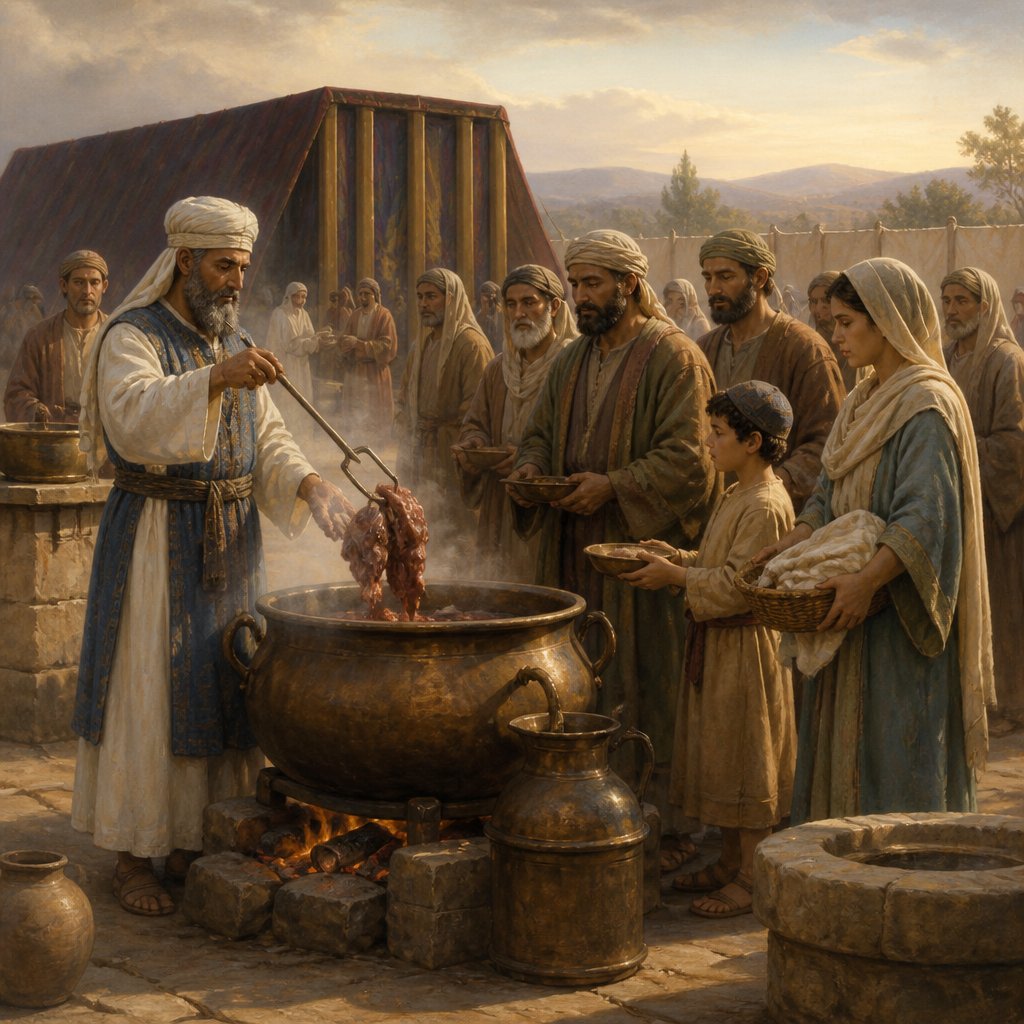
In the sacred space of Shiloh, where the Ark of the Covenant dwelled, a unique practice emerged among the priests during the time of the early Israelites. The verse from 1 Samuel 2:14 (KJV), "And he struck it into the pan, or kettle, or caldron, or pot; all that the fleshhook brought up the priest took for himself. So they did in Shiloh unto all the Israelites that came thither," draws us into the heart of liturgical worship and the often-overlooked implications of our offerings.
This verse illustrates a practice that exemplified how the priests of Israel were to receive their provision from the sacrifices brought forth by the people. Each offering—a bull, a lamb, or grain—came with specific rituals and a divine expectation that these would not only serve as atonement but also sustain the spiritual leaders of Israel, the priests. However, the focus should not merely rest on what was given, but rather on why these offerings were significant in the covenant community with God.
The act of worship through offerings was originally intended to reflect the people's devotion and reverence for God. Each item placed upon the altar was a representation of the worshiper's heart—a sacrifice of thanksgiving, repentance, or dedication. It was an acknowledgment of God’s providence and grace in their lives. Yet, here in Shiloh, we see an interesting dynamic; the priests were taking for themselves a significant portion of the offerings, which leads us to ponder the sanctity and intentions behind both the offerings and their reception.
In this practice, we witness a potential distortion of the sacred transaction between God and His people. The priests, who were to mediate between God and the Israelites, appeared to misuse their position for personal gain. This brings us to a crucial question of integrity in leadership: Are we mindful of how our actions impact the worship of others? Do we allow self-interest to overshadow the true purpose of our roles in God’s service?
The response to the fleshhook method of taking was much more than a rite; it epitomized a lack of reverence for God’s requirements, and ultimately distorted the relationship between the priests and the worshipers. In this modern era, we must guard our hearts against similar tendencies. As we bring our offerings—our time, talents, and finances—are we offering them out of genuine love for God and His work, or are they merely a means of fulfilling obligation?
Moreover, this verse nudges us to reflect upon how we perceive the concept of sacrifice in our daily lives. Our offerings should be more than mere transactions; they should resonate with the echoes of love and gratitude. God is more interested in the position of our hearts than the weight of our sacrifices. In Romans 12:1, we are reminded, "I beseech you therefore, brethren, by the mercies of God, that ye present your bodies a living sacrifice, holy, acceptable unto God, which is your reasonable service." This call transcends just material offerings; it beckons for the surrender of our whole selves, reflecting our true devotion.
We're also reminded that the behaviors of the priests should lead us not to condemnation but to repentance. As we examine our own practices—both in worship and in service—let us ask: Are we reflecting God’s holiness in our endeavors? How do our practices align with His call for authentic, sacrificial worship?
In exploring this verse, let us take a moment to recalibrate our understanding of what it means to offer ourselves truly and wholly to God. May we bring our best before Him, not just in material performance but with a heart that is aligned with His purpose and glory. Let our worship become a beautiful melody of integrity, gratitude, and authentic love, transforming not just our lives but the community around us for generations to come.
Get our apps


Artwork for 1 Samuel 2:14

1 Samuel 2:14 - "And he struck it into the pan, or kettle, or caldron, or pot; all that the fleshhook brought up the priest took for himself. So they did in Shiloh unto all the Israelites that came thither."
"And he struck it into the pan, or kettle, or caldron, or pot; all that the fleshhook brought up the priest took for himself. So they did in Shiloh unto all the Israelites that came thither." - 1 Samuel 2:14

2 Samuel 6:14

2 Samuel 14:1 - "Now Joab the son of Zeruiah perceived that the king's heart was toward Absalom."

2 Samuel 1:14 - "And David said unto him, How wast thou not afraid to stretch forth thine hand to destroy the LORD'S anointed?"

1 Samuel 14:2 - "And Saul tarried in the uttermost part of Gibeah under a pomegranate tree which is in Migron: and the people that were with him were about six hundred men;"

1 Samuel 14:6

1 Samuel 2:12

1 Samuel 14:27
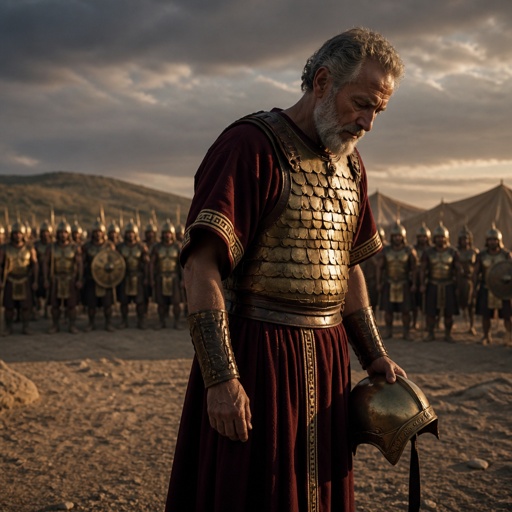
1 Samuel 13:14

1 Samuel 14:7

1 Samuel 11:14 - "Then said Samuel to the people, Come, and let us go to Gilgal, and renew the kingdom there."

2 Samuel 6:14–22

2 Samuel 2:14 - "And Abner said to Joab, Let the young men now arise, and play before us. And Joab said, Let them arise."

2 Samuel 23:14 - "And David was then in an hold, and the garrison of the Philistines was then in Beth-lehem."
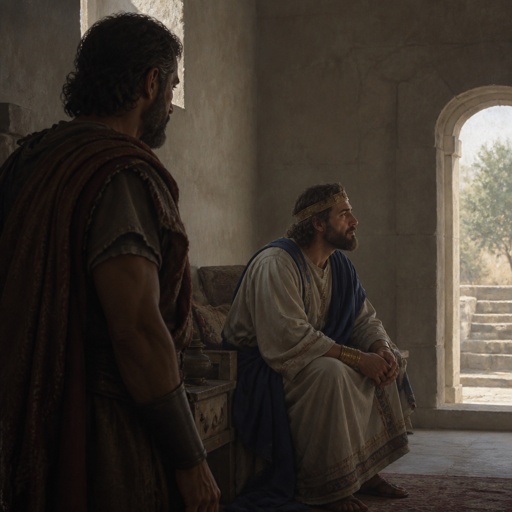
"Now Joab the son of Zeruiah perceived that the king's heart was toward Absalom." - 2 Samuel 14:1
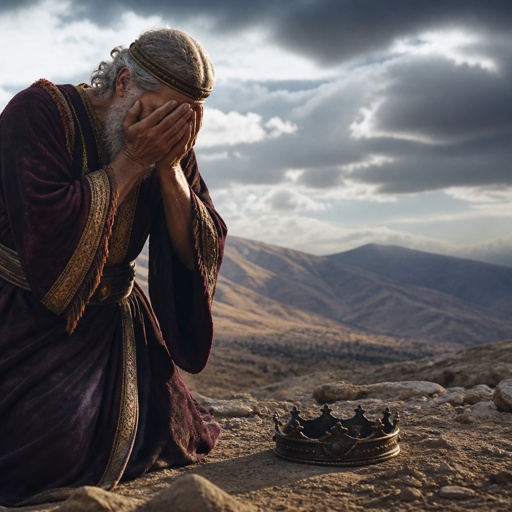
1 Samuel 13:13-14

1 Samuel 17:14 - "And David was the youngest: and the three eldest followed Saul."
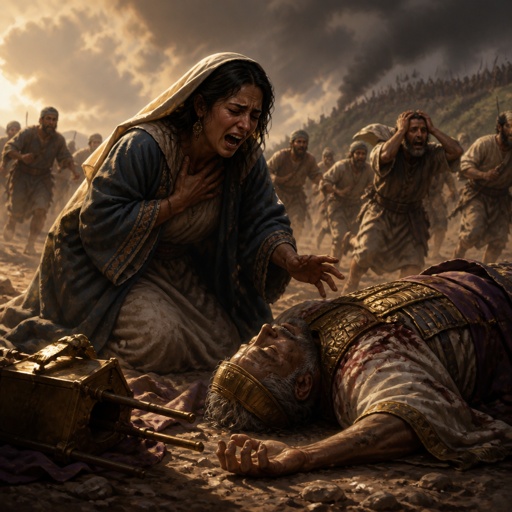
1 Samuel 4:14-16

1 Samuel 15:14 - "And Samuel said, What meaneth then this bleating of the sheep in mine ears, and the lowing of the oxen which I hear?"

2 Samuel 14:23 - "So Joab arose and went to Geshur, and brought Absalom to Jerusalem."

1 Samuel 14:51 - "And Kish was the father of Saul; and Ner the father of Abner was the son of Abiel."

1 Samuel 14:25 - "And all they of the land came to a wood; and there was honey upon the ground."

2 Samuel 22:14 - "The LORD thundered from heaven, and the most High uttered his voice."

2 Samuel 16:14 - "And the king, and all the people that were with him, came weary, and refreshed themselves there."

1 Samuel 9:14 - "And they went up into the city: and when they were come into the city, behold, Samuel came out against them, for to go up to the high place."

2 Samuel 14:28 - "¶ So Absalom dwelt two full years in Jerusalem, and saw not the king's face."

2 Samuel 11:14 - "¶ And it came to pass in the morning, that David wrote a letter to Joab, and sent it by the hand of Uriah."

1 Samuel 19:14 - "And when Saul sent messengers to take David, she said, He is sick."

1 Samuel 14:46 - "Then Saul went up from following the Philistines: and the Philistines went to their own place."