Finding Refuge in the Right Places
“And David said in his heart, I shall now perish one day by the hand of Saul: there is nothing better for me than that I should speedily escape into the land of the Philistines; and Saul shall despair of me, to seek me any more in any coast of Israel: so shall I escape out of his hand.” — 1 Samuel 27:1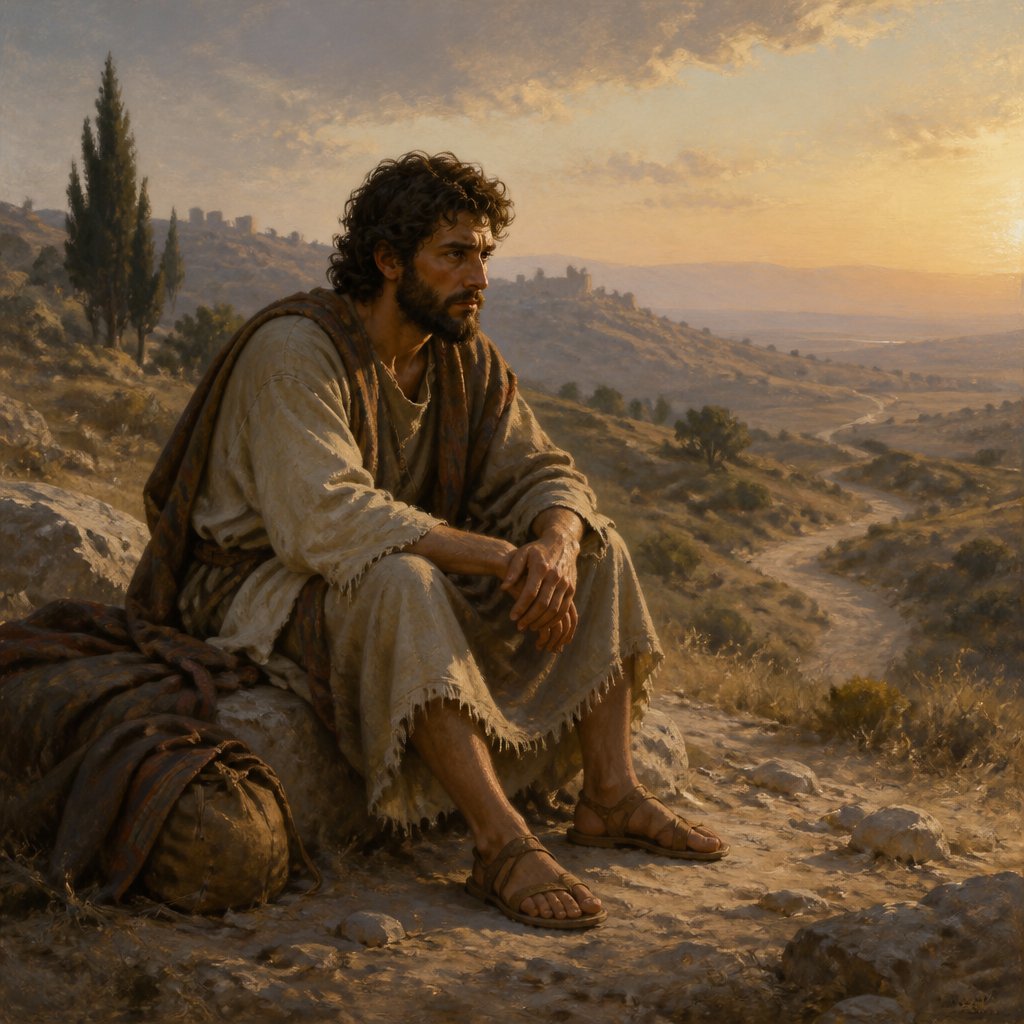
In the tumultuous narrative of David's life, 1 Samuel 27:1 stands as a poignant moment of introspection and decision-making. The verse reads: "And David said in his heart, I shall now perish one day by the hand of Saul: there is nothing better for me than that I should speedily escape into the land of the Philistines; and Saul shall despair of me, to seek me any more in any coast of Israel: so shall I escape out of his hand."
This reflects a critical juncture for David, a man after God’s own heart, who for years had been pursued by King Saul, the reigning monarch of Israel. Despite being anointed as the next king, David found himself entrenched in a battle for survival, plagued by the fear of Saul’s relentless pursuit. In this moment of despair, David turns inward—"I shall now perish one day by the hand of Saul." Here, we witness a vulnerable man wrestling with his fate. His heart speaks a grim truth: the weight of Saul’s hatred was pressing heavily upon him.
When we encounter situations filled with fear, anxiety, and uncertainty, our inclination is often to seek immediate relief—a sanctuary where our hearts can rest, much like David sought refuge among the Philistines. David’s decision to seek safety in the land of his enemies raises questions about trust and the human propensity to take matters into our own hands when we feel abandoned or trapped. The Philistines, historically enemies of Israel, symbolize a seemingly safe refuge away from Saul’s reach. Yet this choice also foreshadows the complexities that arise when we place our trust in the wrong alliances.
We can relate to David’s predicament—times when we feel that the only way forward is to flee into areas that we might consider safe but are fraught with peril. In our search for reprieve, we may too often abandon our spiritual principles and succumb to the temptation of aligning with those who do not share our faith or values. David’s initial escape into Philistine territory offers a mirror reflecting our own instinctual reactions to pressure: to abandon God’s promise for a perceived solution.
As we explore this deeper, we realize that David’s resolve is born from a place of hopelessness—a point many of us reach when life’s challenges overwhelm us. He reasons that if he escapes into the land of the Philistines, then Saul would "despair of me, to seek me any more in any coast of Israel." This thinking—a defensive mindset—reflects how easy it is to become self-reliant instead of continuing to trust in God’s provision and timing.
In moments of crisis, it’s crucial to remember the promises of God instead of succumbing to our fears. David had been the recipient of God’s favor and had experienced many miraculous deliverances. Yet in his heart, fear drove him to a desperate solution. How often do we too focus on our immediate dread rather than holding on to the long-term promises that God has laid out for our lives?
David’s flight to Philistia was not a culmination of God’s plan, but rather a deviation from it. Throughout the Bible, we see that true safety and refuge are found in God alone. Psalm 91:2 reminds us, "I will say of the Lord, He is my refuge and my fortress: my God; in him will I trust."
As we meditate on David’s moment of indecision, let us allow it to remind us of the eternal truth: when we feel driven to take matters into our own hands out of fear and despair, we must pause, pray, and remember the faithfulness of God. Instead of seeking refuge in places that may ultimately pull us away from God’s purpose, let us run toward the arms of our Savior and seek shelter in His promises. Only then can we truly say, "He is my refuge and my fortress."
In our struggles, let us strive to lean not on our understanding but to acknowledge Him, trusting that He will direct our paths, even when the night seems the darkest.
Get our apps


Artwork for 1 Samuel 27:1

1 Samuel 27:1 - "And David said in his heart, I shall now perish one day by the hand of Saul: there is nothing better for me than that I should speedily escape into the land of the Philistines; and Saul shall despair of me, to seek me any more in any coast of Israel: so shall I escape out of his hand."
"And David said in his heart, I shall now perish one day by the hand of Saul: there is nothing better for me than that I should speedily escape into the land of the Philistines; and Saul shall despair of me, to seek me any more in any coast of Israel: so shall I escape out of his hand." - 1 Samuel 27:1

1 Samuel 14:27

1 Samuel 20:27-29

1 Samuel 20:27-30

2 Samuel 1. 17-27

1 Samuel 1:27 - "For this child I prayed; and the LORD hath given me my petition which I asked of him:"

2 Samuel 1:27 - "How are the mighty fallen, and the weapons of war perished!"

1 Samuel 15:27 - "And as Samuel turned about to go away, he laid hold upon the skirt of his mantle, and it rent."

1 Samuel 27:4 - "And it was told Saul that David was fled to Gath: and he sought no more again for him."

1 Samuel 27:7 - "And the time that David dwelt in the country of the Philistines was a full year and four months."

1 Samuel 23:27 - "¶ But there came a messenger unto Saul, saying, Haste thee, and come; for the Philistines have invaded the land."

1 Samuel 17:27 - "And the people answered him after this manner, saying, So shall it be done to the man that killeth him."

1 Samuel 27:6 - "Then Achish gave him Ziklag that day: wherefore Ziklag pertaineth unto the kings of Judah unto this day."

1 Samuel 30:27 - "To them which were in Beth-el, and to them which were in south Ramoth, and to them which were in Jattir,"

1 Samuel 9:27 - "And as they were going down to the end of the city, Samuel said to Saul, Bid the servant pass on before us, (and he passed on,) but stand thou still a while, that I may shew thee the word of God."

"How are the mighty fallen, and the weapons of war perished!" - 2 Samuel 1:27

1 Samuel 27:2 - "And David arose, and he passed over with the six hundred men that were with him unto Achish, the son of Maoch, king of Gath."

1 Samuel 10:27 - "But the children of Belial said, How shall this man save us? And they despised him, and brought him no presents. But he held his peace."

1 Samuel 27:9 - "And David smote the land, and left neither man nor woman alive, and took away the sheep, and the oxen, and the asses, and the camels, and the apparel, and returned, and came to Achish."

1 Samuel 27:10 - "And Achish said, Whither have ye made a road to day? And David said, Against the south of Judah, and against the south of the Jerahmeelites, and against the south of the Kenites."

1 Samuel 27:12 - "And Achish believed David, saying, He hath made his people Israel utterly to abhor him; therefore he shall be my servant for ever."

1 Samuel 25:27 - "And now this blessing which thine handmaid hath brought unto my lord, let it even be given unto the young men that follow my lord."

"And as Samuel turned about to go away, he laid hold upon the skirt of his mantle, and it rent." - 1 Samuel 15:27
"For this child I prayed; and the LORD hath given me my petition which I asked of him:" - 1 Samuel 1:27
"And the time that David dwelt in the country of the Philistines was a full year and four months." - 1 Samuel 27:7

1 Samuel 27:3 - "And David dwelt with Achish at Gath, he and his men, every man with his household, even David with his two wives, Ahinoam the Jezreelitess, and Abigail the Carmelitess, Nabal's wife."

1 Samuel 27:8 - "¶ And David and his men went up, and invaded the Geshurites, and the Gezrites, and the Amalekites: for those nations were of old the inhabitants of the land, as thou goest to Shur, even unto the land of Egypt."
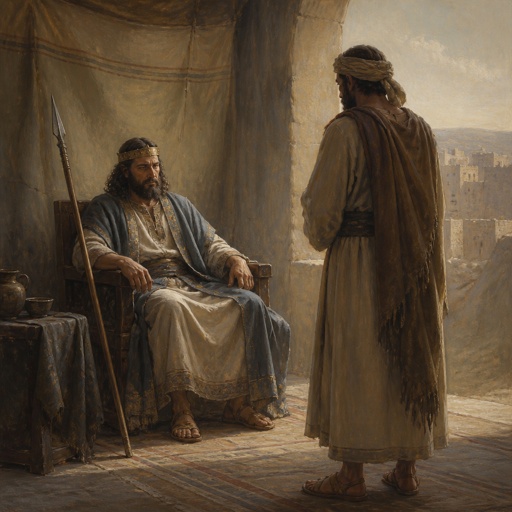
"And it was told Saul that David was fled to Gath: and he sought no more again for him." - 1 Samuel 27:4

1 Samuel 10:1 Samuel anoniting Saul