Faithful Provision in Times of Battle
“And to them which were in Hormah, and to them which were in Chor-ashan, and to them which were in Athach,” — 1 Samuel 30:30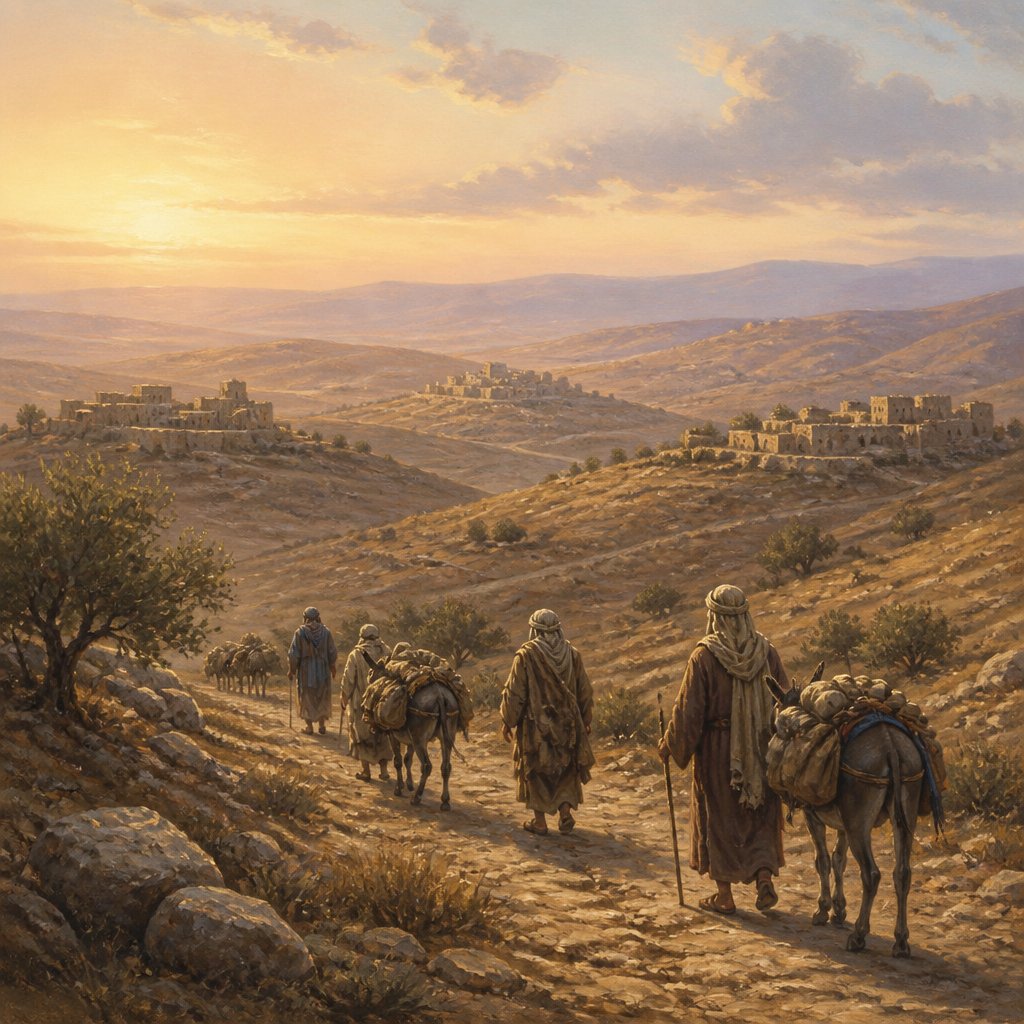
The verse from 1 Samuel 30:30 intriguingly mentions the cities of Hormah, Chorashan, and Athach in a way that may initially seem to demonstrate a mere historical account or geographical listing. Yet, as we delve deeper, we discover profound exaltations of faith, bravery, and the divine provision associated with those who reside in humble places — and the blessings given to those who persist through battles in their lives.
The context of 1 Samuel chapter 30 reveals a tumultuous period for David and his men. They returned to their base in Ziklag only to find it ravaged and burned by the Amalekites. Their families had been kidnapped, and despair enveloped David and his people. The emotional pain was so intense that men who were once soldiers were overcome with grief to the point of threatening to stone their leader. David, however, chose to strengthen himself in the Lord, seeking direction and solace from God (1 Samuel 30:6).
In this moment of chaos, we can reflect on the significance of Hormah, Chorashan, and Athach, which represent more than mere locations. Instead, they encapsulate the idea of refuge and hope amid despair. While these places may seem isolated or insignificant, they are a testimony to God's overarching plan — to offer refuge and assistance to His people in the darkest of times.
To dwell in Hormah, historically known to be an area of defeat for Israel when they first attempted to enter the Promised Land, reminds us how God can lead us from places of failure to places of triumph. As written in Deuteronomy 1:43, the Israelites faced punishment because they doubted His promises. Yet, in 1 Samuel, we see that in the aftermath of despair, God still identifies those in Hormah and promises them inclusion in His plans. He does not overlook those who are small or mountaintops of might, but rather reaches out to uplift and restore.
Chorashan, connected deeply to the word 'prick' or 'thorn,' echoes the times we endure trials and tribulations in our spiritual journeys. God acknowledges our struggles, our pain, and our emotional thorns. It is easy to become consumed with what we face — this thorns— thinking them unjust or too heavy to bear. But amidst that threshold of sorrow, the assurance that God is with us provides hope. As Paul reminds us in Romans 8:28, "And we know that all things work together for good to them that love God, to them who are the called according to his purpose."
Athach represents a place of strength — a harbor during storms where we can gather strength and encouragement. This place serves as a reminder that we do not face battles alone. We are imparted with the strength to pursue victories larger than ourselves. God communicates that even in isolation or separation, divine assistance is present.
The call to remember the communities within these cities also means to extend beyond ourselves. In darkness, we are called to consider our brothers and sisters who may be lost in their Hormah, Chorashan, or Athach. As David fought for his people, we too are summoned to support, protect, and uplift one another, sharing in each other's burdens as exemplified in Galatians 6:2: "Bear ye one another's burdens, and so fulfill the law of Christ."
In reflecting on 1 Samuel 30:30, we are reminded that at our lowest, God incorporates revival into our lives through community, strength, and hope, leading us from despair to fulfillment. Understanding that God’s providence did not miss Hormah, Chorashan, or Athach encourages us to confidently persist. Remember, our battles and struggles are often the avenues through which God’s glory is revealed. Thus, wherever you find your current Hormah, Chorusashan, or Athach, lift them up to the Lord, for He alone will bring restoration, provision, and unprecedented blessings.
Get our apps


Artwork for 1 Samuel 30:30

1 Samuel 30:30 - "And to them which were in Hormah, and to them which were in Chorashan, and to them which were in Athach,"

"And to them which were in Hormah, and to them which were in Chorashan, and to them which were in Athach," - 1 Samuel 30:30

1.samuel 15:30

1 Samuel 30:18

1.samuel 15:30
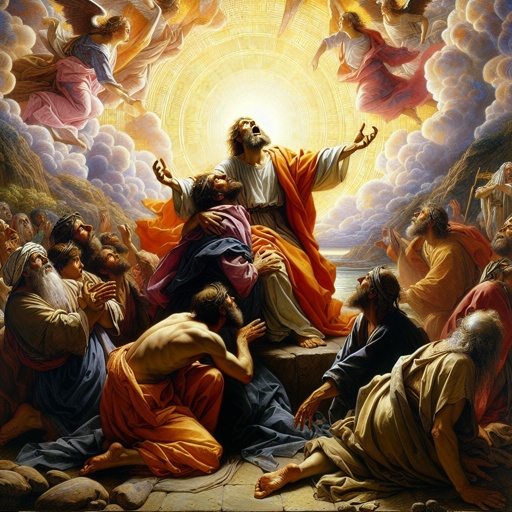
1 Samuel 20:27-30

1 Samuel 30:25 - "And it was so from that day forward, that he made it a statute and an ordinance for Israel unto this day."

1 Samuel 30:28 - "And to them which were in Aroer, and to them which were in Siphmoth, and to them which were in Eshtemoa,"

1 Samuel 30:18 - "And David recovered all that the Amalekites had carried away: and David rescued his two wives."

1 Samuel 30:5 - "And David's two wives were taken captives, Ahinoam the Jezreelitess, and Abigail the wife of Nabal the Carmelite."

1 Samuel 30:4 - "Then David and the people that were with him lifted up their voice and wept, until they had no more power to weep."

1 Samuel 30:29 - "And to them which were in Rachal, and to them which were in the cities of the Jerahmeelites, and to them which were in the cities of the Kenites,"

1 Samuel 30:31 - "And to them which were in Hebron, and to all the places where David himself and his men were wont to haunt."

1 Samuel 30:27 - "To them which were in Beth-el, and to them which were in south Ramoth, and to them which were in Jattir,"

1 Samuel 30:20 - "And David took all the flocks and the herds, which they drave before those other cattle, and said, This is David's spoil."

1 Samuel 30:3 - "¶ So David and his men came to the city, and, behold, it was burned with fire; and their wives, and their sons, and their daughters, were taken captives."

1 Samuel 30:1 - "And it came to pass, when David and his men were come to Ziklag on the third day, that the Amalekites had invaded the south, and Ziklag, and smitten Ziklag, and burned it with fire;"

1 Samuel 30:2 - "And had taken the women captives, that were therein: they slew not any, either great or small, but carried them away, and went on their way."

1 Samuel 17:30 - "¶ And he turned from him toward another, and spake after the same manner: and the people answered him again after the former manner."

1 Samuel 30:11 - "¶ And they found an Egyptian in the field, and brought him to David, and gave him bread, and he did eat; and they made him drink water;"

2 Samuel 23:30 - "Benaiah the Pirathonite, Hiddai of the brooks of Gaash,"

1 Samuel 30:7 - "And David said to Abiathar the priest, Ahimelech's son, I pray thee, bring me hither the ephod. And Abiathar brought thither the ephod to David."

1 Samuel 30:9 - "So David went, he and the six hundred men that were with him, and came to the brook Besor, where those that were left behind stayed."

1 Samuel 30:14 - "We made an invasion upon the south of the Cherethites, and upon the coast which belongeth to Judah, and upon the south of Caleb; and we burned Ziklag with fire."

1 Samuel 30:10 - "But David pursued, he and four hundred men: for two hundred abode behind, which were so faint that they could not go over the brook Besor."

1 Samuel 30:24 - "For who will hearken unto you in this matter? but as his part is that goeth down to the battle, so shall his part be that tarrieth by the stuff: they shall part alike."

1 Samuel 30:26 - "¶ And when David came to Ziklag, he sent of the spoil unto the elders of Judah, even to his friends, saying, Behold a present for you of the spoil of the enemies of the LORD;"
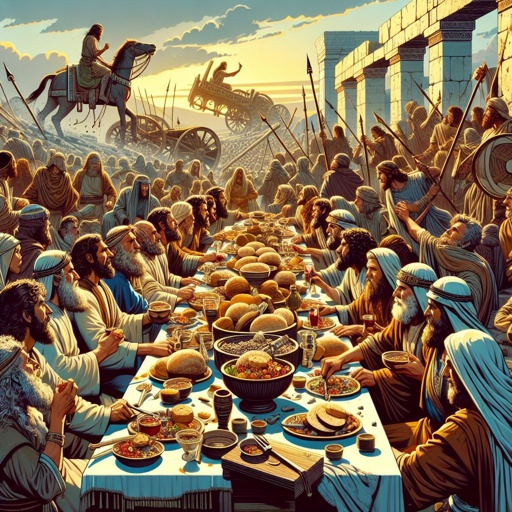
1 Samuel 14:30 - "How much more, if haply the people had eaten freely to day of the spoil of their enemies which they found? for had there not been now a much greater slaughter among the Philistines?"

1 Samuel 18:30 - "Then the princes of the Philistines went forth: and it came to pass, after they went forth, that David behaved himself more wisely than all the servants of Saul; so that his name was much set by."

1 Samuel 30:19 - "And there was nothing lacking to them, neither small nor great, neither sons nor daughters, neither spoil, nor any thing that they had taken to them: David recovered all."