The Final Resting Place: A Reflection on Mourning and Honor
“And they took their bones, and buried them under a tree at Jabesh, and fasted seven days.” — 1 Samuel 31:13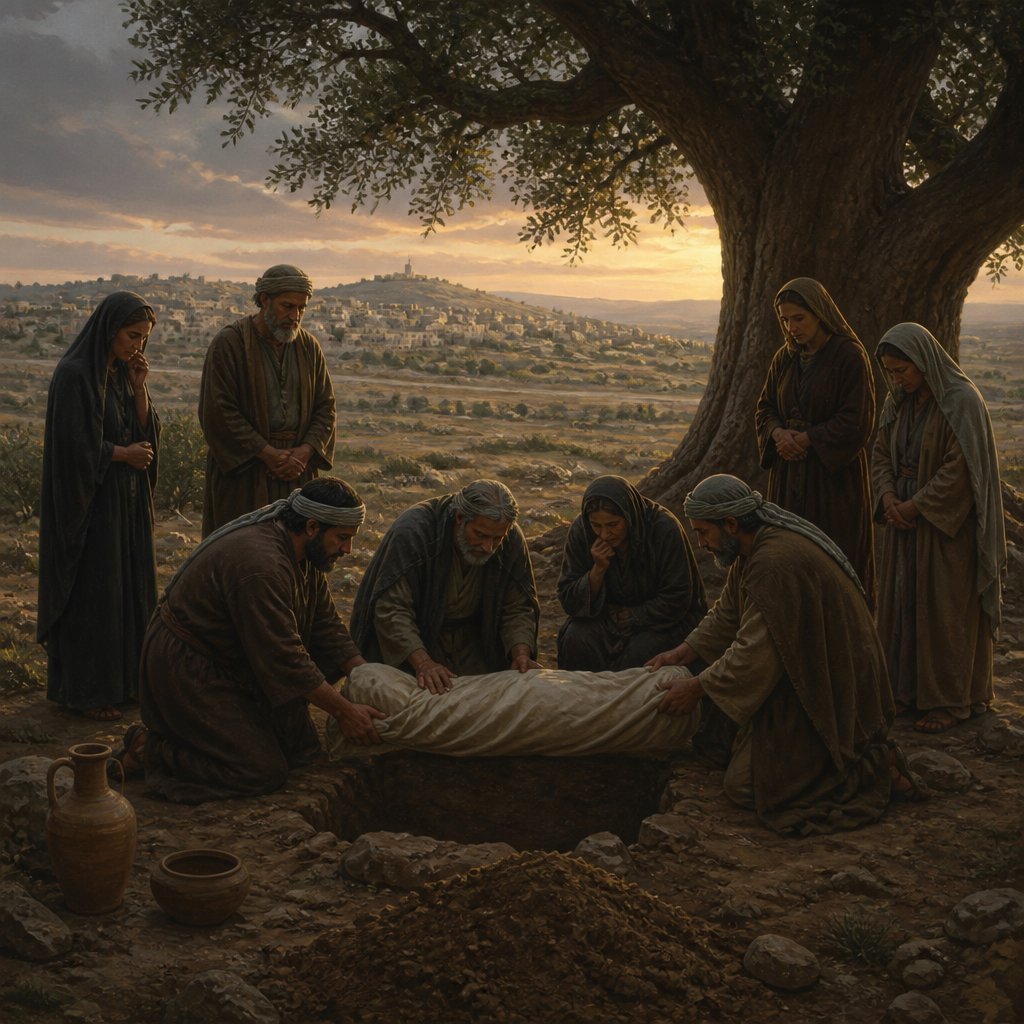
In the narrative of 1 Samuel 31:13, we encounter a heart-wrenching scene following the tragic death of King Saul and his sons. The verse states: "And they took their bones, and buried them under a tree at Jabesh, and fasted seven days" (KJV). This moment offers profound insights into honor, loss, and the role of community in processing grief.
This passage comes at the conclusion of a tumultuous period in the history of Israel. King Saul, the first monarch chosen to lead the Israelites, had experienced a downfall marked by disobedience, jealousy, and ultimately, despair. His death in battle signified not only a personal tragedy but the end of an era. The act of burying his bones and the observance of a seven-day fast reflect the deep respect that the people of Jabesh-Gilead held for their fallen king, despite his failures.
The significance of burial cannot be overstated in ancient cultures, including that of Israel. To bury someone was to acknowledge their life, their contributions, and their humanity. It was a sacred act of giving dignity to the deceased. By taking the bones of Saul and his sons, the men of Jabesh were making a public statement: they would not allow the disgrace of his death or the indignities that had been inflicted upon his body to overshadow his legacy.
The location of the burial is also notable. It is reported that they buried the bones under a tree at Jabesh. Trees often symbolize life, protection, and divine presence in biblical literature. By choosing to bury Saul under a tree, they not only provided a physical resting place but also a symbolic one, suggesting that the king's legacy—his victories and defeats—would continue to be part of the landscape and narrative of their lives.
Fasting for seven days is another significant element in this passage. Fasting in the Bible is often associated with mourning, humility, and seeking the Lord's presence. The seven-day fast reflects the depth of their grief and the seriousness with which they approached their mourning. In Jewish tradition, seven days of mourning, known as 'Shiva', serves as a way of honoring the deceased while allowing the community to support those who are grieving. This act connects the people of Jabesh-Gilead through their shared pain and collective remembrance. In our own lives, how often do we gather as a community in solidarity during times of grief? There is a power in shared mourning that brings healing, support, and remembrance.
As we delve deeper into our reflections on this passage, we might be reminded of those we’ve lost. It prompts us to consider how we honor the memories of those who have departed from this world. Are there meaningful ways in which we can remember them? In our modern-day practices, it could be through acts of kindness, sharing stories that keep their spirit alive, or perhaps, setting aside time for personal reflection or fasting to honor their memory.
Additionally, this scripture calls us to examine how we honor those around us while they are still living. King Saul made many mistakes, yet the men of Jabesh-Gilead recognized the value of his life and governance. Similarly, can we celebrate and honor those around us while they are living? Perhaps it is an invitation to reach out to those we cherish, express our appreciation, and even seek reconciliation with those from whom we might be distanced.
Finally, in the narrative of Saul and his burial, we glean a lesson about humility, honor, and the web of connections that bind us all. As followers of Christ, we are reminded that every life is significant and worthy of respect and dignity, and that love transcends failures and shortcomings. As we ponder this messianic theme of love and honor, may we be encouraged to fast—perhaps not only from food but from distractions that keep us from reflecting on what truly matters. Let us commit to honoring lives lived, whether through memory or present action, and extending grace to ourselves and others as we navigate our shared humanity.
Get our apps


Artwork for 1 Samuel 31:13

1 Samuel 31:13 - "And they took their bones, and buried them under a tree at Jabesh, and fasted seven days."
"And they took their bones, and buried them under a tree at Jabesh, and fasted seven days." - 1 Samuel 31:13

1 Sam 31: 12-13
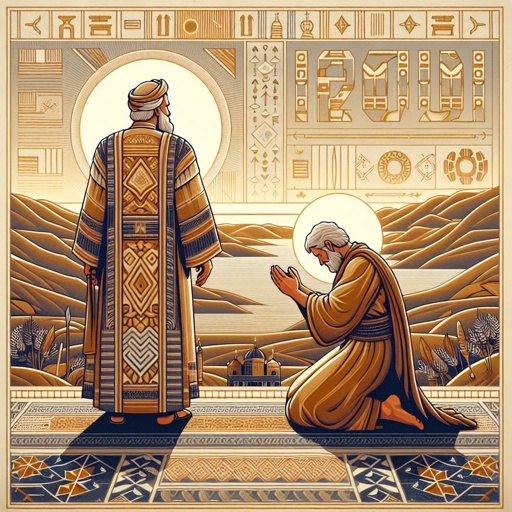
1 Samuel 15:31 - "So Samuel turned again after Saul; and Saul worshipped the LORD."

2 Samuel 13:31 - "Then the king arose, and tare his garments, and lay on the earth; and all his servants stood by with their clothes rent."

1 John 3:1-3
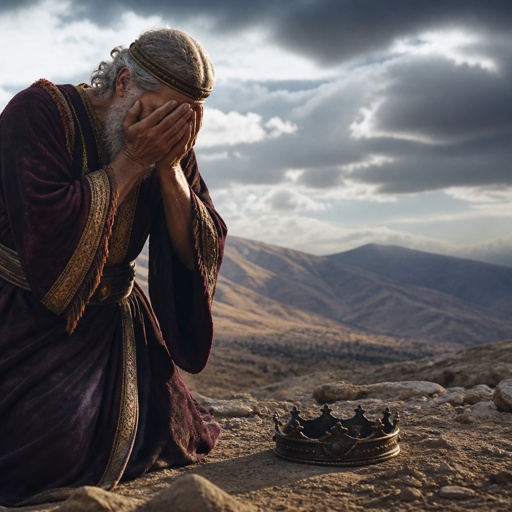
1 Samuel 13:13-14

1 Samuel 31:11 - "¶ And when the inhabitants of Jabesh-gilead heard of that which the Philistines had done to Saul;"

1 Samuel 31:6 - "So Saul died, and his three sons, and his armourbearer, and all his men, that same day together."

1 Samuel 14:31 - "And they smote the Philistines that day from Michmash to Aijalon: and the people were very faint."

1 Samuel 16:1–13

1 Samuel 31:3 - "And the battle went sore against Saul, and the archers hit him; and he was sore wounded of the archers."

1 Samuel 31:10 - "And they put his armour in the house of Ashtaroth: and they fastened his body to the wall of Beth-shan."

"So Samuel turned again after Saul; and Saul worshipped the LORD." - 1 Samuel 15:31
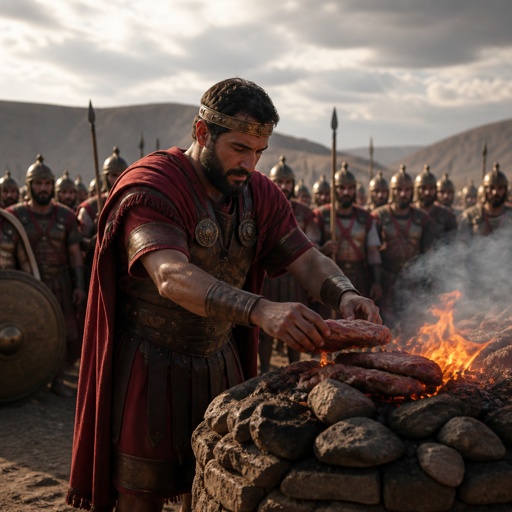
1 Samuel 13:11

1 Samuel 12:13

1 Samuel 31:1 - "Now the Philistines fought against Israel: and the men of Israel fled from before the Philistines, and fell down slain in mount Gilboa."
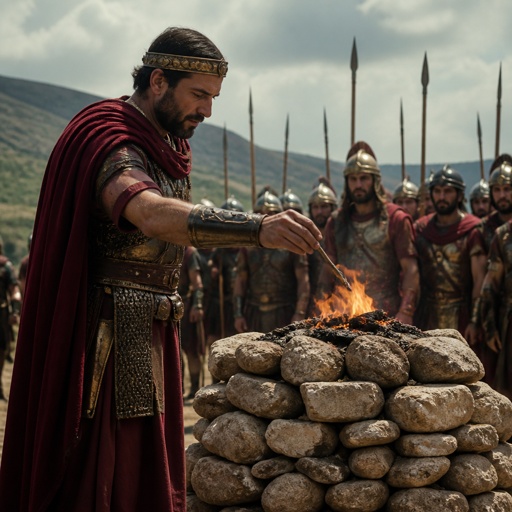
1 Samuel 13:3
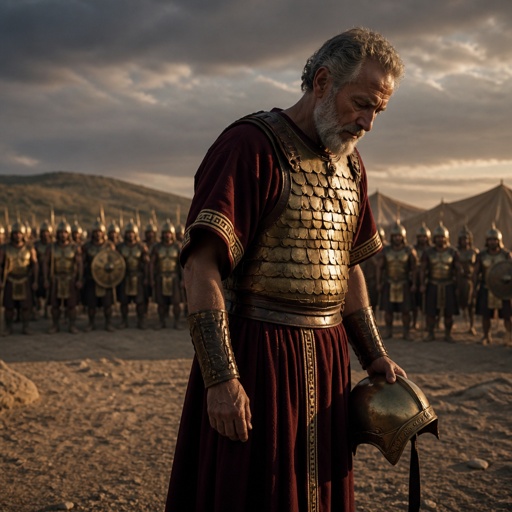
1 Samuel 13:14

1 Samuel 12:13

Altar rebuilt in Jerusalem. Ezra 3:1-3

1 Samuel 31:5 - "And when his armourbearer saw that Saul was dead, he fell likewise upon his sword, and died with him."

1 Samuel 17:31 - "And when the words were heard which David spake, they rehearsed them before Saul: and he sent for him."

1 Samuel 22:11-13

1 Samuel 30:31 - "And to them which were in Hebron, and to all the places where David himself and his men were wont to haunt."

1 Samuel 15:13 - "And Samuel came to Saul: and Saul said unto him, Blessed be thou of the LORD: I have performed the commandment of the LORD."

1 Samuel 3:1

1 Samuel 13:8 - "¶ And he tarried seven days, according to the set time that Samuel had appointed: but Samuel came not to Gilgal; and the people were scattered from him."

1 Samuel 3:1

1 Samuel 31:8 - "And it came to pass on the morrow, when the Philistines came to strip the slain, that they found Saul and his three sons fallen in mount Gilboa."