The Tumult of Spiritual Blindness
“And when Eli heard the noise of the crying, he said, What meaneth the noise of this tumult? And the man came in hastily, and told Eli.” — 1 Samuel 4:14
In 1 Samuel 4:14, we encounter a pivotal moment in the life of Eli, the high priest of Israel: "And when Eli heard the noise of the crying, he said, What meaneth the noise of this tumult? And the man came in hastily, and told Eli." This passage serves as a profound reminder of the spiritual state of the nation of Israel, as well as the personal consequences of neglecting one's spiritual responsibilities.
To grasp the significance of this verse, we must examine the context in which it is situated. Israel was in a dire state of moral and spiritual decay. The sinful actions of Eli's sons, Hophni and Phinehas, were well-known, and their misconduct not only compromised the purity of priestly service but also led the nation away from the worship of Yahweh. Eli, who had received a prophetic warning regarding the fate of his family and the desecration of God’s temple, had become a figure of spiritual blindness. Though he was aware of his sons' transgressions, he had failed to act decisively to correct them.
The phrase "What meaneth the noise of this tumult?" encapsulates Eli's confusion and responsiveness to the chaotic sounds around him. On the surface, the tumult was a result of a devastating defeat in battle, where the Philistines had captured the Ark of the Covenant—the very symbol of God’s presence among His people. However, Eli’s question also reflects a deeper spiritual turmoil; he was oblivious to the true nature of what was happening around him. Here lies the heart of the matter: spiritual blindness leads to an inability to perceive the active presence of God and the dire consequences of disobedience.
The tumult signifies not just a physical uproar but a spiritual alarm bell calling for attention. It whispers of God’s disappointment and judgment upon His people. Eli's inquiry, laden with both concern and confusion, raises an important question for us today: Are we attuned to the spiritual tumult occurring in our lives and our communities? Are we aware of how our actions or the actions of those we lead might be impacting our relationship with God?
In our own lives, we may sometimes find ourselves in situations similar to Eli's. We hear the noise of crisis—the cries of the broken, the shouts of the lost, the tumult of moral and spiritual chaos—but like Eli, we may be either hesitant to react or too consumed by our own spiritual apathy to respond effectively. It is essential to reflect on how we can be proactive in seeking God’s wisdom and guidance, rather than merely reacting to the noise around us.
The story of Eli teaches us the importance of spiritual vigilance. God holds us accountable, not only for our actions but also for our silence in the face of wrongdoing. It calls for introspection: Are there areas in our lives where we too are choosing comfort over conviction? Where we are more concerned about maintaining peace than pursuing righteousness? Eli’s initial response is one of ignorance; he seems more startled by the noise than moved by the underlying spiritual crisis.
In this age of overwhelming noise—be it social media distractions, worldly pursuits, or even the subtle normalization of sin—it becomes imperative for us to cultivate a listening heart. Just as Eli needed to be reminded of the truth, we too need to seek the Lord earnestly, asking for clarity in our tumultuous moments. Let us pursue a lifestyle that actively seeks to discern the signs of the times and to lead others away from spiritual blindness.
Ultimately, God’s response to Eli and Israel is an invitation to repentance and restoration. We can no longer afford to be like Eli, caught up in tumult without insight or action. Rather, let us be diligent stewards of our faith, fully aware of the spiritual landscape, equipped to sound the alarm when necessary, and ever seeking the presence of God in the center of our tumult.
Get our apps


Artwork for 1 Samuel 4:14

1 Samuel 4:14-16

1 Samuel 4:14 - "And when Eli heard the noise of the crying, he said, What meaneth the noise of this tumult? And the man came in hastily, and told Eli."

"And when Eli heard the noise of the crying, he said, What meaneth the noise of this tumult? And the man came in hastily, and told Eli." - 1 Samuel 4:14
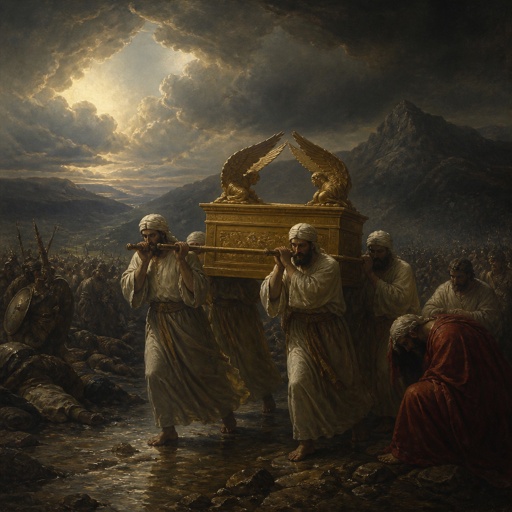
1 Samuel 4:4
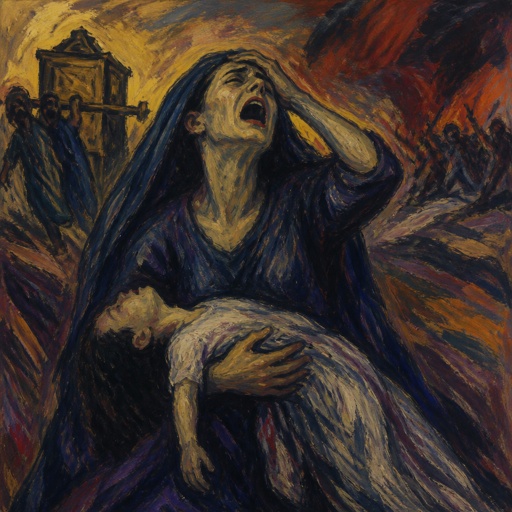
1 Samuel 4:18

1 Samuel 4:12

1 samuel 4:1
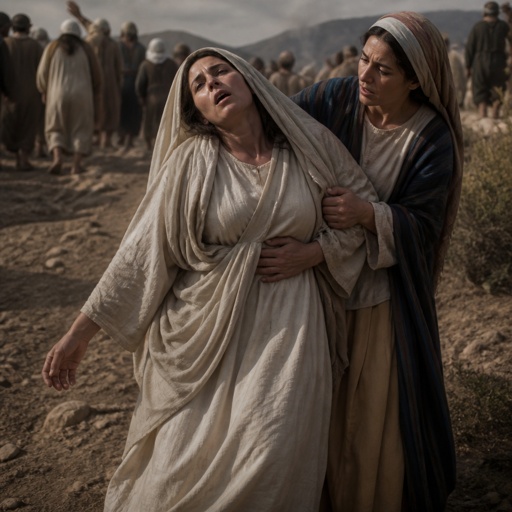
1 Samuel 4:18

1 Samuel 4:2
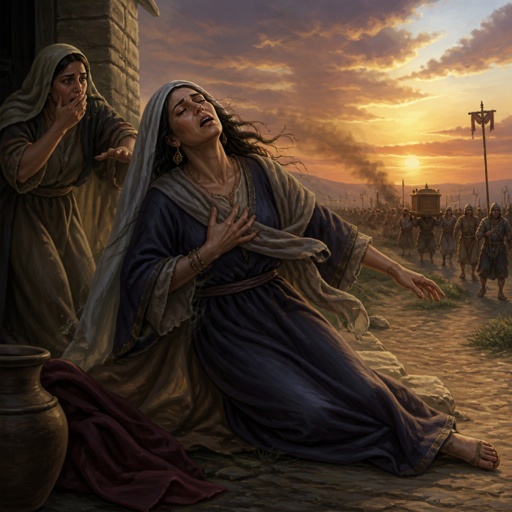
1 Samuel 4:18

1 Samuel 14:6

1 Samuel 14:4 - "¶ And between the passages, by which Jonathan sought to go over unto the Philistines' garrison, there was a sharp rock on the one side, and a sharp rock on the other side: and the name of the one was Bozez, and the name of the other Seneh."

1 Samuel 14:27
1 Samuel 13:14

2 Samuel 6:14

1 Samuel 14:7

1 Samuel 11:14 - "Then said Samuel to the people, Come, and let us go to Gilgal, and renew the kingdom there."

1 Samuel 3:4 - "That the LORD called Samuel: and he answered, Here am I."
1 Samuel 13:13-14

1 Samuel 17:14 - "And David was the youngest: and the three eldest followed Saul."

1 Samuel 15:14 - "And Samuel said, What meaneth then this bleating of the sheep in mine ears, and the lowing of the oxen which I hear?"

1 Samuel 8:4 - "Then all the elders of Israel gathered themselves together, and came to Samuel unto Ramah,"

1 Samuel 14:51 - "And Kish was the father of Saul; and Ner the father of Abner was the son of Abiel."

1 Samuel 14:25 - "And all they of the land came to a wood; and there was honey upon the ground."

1 Samuel 9:14 - "And they went up into the city: and when they were come into the city, behold, Samuel came out against them, for to go up to the high place."

1 Samuel 4:1 - "And the word of Samuel came to all Israel. Now Israel went out against the Philistines to battle, and pitched beside Eben-ezer: and the Philistines pitched in Aphek."

1 Samuel 17:4-8

1 Samuel 5: 3-4

2 Samuel 14:4 - "¶ And when the woman of Tekoah spake to the king, she fell on her face to the ground, and did obeisance, and said, Help, O king."

1 Samuel 19:14 - "And when Saul sent messengers to take David, she said, He is sick."