The Power of Faith Over Numbers
“And Abijah set the battle in array with an army of valiant men of war, even four hundred thousand chosen men: Jeroboam also set the battle in array against him with eight hundred thousand chosen men, being mighty men of valour.” — 2 Chronicles 13:3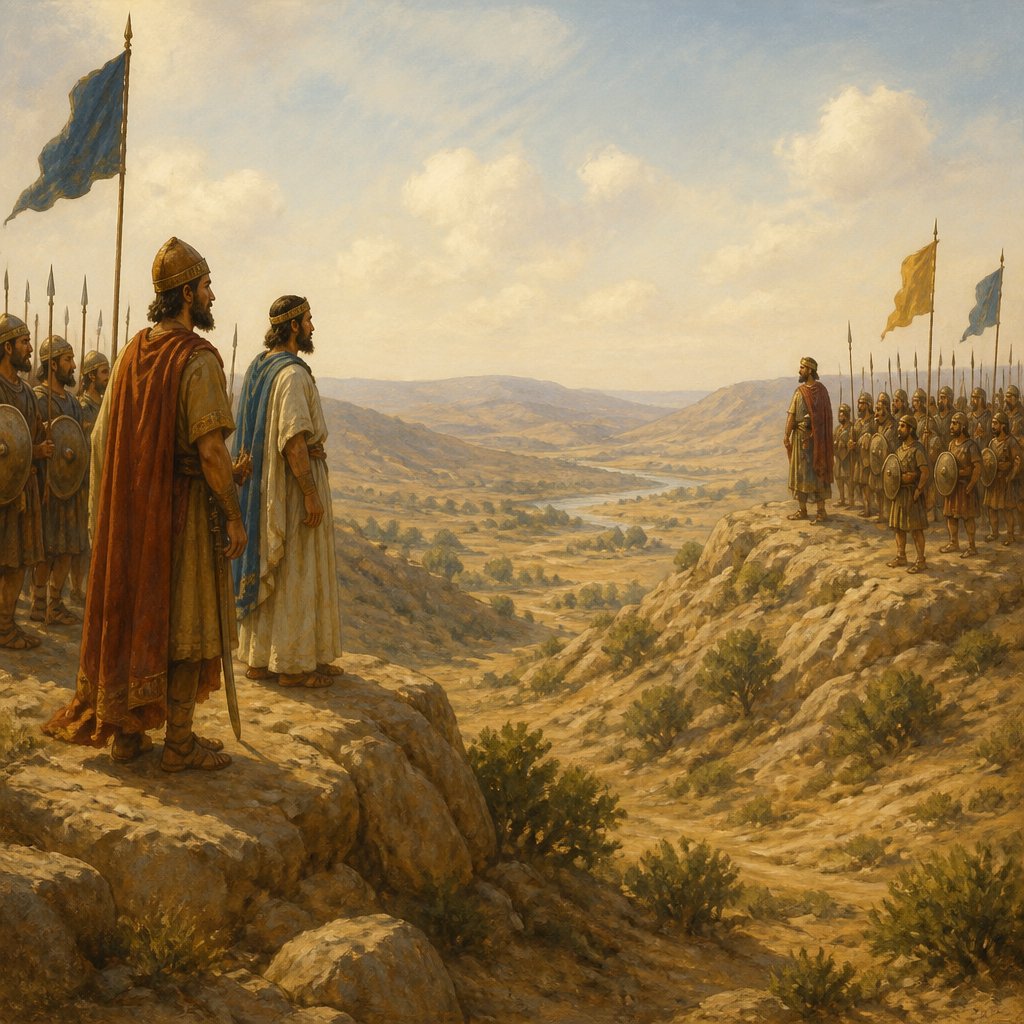
In 2 Chronicles 13:3 we read, "And Abijah set the battle in array with an army of valiant men of war, even four hundred thousand chosen men: Jeroboam also set the battle in array against him with eight hundred thousand chosen men, being mighty men of valour." This verse takes us into the heart of a critical moment in the life of Abijah, the king of Judah, as he stood in opposition to Jeroboam, the king of Israel, on the battlefield. At first glance, this scene appears to be a study in military strategy, numbers, and the logistics of war. However, a deeper exploration reveals profound spiritual truths about faith, trust, and the true source of strength in the face of overwhelming odds.
Abijah’s army numbers 400,000 men—not a small force by any means. Yet, when compared to Jeroboam's 800,000, it seems a daunting challenge. This disparity could easily incite fear and doubt. Many find themselves in similar situations today, where the challenges before them seem insurmountable. The odds might be stacked against them, be it in personal struggles, financial troubles, health issues, or spiritual battles. But Abijah’s story serves as a powerful reminder that faith is not a function of numbers but of trust in God.
Before stepping onto the battlefield, Abijah proclaims a crucial truth to his people. In 2 Chronicles 13:4-5, he calls upon the Israelites to remember their covenant with God: "And Abijah stood up upon Mount Zemaraim, which is in the mount of Ephraim, and said, Hear me, thou Jeroboam, and all Israel; Ought ye not to know that the Lord God of Israel gave the kingdom over Israel to David for ever, even to him and to his sons by a covenant of salt?" This declaration frames the conflict not merely as a struggle for power but as a spiritual battle rooted in God’s enduring promises.
Abijah reminds both his army and his adversaries that the battle is ultimately the Lord's. This proclamation is pivotal. He claims that the Ark of the Covenant—the dwelling place of God—is with Judah and that they have not forsaken it. In verse 13:10, he confidently asserts that Judah has maintained their loyalty to Yahweh, while Israel has turned away. This contrast highlights a fundamental principle in our walk of faith: when we stand with God, no enemy can prevail, regardless of their size or might.
Abijah’s confidence is not rooted in his military prowess or the number of soldiers he commands. Instead, it emerges from a deep understanding of who God is and what He has promised. The courage of Abijah is a challenge to us—how often do we find ourselves assessing our battles based on our resources, strength, or skills? The world tells us to count the costs and analyze our capabilities. Yet, scripture calls us to look beyond our circumstances towards God’s faithfulness.
As Christians, we often face battles that feel overwhelming. Financial burdens, relationship issues, health crises, or spiritual crises can loom large, casting shadows over our faith. Yet, like Abijah, we need to remind ourselves of God’s faithfulness. The words of Psalm 20:7 encourage us: "Some trust in chariots, and some in horses: but we will remember the name of the Lord our God." Trusting in God means leaning on His promises rather than our perceived strength or understanding of the situation.
In conclusion, Abijah’s confrontation with Jeroboam is a divine lesson in faith over fear, strength in numbers, and the ultimate victory found in divine allegiance. As we face our battles—whatever they may be—let us remember that with God on our side, we are a majority. The victory is not ours to secure; it has already been won through faith in Christ. Let us apply the lessons of this account in our lives, standing boldly on the truth of God’s unfailing presence, and letting that faith shape our actions as we navigate life’s battles.
Get our apps


Artwork for 2 Chronicles 13:3

2 Chronicles 13:3 - "And Abijah set the battle in array with an army of valiant men of war, even four hundred thousand chosen men: Jeroboam also set the battle in array against him with eight hundred thousand chosen men, being mighty men of valour."
"And Abijah set the battle in array with an army of valiant men of war, even four hundred thousand chosen men: Jeroboam also set the battle in array against him with eight hundred thousand chosen men, being mighty men of valour." - 2 Chronicles 13:3

2 Chronicles 3:13 - "The wings of these cherubims spread themselves forth twenty cubits: and they stood on their feet, and their faces were inward."

2 chronicles 13:12

2 Chronicles 6:13

1 Chronicles 3:13 - "Ahaz his son, Hezekiah his son, Manasseh his son,"

2 Chronicles 13:14 - "And when Judah looked back, behold, the battle was before and behind: and they cried unto the LORD, and the priests sounded with the trumpets."

1 Chronicles 13:3 - "And let us bring again the ark of our God to us: for we enquired not at it in the days of Saul."

"The wings of these cherubims spread themselves forth twenty cubits: and they stood on their feet, and their faces were inward." - 2 Chronicles 3:13

2 Chronicles 28:3

2 Chronicles 2:13 - "And now I have sent a cunning man, endued with understanding, of Huram my father's,"

2 Chronicles 13:13 - "¶ But Jeroboam caused an ambushment to come about behind them: so they were before Judah, and the ambushment was behind them."

2 Chronicles 29:13 - "And of the sons of Elizaphan; Shimri, and Jeiel: and of the sons of Asaph; Zechariah, and Mattaniah:"

2 Chronicles 13:1 - "Now in the eighteenth year of king Jeroboam began Abijah to reign over Judah."

2 Chronicles 20:13 - "And all Judah stood before the LORD, with their little ones, their wives, and their children."

2 Chronicles 13:16 - "And the children of Israel fled before Judah: and God delivered them into their hand."

1 Chronicles 2:13 - "¶ And Jesse begat his firstborn Eliab, and Abinadab the second, and Shimma the third,"

2 Chronicles 8:3 - "And Solomon went to Hamath-zobah, and prevailed against it."

2 Chronicles 3:2 - "And he began to build in the second day of the second month, in the fourth year of his reign."

2 Chronicles 10:13 - "And the king answered them roughly; and king Rehoboam forsook the counsel of the old men,"

2 Chronicles 16:13 - "¶ And Asa slept with his fathers, and died in the one and fortieth year of his reign."

2 Chronicles 11:13 - "¶ And the priests and the Levites that were in all Israel resorted to him out of all their coasts."

2 Chronicles 13:21 - "¶ But Abijah waxed mighty, and married fourteen wives, and begat twenty and two sons, and sixteen daughters."

2 Chronicles 18:13 - "And Micaiah said, As the LORD liveth, even what my God saith, that will I speak."

2 Chronicles 13:22 - "And the rest of the acts of Abijah, and his ways, and his sayings, are written in the story of the prophet Iddo."

2 Thessalonians 3:13 - "But ye, brethren, be not weary in well doing."

2 Chronicles 13:2 - "He reigned three years in Jerusalem. His mother's name also was Michaiah the daughter of Uriel of Gibeah. And there was war between Abijah and Jeroboam."

2 Chronicles 24:13 - "So the workmen wrought, and the work was perfected by them, and they set the house of God in his state, and strengthened it."

2 Chronicles 3:6 - "And he garnished the house with precious stones for beauty: and the gold was gold of Parvaim."

2 Chronicles 13:20 - "Neither did Jeroboam recover strength again in the days of Abijah: and the LORD struck him, and he died."