The Rise of Abijah: A Lesson on Leadership and Legacy
“Now in the eighteenth year of king Jeroboam began Abijah to reign over Judah.” — 2 Chronicles 13:1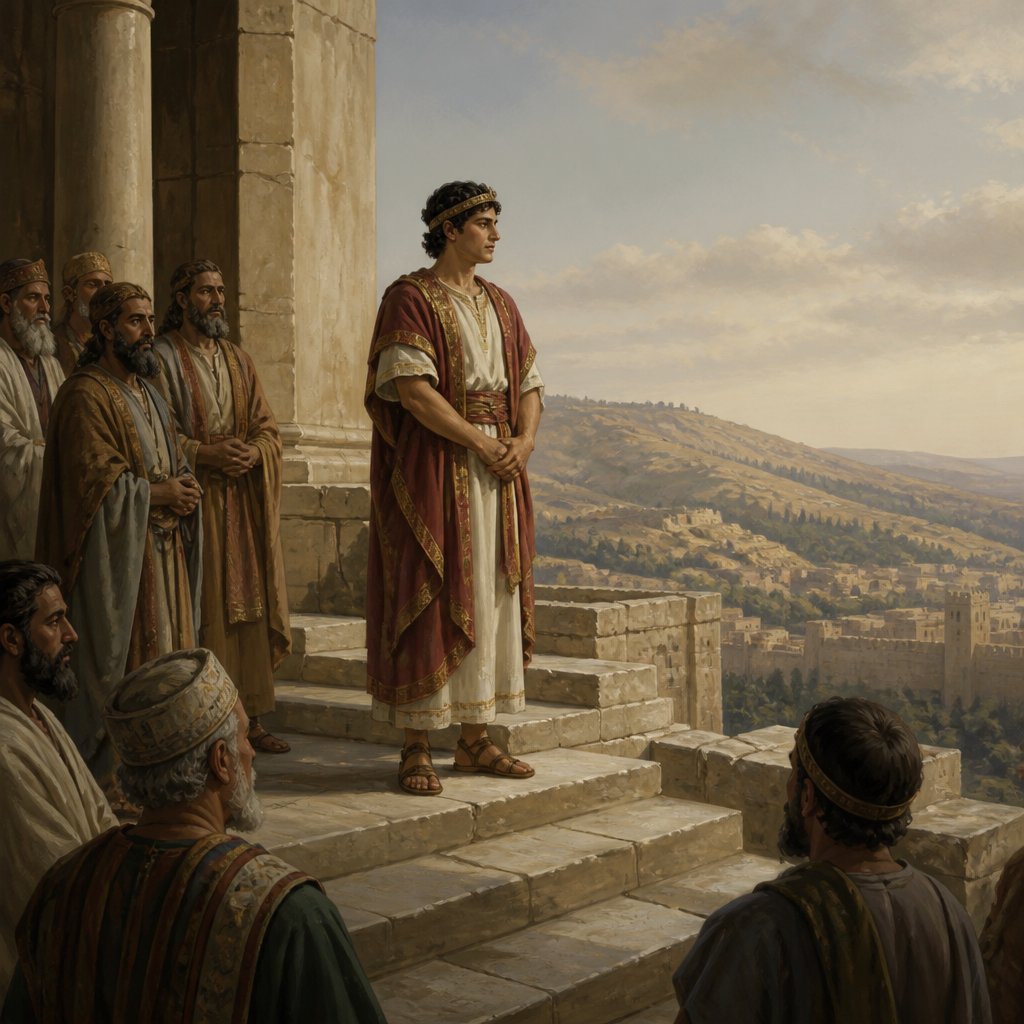
As we delve into the biblical narrative of 2 Chronicles 13:1, we encounter a significant moment in the history of Israel and Judah. The Scripture reads: "Now in the eighteenth year of king Jeroboam began Abijah to reign over Judah." This single verse holds within it profound implications regarding leadership, legacy, and the intricate workings of God’s sovereignty in the affairs of nations.
The passage introduces us to Abijah, the king of Judah, during a pivotal moment characterized by political strife and spiritual decline. King Jeroboam, who reigned over the northern kingdom of Israel, had established a kingdom that turned its back on the true worship of God, instituting false idols and leading the people into spiritual stagnation. In contrast, the southern kingdom of Judah held onto the lineage of David, where the worship of Yahweh was still practiced, albeit not without its challenges.
Abijah's ascent to power comes at a time when the faithful remnant in Judah faced formidable opposition from Jeroboam’s northern kingdom. Leadership in such a context is filled with challenges and responsibilities, and Abijah’s reign serves as an important case study for our understanding of what God expects from leaders today. As we reflect on the implications of Abijah's story, we can draw several lessons that resonate in our own lives, regardless of whether we are in positions of leadership or not.
### Lesson 1: Understanding Our Position
Abijah’s reign began in the shadow of his predecessors, which means he inherited both the challenges and the opportunities presented by those who came before him. It reminds us that where we find ourselves today, whether in a high position or lowly, is often the result of the actions and decisions of those who came before us. As believers, we are not merely products of our circumstances, but rather instruments of change within them. When Abijah began to reign, he knew that he was tasked with preserving the covenant relationship that his forefathers had with God. We, too, are called to honor the legacy of faith handed down to us, and to build upon it with our lives.
### Lesson 2: The Call to Boldness
Abijah did not shy away from the challenges posed by Jeroboam. As chronicled in the following verses, he boldly addressed Jeroboam and the northern tribes, declaring the truth of God’s promise and reminding them of their rebellion against the Lord. This act of courage illustrates the necessity of standing firm in our faith, even when the world around us seems entrenched in error. In an age where many are hesitant to speak biblical truth for fear of offending or controversy, Abijah’s example encourages us to speak with clarity, conviction, and compassion.
### Lesson 3: The Assurance of God’s Sovereignty
Throughout history, including Abijah’s reign, we observe that while leadership shifts and political landscapes change, God remains sovereign. The verse subtly emphasizes His control over the unfolding events in Israel and Judah. Leaders may come and go, yet the throne of Heaven remains steady and unshaken. This truth offers profound comfort and assurance amidst our earthly turmoil. We are reminded that regardless of who may reign on earth, we ultimately serve the King of Kings. Let us anchor our hope in His sovereignty instead of the transient stability of worldly powers.
### Lesson 4: Legacy of Faith
Finally, as we reflect on Abijah’s reign, we are called to think about our legacy. What will be said of our leadership, whether in our families, workplaces, or communities? Abijah’s life challenges us to ponder the ultimate goal of our leadership: to glorify God and guide others in the paths of righteousness. The choices we make today will echo in eternity, shaping our children's faith and the spiritual climate of our community.
In conclusion, as we meditate upon the reign of Abijah and the context of 2 Chronicles 13:1, we must seek to embody the principles of faithful leadership, courage in the face of adversity, trust in God's sovereignty, and a commitment to leaving a godly legacy. Let us strive each day to honor our calling, fulfilling it in ways that reflect God’s glory and advance His kingdom, just as King Abijah attempted to do in his time.
Get our apps


Artwork for 2 Chronicles 13:1

2 Chronicles 13:1 - "Now in the eighteenth year of king Jeroboam began Abijah to reign over Judah."
"Now in the eighteenth year of king Jeroboam began Abijah to reign over Judah." - 2 Chronicles 13:1

1 Chronicles 2:13 - "¶ And Jesse begat his firstborn Eliab, and Abinadab the second, and Shimma the third,"

2 chronicles 13:12

1 Chronicles 13:1 - "And David consulted with the captains of thousands and hundreds, and with every leader."

2 Chronicles 1:13 - "¶ Then Solomon came from his journey to the high place that was at Gibeon to Jerusalem, from before the tabernacle of the congregation, and reigned over Israel."

2 Chronicles 6:13

1 Chronicles 1:13 - "And Canaan begat Zidon his firstborn, and Heth,"

1 Chronicles 24:13 - "The thirteenth to Huppah, the fourteenth to Jeshebeab,"

1 Chronicles 12:13 - "Jeremiah the tenth, Machbanai the eleventh."
"¶ And Jesse begat his firstborn Eliab, and Abinadab the second, and Shimma the third," - 1 Chronicles 2:13

2 Chronicles 2:13 - "And now I have sent a cunning man, endued with understanding, of Huram my father's,"

2 Chronicles 13:13 - "¶ But Jeroboam caused an ambushment to come about behind them: so they were before Judah, and the ambushment was behind them."

"And David consulted with the captains of thousands and hundreds, and with every leader." - 1 Chronicles 13:1

1 Chronicles 6:13 - "And Shallum begat Hilkiah, and Hilkiah begat Azariah,"

2 Chronicles 29:13 - "And of the sons of Elizaphan; Shimri, and Jeiel: and of the sons of Asaph; Zechariah, and Mattaniah:"

1 Chronicles 13:13 - "So David brought not the ark home to himself to the city of David, but carried it aside into the house of Obed-edom the Gittite."

1 Chronicles 4:13 - "And the sons of Kenaz; Othniel, and Seraiah: and the sons of Othniel; Hathath."

1 Chronicles 14:13 - "And the Philistines yet again spread themselves abroad in the valley."

2 Chronicles 20:13 - "And all Judah stood before the LORD, with their little ones, their wives, and their children."

2 Chronicles 13:16 - "And the children of Israel fled before Judah: and God delivered them into their hand."

2 Chronicles 10:13 - "And the king answered them roughly; and king Rehoboam forsook the counsel of the old men,"

2 Chronicles 16:13 - "¶ And Asa slept with his fathers, and died in the one and fortieth year of his reign."

1 Chronicles 7:13 - "¶ The sons of Naphtali; Jahziel, and Guni, and Jezer, and Shallum, the sons of Bilhah."

2 Chronicles 11:13 - "¶ And the priests and the Levites that were in all Israel resorted to him out of all their coasts."

1 Chronicles 1:2 - "Kenan, Mahalaleel, Jered,"

2 Chronicles 13:21 - "¶ But Abijah waxed mighty, and married fourteen wives, and begat twenty and two sons, and sixteen daughters."

2 Chronicles 18:13 - "And Micaiah said, As the LORD liveth, even what my God saith, that will I speak."

2 Chronicles 13:22 - "And the rest of the acts of Abijah, and his ways, and his sayings, are written in the story of the prophet Iddo."

1 Chronicles 25:13 - "The sixth to Bukkiah, he, his sons, and his brethren, were twelve:"