What does 2 Chronicles 13:1 mean?
“Now in the eighteenth year of king Jeroboam began Abijah to reign over Judah.” — 2 Chronicles 13:1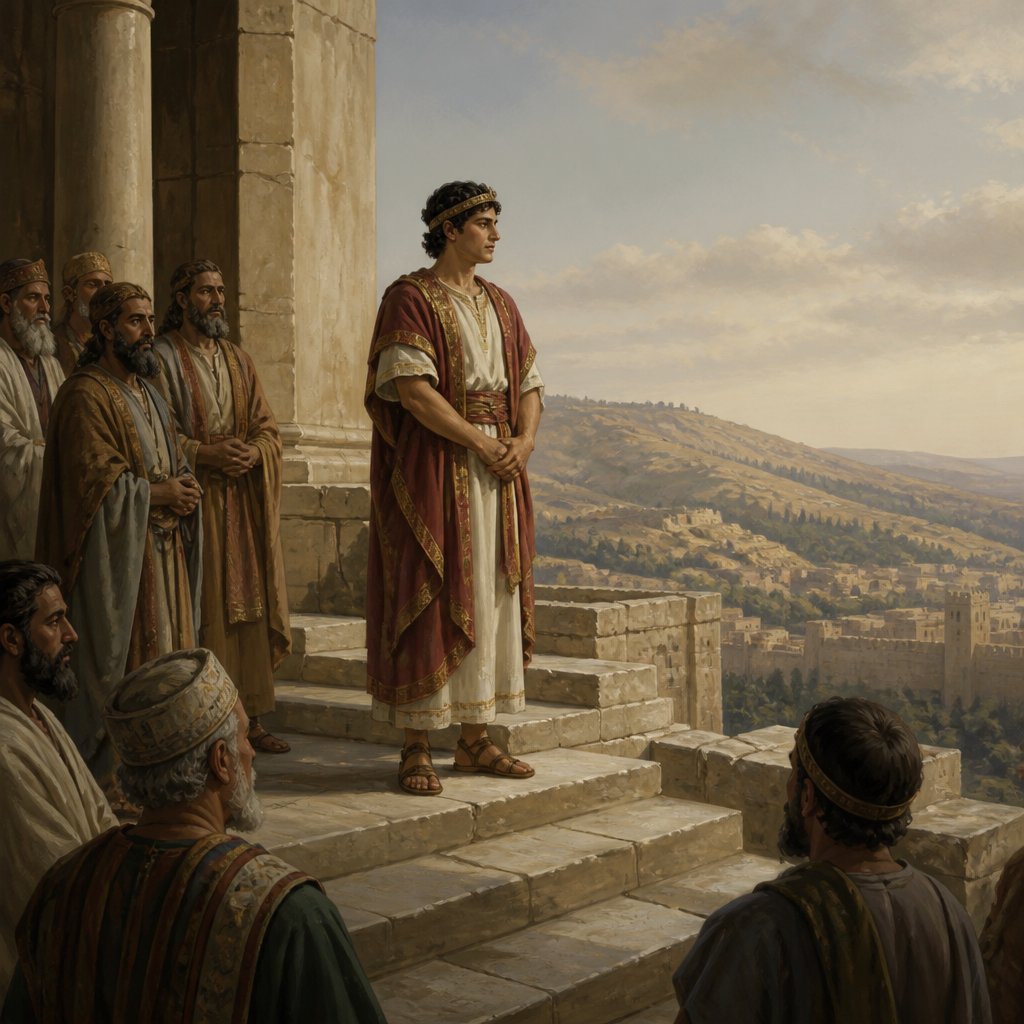
The verse 2 Chronicles 13:1 from the King James Version (KJV) states: "Now in the eighteenth year of king Jeroboam began Abijah to reign over Judah."
This verse is part of the larger narrative of the divided kingdom of Israel and Judah. It marks a pivotal moment in the reign of Abijah, also known as Abijam, who was the son of Rehoboam and the grandson of Solomon. This verse sets the stage for the conflict between the two kingdoms of Israel and Judah, as Abijah becomes king of Judah.
The book of 2 Chronicles is a historical account of the kings of Judah, tracing their lineage and the events that shaped their reigns. In the case of Abijah, his reign was marked by warfare and conflict with the northern kingdom of Israel, ruled by Jeroboam. This conflict was rooted in the division of the kingdom after the reign of Solomon, when the ten northern tribes rebelled against the rule of Rehoboam, Solomon's son.
The verse serves as a historical marker, noting the beginning of Abijah's reign and setting the stage for the conflict that would unfold between the two kingdoms. It also highlights the theme of power struggles and political tensions that characterized the biblical narrative during this period.
In a broader context, this verse also reflects the theological implications of the divided kingdom. The division of Israel and Judah was seen as a result of the people's disobedience to God and their turning away from His commandments. The conflict between the two kingdoms was seen as a manifestation of this disobedience and a reminder of the consequences of forsaking God.
From a symbolic standpoint, the reign of Abijah represents the struggle for power and the maintenance of the lineage of David, as the rightful heir to the throne of Judah. The conflict with Jeroboam and the northern kingdom symbolizes the larger theological and spiritual battle for the soul of the nation.
Overall, 2 Chronicles 13:1 serves as a crucial point in the narrative of the divided kingdom, marking the beginning of Abijah's reign and setting the stage for the conflict between the kingdoms of Israel and Judah. It also reflects the theological implications of the division and the broader themes of power struggles and obedience to God. The verse holds significance as a historical marker and as a reflection of the spiritual and political struggles of the biblical narrative.
Get our apps


Artwork for 2 Chronicles 13:1

2 Chronicles 13:1 - "Now in the eighteenth year of king Jeroboam began Abijah to reign over Judah."
"Now in the eighteenth year of king Jeroboam began Abijah to reign over Judah." - 2 Chronicles 13:1

1 Chronicles 2:13 - "¶ And Jesse begat his firstborn Eliab, and Abinadab the second, and Shimma the third,"

2 chronicles 13:12

1 Chronicles 13:1 - "And David consulted with the captains of thousands and hundreds, and with every leader."

2 Chronicles 1:13 - "¶ Then Solomon came from his journey to the high place that was at Gibeon to Jerusalem, from before the tabernacle of the congregation, and reigned over Israel."

2 Chronicles 6:13

1 Chronicles 1:13 - "And Canaan begat Zidon his firstborn, and Heth,"

1 Chronicles 24:13 - "The thirteenth to Huppah, the fourteenth to Jeshebeab,"

1 Chronicles 12:13 - "Jeremiah the tenth, Machbanai the eleventh."
"¶ And Jesse begat his firstborn Eliab, and Abinadab the second, and Shimma the third," - 1 Chronicles 2:13

2 Chronicles 2:13 - "And now I have sent a cunning man, endued with understanding, of Huram my father's,"

2 Chronicles 13:13 - "¶ But Jeroboam caused an ambushment to come about behind them: so they were before Judah, and the ambushment was behind them."

"And David consulted with the captains of thousands and hundreds, and with every leader." - 1 Chronicles 13:1

1 Chronicles 6:13 - "And Shallum begat Hilkiah, and Hilkiah begat Azariah,"

2 Chronicles 29:13 - "And of the sons of Elizaphan; Shimri, and Jeiel: and of the sons of Asaph; Zechariah, and Mattaniah:"

1 Chronicles 13:13 - "So David brought not the ark home to himself to the city of David, but carried it aside into the house of Obed-edom the Gittite."

1 Chronicles 4:13 - "And the sons of Kenaz; Othniel, and Seraiah: and the sons of Othniel; Hathath."

1 Chronicles 14:13 - "And the Philistines yet again spread themselves abroad in the valley."

2 Chronicles 20:13 - "And all Judah stood before the LORD, with their little ones, their wives, and their children."

2 Chronicles 13:16 - "And the children of Israel fled before Judah: and God delivered them into their hand."

2 Chronicles 10:13 - "And the king answered them roughly; and king Rehoboam forsook the counsel of the old men,"

2 Chronicles 16:13 - "¶ And Asa slept with his fathers, and died in the one and fortieth year of his reign."

1 Chronicles 7:13 - "¶ The sons of Naphtali; Jahziel, and Guni, and Jezer, and Shallum, the sons of Bilhah."

2 Chronicles 11:13 - "¶ And the priests and the Levites that were in all Israel resorted to him out of all their coasts."

1 Chronicles 1:2 - "Kenan, Mahalaleel, Jered,"

2 Chronicles 13:21 - "¶ But Abijah waxed mighty, and married fourteen wives, and begat twenty and two sons, and sixteen daughters."

2 Chronicles 18:13 - "And Micaiah said, As the LORD liveth, even what my God saith, that will I speak."

2 Chronicles 13:22 - "And the rest of the acts of Abijah, and his ways, and his sayings, are written in the story of the prophet Iddo."

1 Chronicles 25:13 - "The sixth to Bukkiah, he, his sons, and his brethren, were twelve:"