The Mark of Destiny: Understanding God's Sovereignty in Our Lives
“And a certain man drew a bow at a venture, and smote the king of Israel between the joints of the harness: therefore he said to his chariot man, Turn thine hand, that thou mayest carry me out of the host; for I am wounded.” — 2 Chronicles 18:33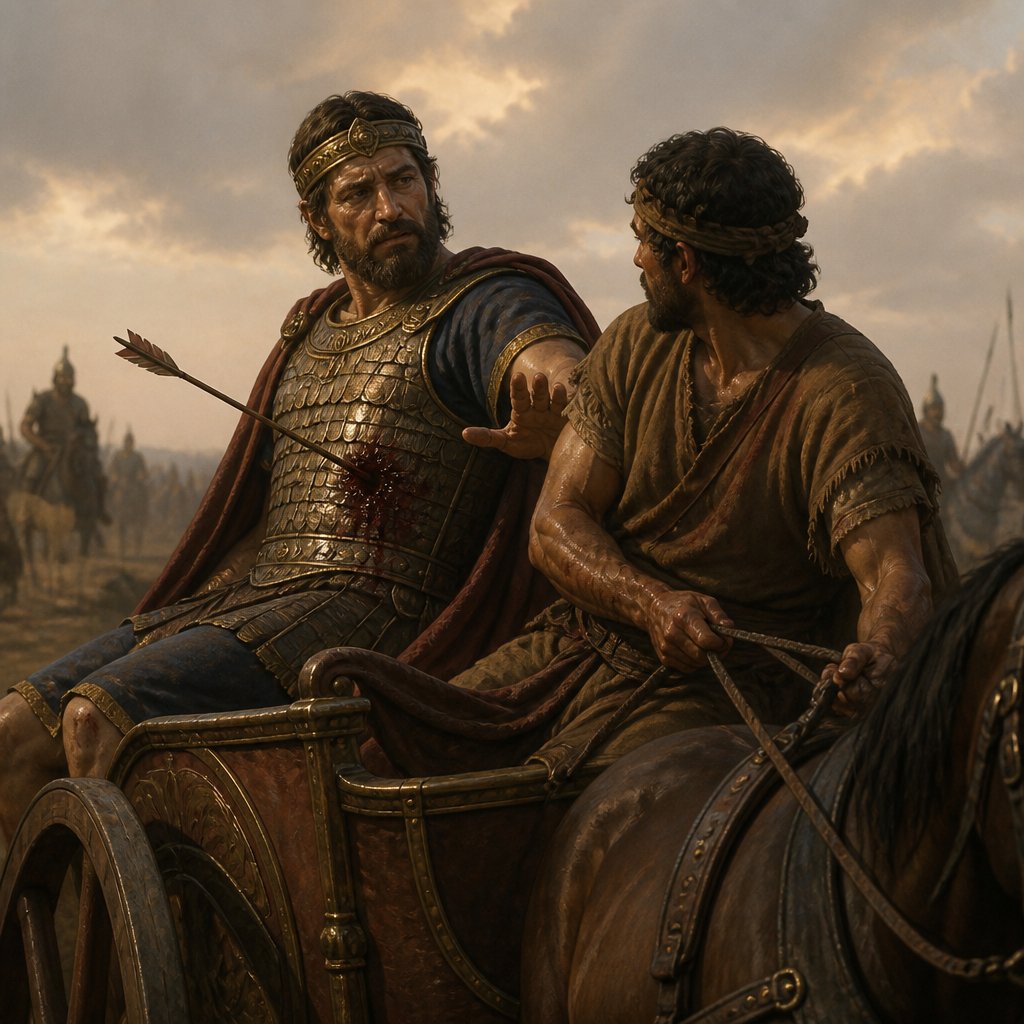
In the annals of Scripture, 2 Chronicles 18:33 presents one of those striking moments where human actions interlace with divine providence leading to unexpected outcomes. The verse reads: "And a certain man drew a bow at a venture, and smote the king of Israel between the joints of the harness: therefore he said to his chariot man, Turn thine hand, that thou mayest carry me out of the host; for I am wounded."
This scene unfolds in the midst of a battle, within a narrative steeped in the complexities of human choices and God's overarching plan. To fully grasp the significance of this moment, we need to delve into the backdrop of the narrative. King Ahab of Israel, a ruler whose life reflects the consequences of aligning with wickedness, had formed an alliance with Jehoshaphat, the king of Judah. Their united front against the Arameans sets the stage for a clash not just of armies, but of ideologies concerning fidelity to God, the ultimate Sovereign.
Ahab, in a moment of pride and incredulity, had sought the counsel of 400 prophets, all of whom echoed what he wished to hear. However, it was the lone voice of Micaiah, a prophet considered unwelcome by Ahab, who spoke truthfully, foretelling defeat and death for Ahab. Ignoring this warning, Ahab donned his royal armor and entered the fray, hiding among the ranks, which reveals a profound insight into human frailty.
Here, we encounter the unnamed archer whose action appears random — "drew a bow at a venture." This phrase captures the essence of chance or luck in human terms, yet we must recognize that in the economy of God’s sovereign control, there is no randomness. The arrow that struck Ahab was not merely a chance shot; rather, it was the unfolding of divine judgment and destiny that had been long prophesied.
In contemplating this event, we should reflect on our own lives and the seemingly random circumstances that lead to pivotal moments. God, in His infinite wisdom, orchestrates events — seen and unseen, intentional and seemingly incidental — to fulfill His plans and purposes. Just as the arrow found its mark, our lives are often pierced by trials, unexpected turns, and divine interventions that may seem disjointed. Yet, the truth remains: every detail is under God's jurisdiction.
When the wounded Ahab commanded his charioteer to turn aside, we can perceive the gravity of his situation—a reflection of our own responses in times of crisis. In our pain and confusion, we often call for assistance, seeking relief from our struggles. Ahab, although wounded, displays a tenacity to command and steer his course even in defeat. But unlike the king, we are called not merely to seek the aid of others but to turn towards God, our ultimate refuge. The sovereignty of God calls us to humility, recognizing that beyond our own efforts, we must yield to His mighty hand.
As we face battles in our own lives, how often do we exhibit the same tendency as Ahab? To cling to our strategies, despite discerning a prophetic voice warning us of potential peril? We must remember that God is both a refuge and a judge. His will is often revealed through the Word, and the promptings of the Holy Spirit. Are we listening? Are we brave enough to heed His warnings?
2 Chronicles 18:33 serves as a reminder that the course of our lives is ultimately guided not by mere chance but by a divine Hand that sees beyond the immediate. Today, let us align ourselves with God’s purposes, recognizing that even the most random events can be divine appointments filled with lessons in humility, trust, and a call to meaning. Trust in God's plan, even when faced with dire circumstances, knowing that every wound — emotional or physical — serves a purpose in molding us into the image of Christ.
Get our apps


Artwork for 2 Chronicles 18:33

2 Chronicles 18:33 - "And a certain man drew a bow at a venture, and smote the king of Israel between the joints of the harness: therefore he said to his chariot man, Turn thine hand, that thou mayest carry me out of the host; for I am wounded."
"And a certain man drew a bow at a venture, and smote the king of Israel between the joints of the harness: therefore he said to his chariot man, Turn thine hand, that thou mayest carry me out of the host; for I am wounded." - 2 Chronicles 18:33

2 Chronicles 33:18 - "¶ Now the rest of the acts of Manasseh, and his prayer unto his God, and the words of the seers that spake to him in the name of the LORD God of Israel, behold, they are written in the book of the kings of Israel."

1 Chronicles 2:33 - "And the sons of Jonathan; Peleth, and Zaza. These were the sons of Jerahmeel."

2 Chronicles 33:10 - "And the LORD spake to Manasseh, and to his people: but they would not hearken."

2 Chronicles 29:33 - "And the consecrated things were six hundred oxen and three thousand sheep."

2 Chronicles 18:9

2 Chronicles 18:9

2 Chronicles 33:5 - "And he built altars for all the host of heaven in the two courts of the house of the LORD."

2 Chronicles 33:24 - "And his servants conspired against him, and slew him in his own house."

2 Chronicles 20:18

2 Chronicles 33:2 - "But did that which was evil in the sight of the LORD, like unto the abominations of the heathen, whom the LORD had cast out before the children of Israel."

2 Chronicles 33:17 - "Nevertheless the people did sacrifice still in the high places, yet unto the LORD their God only."

2 Kings 18:33 - "Hath any of the gods of the nations delivered at all his land out of the hand of the king of Assyria?"

2 Chronicles 33:21 - "¶ Amon was two and twenty years old when he began to reign, and reigned two years in Jerusalem."

2 Chronicles 20:33 - "Howbeit the high places were not taken away: for as yet the people had not prepared their hearts unto the God of their fathers."

2 Chronicles 33:23 - "And humbled not himself before the LORD, as Manasseh his father had humbled himself; but Amon trespassed more and more."

2 Chronicles 33:1 - "Manasseh was twelve years old when he began to reign, and he reigned fifty and five years in Jerusalem:"

2 Chronicles 33:12 - "And when he was in affliction, he besought the LORD his God, and humbled himself greatly before the God of his fathers,"

2 Chronicles 33:4 - "Also he built altars in the house of the LORD, whereof the LORD had said, In Jerusalem shall my name be for ever."

2 Chronicles 33:20 - "¶ So Manasseh slept with his fathers, and they buried him in his own house: and Amon his son reigned in his stead."

2 Chronicles 33:16 - "And he repaired the altar of the LORD, and sacrificed thereon peace offerings and thank offerings, and commanded Judah to serve the LORD God of Israel."

"And the LORD spake to Manasseh, and to his people: but they would not hearken." - 2 Chronicles 33:10

2 Kings 14:18 - "And the rest of the acts of Amaziah, are they not written in the book of the chronicles of the kings of Judah?"

"And the sons of Jonathan; Peleth, and Zaza. These were the sons of Jerahmeel." - 1 Chronicles 2:33

2 Chronicles 33:9 - "So Manasseh made Judah and the inhabitants of Jerusalem to err, and to do worse than the heathen, whom the LORD had destroyed before the children of Israel."

2 Chronicles 33:25 - "¶ But the people of the land slew all them that had conspired against king Amon; and the people of the land made Josiah his son king in his stead."

2 Chronicles 21:18 - "¶ And after all this the LORD smote him in his bowels with an incurable disease."

2 Chronicles 18:1 - "Now Jehoshaphat had riches and honour in abundance, and joined affinity with Ahab."

1 Chronicles 18:2 - "And he smote Moab; and the Moabites became David's servants, and brought gifts."