The Bounty of Divine Provision
“And, behold, I will give to thy servants, the hewers that cut timber, twenty thousand measures of beaten wheat, and twenty thousand measures of barley, and twenty thousand baths of wine, and twenty thousand baths of oil.” — 2 Chronicles 2:10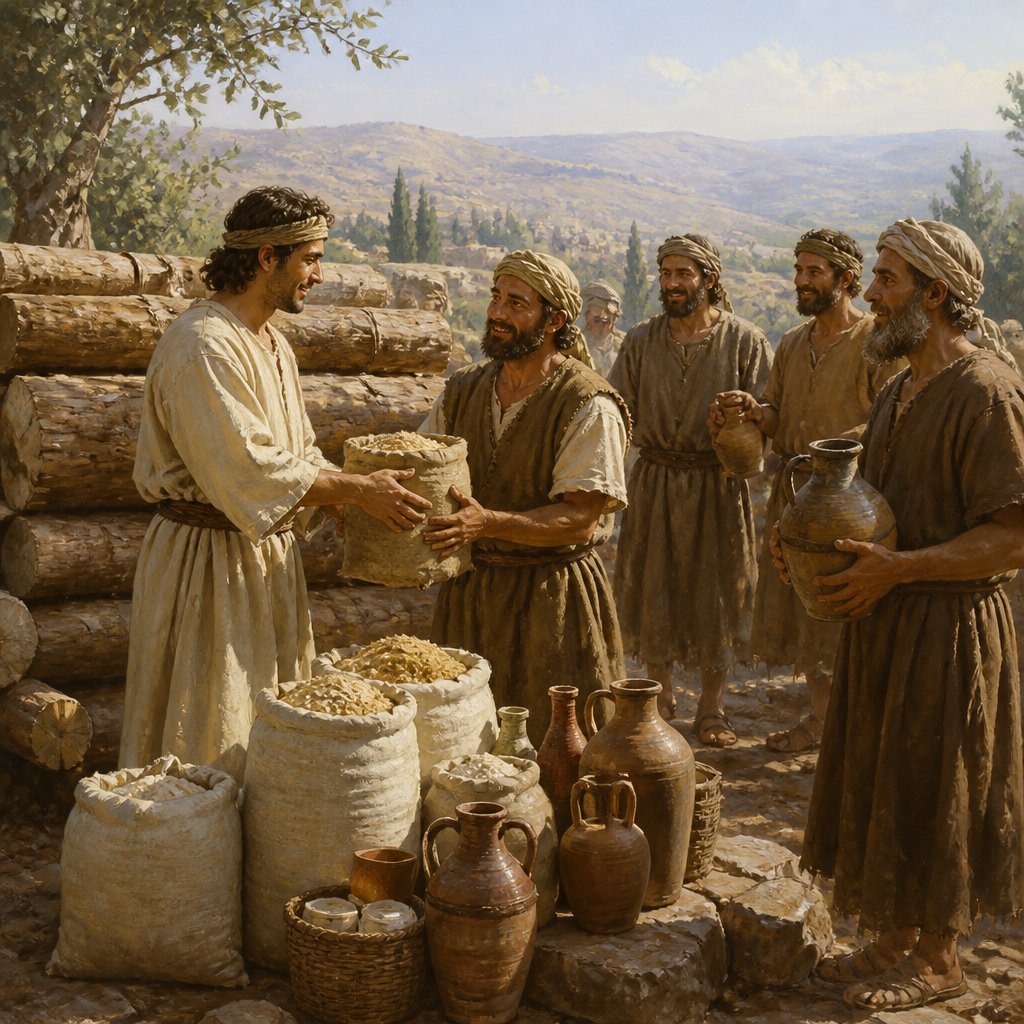
In the grand narrative of 2 Chronicles, we witness a pivotal moment in Israel's history—King Solomon’s monumental task of building the temple for the Lord. The verse 2 Chronicles 2:10 states: "And, behold, I will give to thy servants, the hewers that cut timber, twenty thousand measures of beaten wheat, and twenty thousand measures of barley, and twenty thousand baths of wine, and twenty thousand baths of oil." This text paints a vivid picture of abundance and divine provision, inviting us to reflect on God’s generosity and our role in His grand design.
At the outset of this verse, God is speaking directly to Solomon, someone who seeks to honor Him through the building of a temple. Solomon recognizes that such an undertaking requires not only great skill but also immense resources. It is in this moment of seeking and preparing that the Lord promises to supply abundantly. The magnitude of what is offered—twenty thousand measures of wheat and barley, as well as significant quantities of wine and oil—serves as a tangible reminder of God’s capacity to provide for His people’s needs.
Let’s delve into the significance of the items listed. Wheat and barley were staples in ancient Israel, symbolizing sustenance and nourishment. In offering these commodities, God ensures that the hewers, the workers, and all those involved in construction and support would be well-fed and taken care of. It reminds us of Philippians 4:19, which declares, "But my God shall supply all your need according to his riches in glory by Christ Jesus." Here, we see a parallel: just as God provided for Solomon, He promises to provide for our needs, spiritually and materially.
Wine and oil, on the other hand, are symbols of joy, celebration, and blessing. Wine represents joy and festivity, often associated with God's blessings in Scripture. Oil, particularly in the biblical sense, was used for anointing, healing, and as a symbol of the Holy Spirit. These elements remind us of the blessings that flow from God's abundant grace. When God blesses us, it is not solely for our own benefit, but also for the encouragement and upliftment of those around us. Just as Solomon was called to build the temple as a place for worship—the epicenter of Israel's relationship with God—we too are called to be conduits of God’s blessings, sharing joy and abundance with others.
The repetition of the phrase “twenty thousand” underscores God’s overflow. It signifies not just enough, but more than enough, reflecting God's abundant nature. In a world that often promotes scarcity, this verse shatters that misconception. God operates in fullness; He provides abundantly above and beyond what we could ask or imagine (Ephesians 3:20). This revelation should inspire us—when God calls us to tasks, whether great or small, He also equips us with everything we need to accomplish His will.
Moreover, this divine provision comes in the context of service. Solomon’s workers, the hewers of timber, are on a mission to create a holy space for God’s presence. The resources provided by God ensure that their work is fruitful and sustained. In our lives, God supplies us so that we can serve others, engage in the work of His kingdom, and fulfill His purposes. Every act of service, whether in the church or in our communities, is undergirded by God’s provision. Like Solomon’s hewers of timber, we are called to labor in faith, trusting that God will provide for our every need.
As we meditate on 2 Chronicles 2:10, let us embrace the truth of God’s generous provision in our lives. May we be open to recognizing the abundance around us, grateful for the blessings we often take for granted. In our endeavors, let us seek not just for our own sustenance but for the opportunity to bless others—the true mark of God’s provision is not merely in receiving, but in sharing. Let us remember, we do not work for scarcity; we labor from a place of abundance, filled with the richness of God’s grace, ready to impact the world around us.
Get our apps


Artwork for 2 Chronicles 2:10
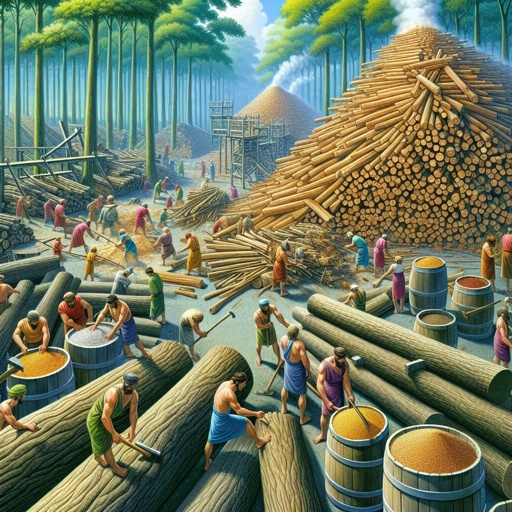
2 Chronicles 2:10 - "And, behold, I will give to thy servants, the hewers that cut timber, twenty thousand measures of beaten wheat, and twenty thousand measures of barley, and twenty thousand baths of wine, and twenty thousand baths of oil."
"And, behold, I will give to thy servants, the hewers that cut timber, twenty thousand measures of beaten wheat, and twenty thousand measures of barley, and twenty thousand baths of wine, and twenty thousand baths of oil." - 2 Chronicles 2:10

2 Chronicles 23:10

2 Chronicles 23:10

2 Chronicles 30:10

2 Chronicles 35:10

2 Chronicles 10:19 - "And Israel rebelled against the house of David unto this day."

2 Chronicles 33:10 - "And the LORD spake to Manasseh, and to his people: but they would not hearken."

2 Chronicles 11:10 - "And Zorah, and Aijalon, and Hebron, which are in Judah and in Benjamin fenced cities."

1 Chronicles 2:10 - "And Ram begat Amminadab; and Amminadab begat Nahshon, prince of the children of Judah;"

2 Chronicles 10:17 - "But as for the children of Israel that dwelt in the cities of Judah, Rehoboam reigned over them."

2 Chronicles 4:10 - "And he set the sea on the right side of the east end, over against the south."

2 Chronicles 10:13 - "And the king answered them roughly; and king Rehoboam forsook the counsel of the old men,"

2 Chronicles 35:10 - "So the service was prepared, and the priests stood in their place, and the Levites in their courses, according to the king's commandment."

2 Chronicles 10:1 - "And Rehoboam went to Shechem: for to Shechem were all Israel come to make him king."

2 Chronicles 10:3 - "And they sent and called him. So Jeroboam and all Israel came and spake to Rehoboam, saying,"

2 Chronicles 15:10 - "So they gathered themselves together at Jerusalem in the third month, in the fifteenth year of the reign of Asa."

2 Chronicles 10:2 - "And it came to pass, when Jeroboam the son of Nebat, who was in Egypt, whither he had fled from the presence of Solomon the king, heard it, that Jeroboam returned out of Egypt."

2 Chronicles 14:10 - "Then Asa went out against him, and they set the battle in array in the valley of Zephathah at Mareshah."

2 Chronicles 24:10 - "And all the princes and all the people rejoiced, and brought in, and cast into the chest, until they had made an end."

2 Chronicles 3:10 - "And in the most holy house he made two cherubims of image work, and overlaid them with gold."

2 Chronicles 10:5 - "And he said unto them, Come again unto me after three days. And the people departed."

2 Chronicles 8:10 - "And these were the chief of king Solomon's officers, even two hundred and fifty, that bare rule over the people."

2 Chronicles 32:10 - "Thus saith Sennacherib king of Assyria, Whereon do ye trust, that ye abide in the siege in Jerusalem?"

2 Chronicles 9:10 - "And the servants also of Huram, and the servants of Solomon, which brought gold from Ophir, brought algum trees and precious stones."

2 Chronicles 34:10 - "And they put it in the hand of the workmen that had the oversight of the house of the LORD, and they gave it to the workmen that wrought in the house of the LORD, to repair and amend the house:"

2 Kings 10:34 - "Now the rest of the acts of Jehu, and all that he did, and all his might, are they not written in the book of the chronicles of the kings of Israel?"

2 Chronicles 22:10 - "¶ But when Athaliah the mother of Ahaziah saw that her son was dead, she arose and destroyed all the seed royal of the house of Judah."

2 Chronicles 10:12 - "So Jeroboam and all the people came to Rehoboam on the third day, as the king bade, saying, Come again to me on the third day."

2 Chronicles 10:7 - "And they spake unto him, saying, If thou be kind to this people, and please them, and speak good words to them, they will be thy servants for ever."