Executing Righteous Judgment: Lessons from 2 Chronicles 22:8
“And it came to pass, that, when Jehu was executing judgment upon the house of Ahab, and found the princes of Judah, and the sons of the brethren of Ahaziah, that ministered to Ahaziah, he slew them.” — 2 Chronicles 22:8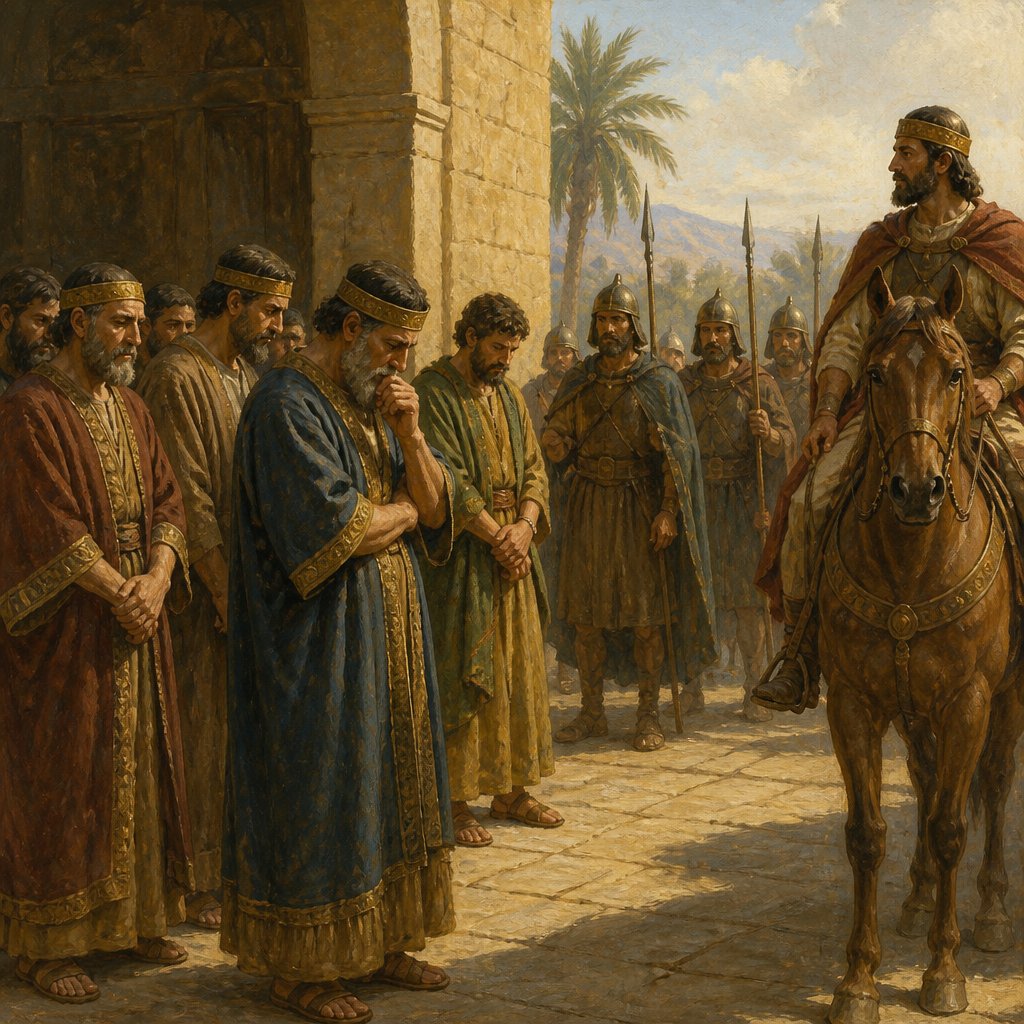
The passage in 2 Chronicles 22:8 presents a vivid moment in the history of Judah, one that encapsulates the seriousness of divine judgment and the ramifications of allegiance to unrighteousness. The King James Version (KJV) states, "And it came to pass, that, when Jehu was executing judgment upon the house of Ahab, and found the princes of Judah, and the sons of the brethren of Ahaziah, that ministered to Ahaziah, he slew them." This verse stands as a stark reminder of God’s sovereignty and the relentless pursuit of justice that rests in His hands.
To understand the depth of this narrative, it's essential to recognize the historical context. King Ahab and his progeny, including Ahaziah, had led Israel and Judah into grievous sin, promoting idolatry and turning away from the One True God. This disobedience not only incurred God’s wrath but also set in motion a series of events crucial to the fulfillment of divine prophecy. Jehu, appointed by God, was tasked with eradicating Ahab's lineage and the corrupt influences that had infiltrated the nation.
The act of judgment executed by Jehu reveals a duality of nature—God’s relentless justice juxtaposed against human frailty. Jehu was a warrior, marked by his zealousness for the Lord’s commands. However, his actions, though rooted in divine purpose, unfold a challenging reality: judgment often involves painful consequences and difficult decisions, particularly for those who cling to unrighteousness. The "princes of Judah" and the sons of Ahaziah found in Jehu’s path signify individuals who actively supported or participated in the corrupt regime of Ahab. Their demise underscores a critical truth; everything that is contrary to God’s will is destined for judgment.
Furthermore, there is an inherent call in this scripture for introspection. We must examine our own hearts and lives, looking for any alliances with the ‘Ahab’ systems that may still seek to influence us today. Just as Ahaziah's brethren served the idolatrous practices of their forebears, we too can find ourselves in positions where we either serve righteousness or compromise with the values of the world. Jehu's extreme actions compel us to confront our complacency toward sin. The lethal reality of judgment serves as a call to repentance and a renewed commitment to living righteously, pursuing holiness in our personal journeys.
In addition, the execution of judgment starkly contrasts the mercy and grace often highlighted in the New Testament. Herein lies a profound truth about God’s character; He is both loving and just. The God we serve does not sweep sin under the rug, nor does He ignore the need for justice. His holiness demands that all wrongs will be righted, either through Christ's atoning sacrifice or through the inevitable shift toward divine justice seen here in 2 Chronicles.
The impact of this passage also extends beyond individual lives and brushes against the wider community of faith. As followers of Christ, we carry the responsibility to uphold righteousness in our churches, families, and communities. This entails not merely judging others but fostering an atmosphere of accountability, conviction, and restoration when necessary. Even as Jehu executed judgment, we are called to echo the heart of God, pursuing justice and mercy in equal measure. The Church must be a beacon of righteousness, calling our culture back to moral clarity and accuracy as defined by Scripture.
Finally, let us remember that judgment is not merely about punishment but about restoration. God’s ultimate plan is to reconcile the world to Himself, calling all men to repent and return to Him. While Jehu's actions were brutally decisive, they were also part of a larger divine narrative—a cleansing of the sinful influences to prepare the way for a renewed faith in God.
In essence, 2 Chronicles 22:8 serves as both a warning and a reminder of the importance of aligning our hearts with God’s will. We serve a God who executes righteous judgment, desiring a people who seek Him wholeheartedly, remain vigilant against compromise, and advocate for the principles of His kingdom.
Get our apps


Artwork for 2 Chronicles 22:8
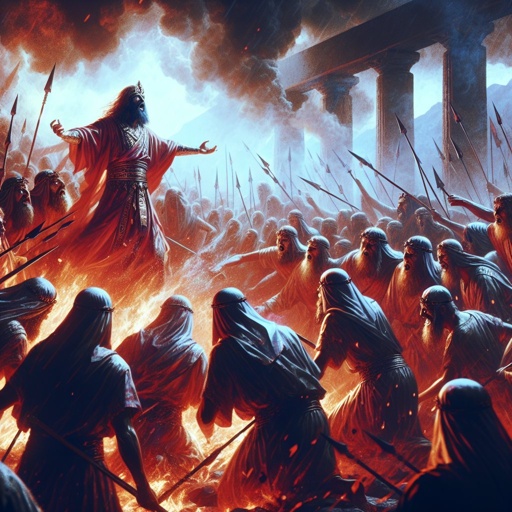
2 Chronicles 22:8 - "And it came to pass, that, when Jehu was executing judgment upon the house of Ahab, and found the princes of Judah, and the sons of the brethren of Ahaziah, that ministered to Ahaziah, he slew them."
"And it came to pass, that, when Jehu was executing judgment upon the house of Ahab, and found the princes of Judah, and the sons of the brethren of Ahaziah, that ministered to Ahaziah, he slew them." - 2 Chronicles 22:8

1 Chronicles 8:22 - "And Ishpan, and Heber, and Eliel,"

"And Ishpan, and Heber, and Eliel," - 1 Chronicles 8:22

2 Chronicles 36:22

2 Chronicles 4:22

1 Chronicles 2:8 - "And the sons of Ethan; Azariah."

2 Chronicles 11:8 - "And Gath, and Mareshah, and Ziph,"

1 Chronicles 8:2 - "Nohah the fourth, and Rapha the fifth."

2 Chronicles 9:22 - "And king Solomon passed all the kings of the earth in riches and wisdom."

2 Chronicles 8:3 - "And Solomon went to Hamath-zobah, and prevailed against it."

2 Chronicles 25:22 - "And Judah was put to the worse before Israel, and they fled every man to his tent."

1 Chronicles 2:22 - "And Segub begat Jair, who had three and twenty cities in the land of Gilead."

2 Chronicles 22:12 - "And he was with them hid in the house of God six years: and Athaliah reigned over the land."

2 Chronicles 13:22 - "And the rest of the acts of Abijah, and his ways, and his sayings, are written in the story of the prophet Iddo."

2 Chronicles 28:22 - "¶ And in the time of his distress did he trespass yet more against the LORD: this is that king Ahaz."

2 Chronicles 22:3 - "He also walked in the ways of the house of Ahab: for his mother was his counsellor to do wickedly."

2 Chronicles 26:22 - "¶ Now the rest of the acts of Uzziah, first and last, did Isaiah the prophet, the son of Amoz, write."

2 Chronicles 8:2 - "That the cities which Huram had restored to Solomon, Solomon built them, and caused the children of Israel to dwell there."

2 Chronicles 28:22 (KJVA) 22 And in the time of his distress did he trespass yet more against the LORD: this is that king Ahaz.

2 Chronicles 24:8 - "And at the king's commandment they made a chest, and set it without at the gate of the house of the LORD."

"And the sons of Ethan; Azariah." - 1 Chronicles 2:8

"And Gath, and Mareshah, and Ziph," - 2 Chronicles 11:8

2 Chronicles 8:17 - "¶ Then went Solomon to Ezion-geber, and to Eloth, at the sea side in the land of Edom."

2 Samuel 22:8 - "Then the earth shook and trembled; the foundations of heaven moved and shook, because he was wroth."

1 Chronicles 22:8 - "But the word of the LORD came to me, saying, Thou hast shed blood abundantly, and hast made great wars: thou shalt not build an house unto my name, because thou hast shed much blood upon the earth in my sight."

2 Chronicles 20:8 - "And they dwelt therein, and have built thee a sanctuary therein for thy name, saying,"

2 Chronicles 8:8 - "But of their children, who were left after them in the land, whom the children of Israel consumed not, them did Solomon make to pay tribute until this day."

2 Chronicles 22:2 - "Forty and two years old was Ahaziah when he began to reign, and he reigned one year in Jerusalem. His mother's name also was Athaliah the daughter of Omri."

2 Chronicles 11:22 - "And Rehoboam made Abijah the son of Maachah the chief, to be ruler among his brethren: for he thought to make him king."