The Weight of Actions: Lessons from 2 Chronicles 28:7
“And Zichri, a mighty man of Ephraim, slew Maaseiah the king’s son, and Azrikam the governor of the house, and Elkanah that was next to the king.” — 2 Chronicles 28:7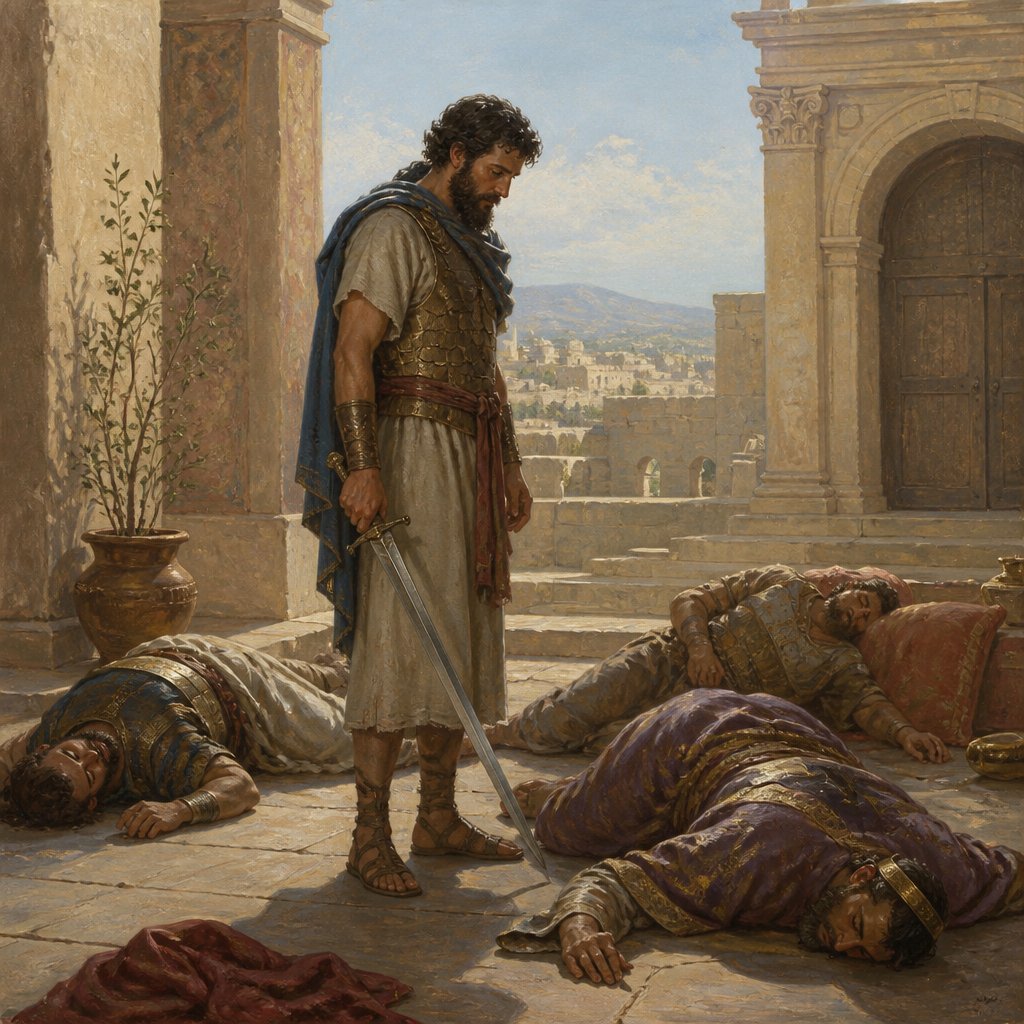
In the annals of biblical history, few events encapsulate the interplay of human actions and divine sovereignty as poignantly as the account found in 2 Chronicles 28:7. This verse reads: "And Zichri, a mighty man of Ephraim, slew Maaseiah the king's son, and Azrikam the governor of the house, and Elkanah that was next to the king." On first glance, it might seem like a mere historical account, but when we ponder the implications of this verse, we unlock profound lessons regarding authority, accountability, and the consequences of our decisions.
To understand the weight of Zichri's actions, we must delve into the context surrounding this grievous act. The chapter recounts a period of turmoil for the kingdom of Judah led by King Ahaz, who practiced idolatry to such an extent that it provoked God’s anger and brought the nation to its knees both spiritually and militarily. The invasion of the kingdom by Pekah, the king of Israel, serves as a backdrop to Zichri’s violent act. In such a context, the murder of the king’s son and prominent officials reflects the complexities of political power struggles of the time, where personal vendettas and national interests often collided.
Zichri, labeled as a "mighty man of Ephraim," underscores a critical theme: strength does not always equate to righteousness. His might may have been physical or military, yet his choice to kill speaks volumes about moral character. Power can often lead individuals astray, enticing them to act violently against the will of God. As believers, we must remind ourselves that true strength lies not in the forcefulness of our actions but in the righteousness of our decisions. We can be powerful personalities without embodying the godliness that should be the hallmark of our lives.
In examining the individuals who fell victim to Zichri, we must recognize their roles within King Ahaz’s kingdom. Maaseiah, the king’s son, symbolized a potential continuation of a legacy that had turned away from God. Azrikam, the governor of the house, had administrative authority and was likely a facilitator of the kingdom's direction, while Elkanah, next to the king, represented immediate loyalty to the king's lineage. The narrative prompts us to evaluate the relationships we have and the responsibilities we carry towards those placed above us or around us. In our modern context, we may not be involved in royal duties, yet each believer must contend with how their actions can impact hierarchies at work, within the family, and in the church.
The gravity of violence juxtaposed with God’s sovereignty invites us to reflect on the results of sinful choices. When Zichri chose to act in vengeance, he set off a chain of events that would lead to greater turmoil in the nation. Each act of violence breeds more violence, an unavoidable consequence in the cycle of sin. Believers today must be ever vigilant, recognizing that our decisions can have repercussions far beyond our immediate circumstances. This presents a dual challenge: to seek reconciliation rather than retaliation, and to uphold justice instead of revenge. God ultimately desires His people to be conduits of peace, love, and grace.
Thus, as we meditate on 2 Chronicles 28:7, let us ask ourselves: what kind of "mighty men and women" are we called to be? Are we wielders of power for good, or have we allowed our strength to drive us toward sinful choices? Each day presents us opportunities to make decisions steeped in the wisdom and guidance of Scripture, which can alter the trajectory not only of our lives but of our communities and the world around us.
In conclusion, we must strive to embody righteousness in our strengths, nurturing relationships that reflect the love and justice of Christ. Zichri’s violent act stands as a solemn reminder of the weight our actions hold—spiritually and relationally. May we choose paths of grace, extending mercy to others as we trust in God's plan, knowing that our lives can greatly influence the world in which we dwell. Amen.
Get our apps


Artwork for 2 Chronicles 28:7

2 Chronicles 28:7 - "And Zichri, a mighty man of Ephraim, slew Maaseiah the king's son, and Azrikam the governor of the house, and Elkanah that was next to the king."
"And Zichri, a mighty man of Ephraim, slew Maaseiah the king's son, and Azrikam the governor of the house, and Elkanah that was next to the king." - 2 Chronicles 28:7

2 Chronicles 28:3

2 Chronicles 20:28

2 Chronicles 28:2 - "For he walked in the ways of the kings of Israel, and made also molten images for Baalim."

1 Chronicles 28:7 - "Moreover I will establish his kingdom for ever, if he be constant to do my commandments and my judgments, as at this day."

2 Chronicles 20:28 - "And they came to Jerusalem with psalteries and harps and trumpets unto the house of the LORD."

2 Chronicles 9:28 - "And they brought unto Solomon horses out of Egypt, and out of all lands."

1 Chronicles 2:28 - "And the sons of Onam were, Shammai, and Jada. And the sons of Shammai; Nadab, and Abishur."

2 Chronicles 28:17 - "For again the Edomites had come and smitten Judah, and carried away captives."

2 Chronicles 28:14 - "So the armed men left the captives and the spoil before the princes and all the congregation."

2 Chronicles 18:28 - "So the king of Israel and Jehoshaphat the king of Judah went up to Ramoth-gilead."

2 Chronicles 28:16 - "¶ At that time did king Ahaz send unto the kings of Assyria to help him."

2 Chronicles 25:28 - "And they brought him upon horses, and buried him with his fathers in the city of Judah."

2 Chronicles 28:20 - "And Tilgath-pilneser king of Assyria came unto him, and distressed him, but strengthened him not."

2 chronicles 7:14

2 chronicles 7:14

2 Chronicles 28:22 - "¶ And in the time of his distress did he trespass yet more against the LORD: this is that king Ahaz."

2 Chronicles 28:4 - "He sacrificed also and burnt incense in the high places, and on the hills, and under every green tree."

2 Kings 23:28 - "Now the rest of the acts of Josiah, and all that he did, are they not written in the book of the chronicles of the kings of Judah?"

2 Chronicles 32:28 - "Storehouses also for the increase of corn, and wine, and oil; and stalls for all manner of beasts, and cotes for flocks."

2 Chronicles 11:7 - "And Beth-zur, and Shoco, and Adullam,"

2 Chronicles 29:28 - "And all the congregation worshipped, and the singers sang, and the trumpeters sounded: and all this continued until the burnt offering was finished."

1 Chronicles 7:28 - "¶ And their possessions and habitations were, Beth-el and the towns thereof, and eastward Naaran, and westward Gezer, with the towns thereof; Shechem also and the towns thereof, unto Gaza and the towns thereof:"

2 Chronicles 28:26 - "¶ Now the rest of his acts and of all his ways, first and last, behold, they are written in the book of the kings of Judah and Israel."

2 Chronicles 6:28 - "¶ If there be dearth in the land, if there be pestilence, if there be blasting, or mildew, locusts, or caterpillers; if their enemies besiege them in the cities of their land; whatsoever sore or whatsoever sickness there be:"

2 Chronicles 28:19 - "For the LORD brought Judah low because of Ahaz king of Israel; for he made Judah naked, and transgressed sore against the LORD."

2 Chronicles 7:4 - "¶ Then the king and all the people offered sacrifices before the LORD."

2 Chronicles 7:2 - "And the priests could not enter into the house of the LORD, because the glory of the LORD had filled the LORD'S house."

Humble ourselves and pray 2 Chronicles 7:14