Cherubim of Glory: The Divine Presence in Our Lives
“And in the most holy house he made two cherubims of image work, and overlaid them with gold.” — 2 Chronicles 3:10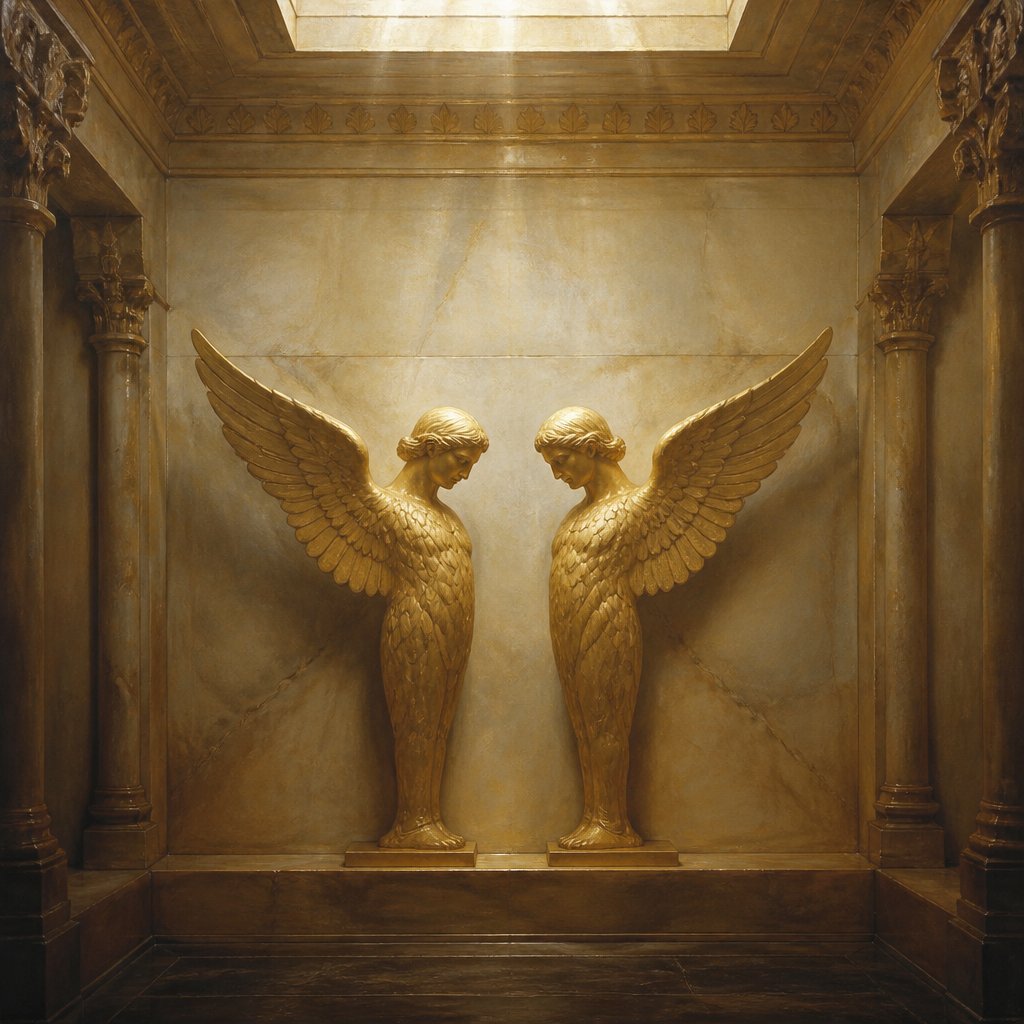
In 2 Chronicles 3:10, we encounter a profound and intricate moment in the construction of King Solomon's temple: "And in the most holy house he made two cherubims of image work, and overlaid them with gold." This verse gives us a glimpse into the meticulous attention to detail and the significance of the symbols used in the temple—the dwelling place of God on earth.
The creation of these two cherubim serves not just as decorative elements but as powerful representations of God's presence and holiness. Cherubim, as described in Scripture, are not only angelic beings but are also guardians of sacred spaces. They remind us that the holiness of God is both inviting and awe-inspiring. Their wings stretching across the ark of the covenant symbolize the surrounding glory and majesty of God. Herein lies a beautiful truth for us: in the most holy spaces of our lives—our hearts and minds—God desires to dwell richly.
As we reflect on this verse, we should ponder what it means for the most holy of places to be constructed in our lives. Just as Solomon built a magnificent temple to house God’s presence, we too are called to create sacred spaces in our hearts where God can reside. 1 Corinthians 6:19 declares, "What? know ye not that your body is the temple of the Holy Ghost which is in you, which ye have of God, and ye are not your own?" This idea echoes the significance of the temple in Jerusalem—it highlights that God wishes to make His presence known in our lives.
The artistry displayed in the cherubim challenges us to consider the level of care we provide for our own spiritual lives. Are we intentionally cultivating an environment where God can thrive through our thoughts, actions, and decisions? Just as the gold overlay on the cherubim represents purity, brilliance, and beauty, we, too, must strive to reflect the glory of God in our lives. Our actions should emit the love and grace we have received, reminding everyone around us of our magnificent Creator.
Additionally, the cherubim serve as a reminder of the accessibility of God's presence. In the temple, the cherubim were positioned above the mercy seat, where the high priest would sprinkle the blood of atonement once a year. This appointed act signifies that through sacrifice, God's presence remains closely accessible to His people. We can relate this to our constant need for renewal through the blood of Jesus Christ, the ultimate sacrifice. **Hebrews 4:16 tells us, "Let us therefore come boldly unto the throne of grace, that we may obtain mercy, and find grace to help in time of need."** This invitation shows that there are no longer barriers between us and God. The cherubim symbolize our intimate relationship with a holy God, who desires to meet us in our most desperate moments.
In a world filled with distractions and noise, it's easy to forget the beauty of setting apart space for God. Let us take inspiration from Solomon’s temple and the craftsmanship of the cherubim to create intentional moments of worship and reflection. In our daily lives, these moments can manifest through prayer, meditation on Scripture, or acts of kindness towards others. By embedding the divine presence in our day-to-day interactions, we emulate the cherubim who guard and worship around the very throne of God.
In conclusion, 2 Chronicles 3:10 beckons us to recognize the importance of cherishing the sacred spaces within us. We have the privilege of housing the Holy Spirit, the same Spirit that filled the temple Solomon built. May we commit ourselves to maintaining the integrity of this holy dwelling, allowing God's presence to shine through our lives as brightly as the gold overlay on the cherubim, inviting others into His glorious light. Let us remember, as we build our lives, that each action, word, and thought is an opportunity to reflect the beauty, holiness, and love of God.
Get our apps


Artwork for 2 Chronicles 3:10

2 Chronicles 3:10 - "And in the most holy house he made two cherubims of image work, and overlaid them with gold."
"And in the most holy house he made two cherubims of image work, and overlaid them with gold." - 2 Chronicles 3:10

2 Chronicles 10:3 - "And they sent and called him. So Jeroboam and all Israel came and spake to Rehoboam, saying,"

1 Chronicles 3:10 - "¶ And Solomon's son was Rehoboam, Abia his son, Asa his son, Jehoshaphat his son,"

2 Chronicles 23:10

2 Chronicles 23:10

2 Chronicles 30:10

2 Chronicles 35:10

"¶ And Solomon's son was Rehoboam, Abia his son, Asa his son, Jehoshaphat his son," - 1 Chronicles 3:10

"And they sent and called him. So Jeroboam and all Israel came and spake to Rehoboam, saying," - 2 Chronicles 10:3

2 Chronicles 28:3

2 corinthians 10:3-5

2 corinthians 10:3-5

2 corinthians 10:3-5

2 corinthians 10:3-5

2 corinthians 10:3-5

2 corinthians 10:3-5

2 corinthians 10:3-5

2 corinthians 10:3-5

2 corinthians 10:3-5

2 corinthians 10:3-5

1 Chronicles 10:3 - "And the battle went sore against Saul, and the archers hit him, and he was wounded of the archers."

2 corinthians 10:3-5

2 corinthians 10:3-5

2 Chronicles 10:19 - "And Israel rebelled against the house of David unto this day."

2 Chronicles 33:10 - "And the LORD spake to Manasseh, and to his people: but they would not hearken."

2 Chronicles 8:3 - "And Solomon went to Hamath-zobah, and prevailed against it."

2 Chronicles 11:10 - "And Zorah, and Aijalon, and Hebron, which are in Judah and in Benjamin fenced cities."

2 Chronicles 3:2 - "And he began to build in the second day of the second month, in the fourth year of his reign."

1 Chronicles 2:10 - "And Ram begat Amminadab; and Amminadab begat Nahshon, prince of the children of Judah;"