Restoration Through Repentance: The Heart of Passover
“Then they killed the passover on the fourteenth day of the second month: and the priests and the Levites were ashamed, and sanctified themselves, and brought in the burnt offerings into the house of the LORD.” — 2 Chronicles 30:15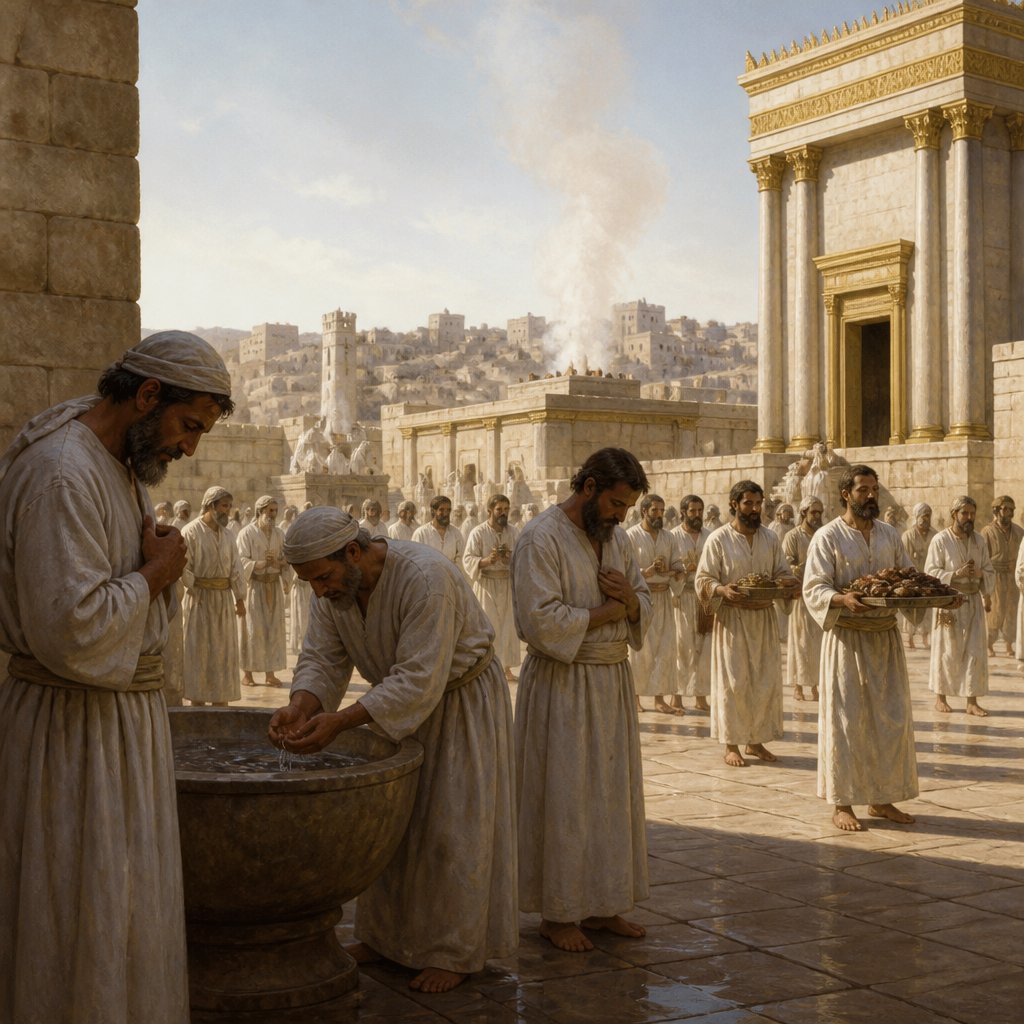
In the context of 2 Chronicles 30:15, the verse reads: "Then they killed the passover on the fourteenth day of the second month: and the priests and the Levites were ashamed, and sanctified themselves, and brought in the burnt offerings into the house of the LORD." This passage reflects a moment of deep significance not only for ancient Israel but also for us today as we contemplate the themes of repentance, holiness, and renewal within the context of worship.
To fully appreciate this verse, we must understand the background surrounding this event. King Hezekiah, during his reign over Judah, found that many of the people had not properly observed the Passover in the first month, as was customary. This was a significant problem since the Passover commemorates the liberation of the Israelites from Egyptian bondage, embodying themes of deliverance, hope, and the faithfulness of God. Recognizing this, Hezekiah resolved to call for a national observance of the Passover in the second month. The decision was not merely one of convenience but a powerful act of restoration, inviting the people back into fellowship with God.
The verse points out the response of the priests and Levites upon this call to action. Their shame signifies a recognition of neglecting their sacred duties and failing to lead the people of Judah in worship with the purity and reverence that God requires. In acknowledging their need for sanctification, they set an example for the people: acknowledging one's sin and seeking holiness is the first step towards restoration.
Too often, there lies a barrier to genuine worship in our lives, and that barrier is sin. The priests and Levites display a profound moment of humility as they "sanctified themselves" before approaching the altar of God. Sanctification is more than merely setting oneself apart; it involves a deep introspection of the heart, an acknowledgment of areas that do not honor God, and a commitment to purify oneself in light of His holiness. These men understood that they could not bring acceptable offerings into the house of the Lord without first dealing with their own uncleanliness and shame. In our own lives, how often do we attempt to approach God without addressing our sins or the distractions that keep us from fully engaging with Him?
Moreover, the act of bringing their offerings into the house of the LORD is highly symbolic. Burnt offerings were a means of atonement and worship, representing total surrender to God. It is a beautiful illustration of our response to the Holy God who desires our hearts. When we come to God with our burdens and sins, we are invited to leave them behind. The passage reminds us that after acknowledgment, there is an action; bringing our offerings—to give of ourselves in gratitude for His mercy and grace. Thus, participation in worship is a communal act that reflects individual devotion and restoration.
As we reflect on this scripture, we should ask ourselves a vital question: When was the last time we approached God with the humility reflected by these priests and Levites? Are we willing to "sanctify" ourselves, setting aside the distractions and sins that entangle us? Just like King Hezekiah called the people to return to true worship, the Holy Spirit beckons us to return to places of holiness where our relationships with God can thrive.
In conclusion, the practices surrounding Passover teach us that God desires not just rituals but hearts that align with His. Let us be encouraged to follow the example set in 2 Chronicles 30:15: to acknowledge our need for repentance, to sanctify ourselves, and to bring forward our offerings of worship. In doing so, we not only find healing and restoration but also stand as a testament of God’s transformative grace in our lives and in our communities.
Get our apps


Artwork for 2 Chronicles 30:15

2 Chronicles 30:15 - "Then they killed the passover on the fourteenth day of the second month: and the priests and the Levites were ashamed, and sanctified themselves, and brought in the burnt offerings into the house of the LORD."
"Then they killed the passover on the fourteenth day of the second month: and the priests and the Levites were ashamed, and sanctified themselves, and brought in the burnt offerings into the house of the LORD." - 2 Chronicles 30:15

2 Chronicles 30:10

2 Chronicles 30:4 - "And the thing pleased the king and all the congregation."

2 Chronicles 30:20 - "And the LORD hearkened to Hezekiah, and healed the people."

2 Chronicles 9:30 - "And Solomon reigned in Jerusalem over all Israel forty years."

1 Chronicles 2:30 - "And the sons of Nadab; Seled, and Appaim: but Seled died without children."

2 Chronicles 30:2 - "For the king had taken counsel, and his princes, and all the congregation in Jerusalem, to keep the passover in the second month."

2 Chronicles 30:11 - "Nevertheless divers of Asher and Manasseh and of Zebulun humbled themselves, and came to Jerusalem."

2 Chronicles 20:30 - "So the realm of Jehoshaphat was quiet: for his God gave him rest round about."

1 Chronicles 2:15 - "Ozem the sixth, David the seventh:"

2 Chronicles 4:15 - "One sea, and twelve oxen under it."

2 Chronicles 30:23 - "And the whole assembly took counsel to keep other seven days: and they kept other seven days with gladness."

2 Chronicles 30:26 - "So there was great joy in Jerusalem: for since the time of Solomon the son of David king of Israel there was not the like in Jerusalem."

2 Chronicles 30:13 - "¶ And there assembled at Jerusalem much people to keep the feast of unleavened bread in the second month, a very great congregation."

"And the LORD hearkened to Hezekiah, and healed the people." - 2 Chronicles 30:20

"And the thing pleased the king and all the congregation." - 2 Chronicles 30:4

2 Kings 15:15 - "And the rest of the acts of Shallum, and his conspiracy which he made, behold, they are written in the book of the chronicles of the kings of Israel."

2 Chronicles 30:12 - "Also in Judah the hand of God was to give them one heart to do the commandment of the king and of the princes, by the word of the LORD."

2 Chronicles 30:14 - "And they arose and took away the altars that were in Jerusalem, and all the altars for incense took they away, and cast them into the brook Kidron."

2 Chronicles 30:19 - "That prepareth his heart to seek God, the LORD God of his fathers, though he be not cleansed according to the purification of the sanctuary."

2 Chronicles 15:1 - "And the Spirit of God came upon Azariah the son of Oded:"

2 Chronicles 30:3 - "For they could not keep it at that time, because the priests had not sanctified themselves sufficiently, neither had the people gathered themselves together to Jerusalem."

2 Chronicles 30:16 - "And they stood in their place after their manner, according to the law of Moses the man of God: the priests sprinkled the blood, which they received of the hand of the Levites."

2 Chronicles 15:19 - "And there was no more war unto the five and thirtieth year of the reign of Asa."

2 Chronicles 15:14 - "And they sware unto the LORD with a loud voice, and with shouting, and with trumpets, and with cornets."

2 Chronicles 17:15 - "And next to him was Jehohanan the captain, and with him two hundred and fourscore thousand."

2 Chronicles 30:27 - "¶ Then the priests the Levites arose and blessed the people: and their voice was heard, and their prayer came up to his holy dwelling place, even unto heaven."

2 Kings 15:11 - "And the rest of the acts of Zachariah, behold, they are written in the book of the chronicles of the kings of Israel."

2 Chronicles 18:30 - "Now the king of Syria had commanded the captains of the chariots that were with him, saying, Fight ye not with small or great, save only with the king of Israel."