The Legacy of Leadership: Lessons from King Amon and Josiah
“But the people of the land slew all them that had conspired against king Amon; and the people of the land made Josiah his son king in his stead.” — 2 Chronicles 33:25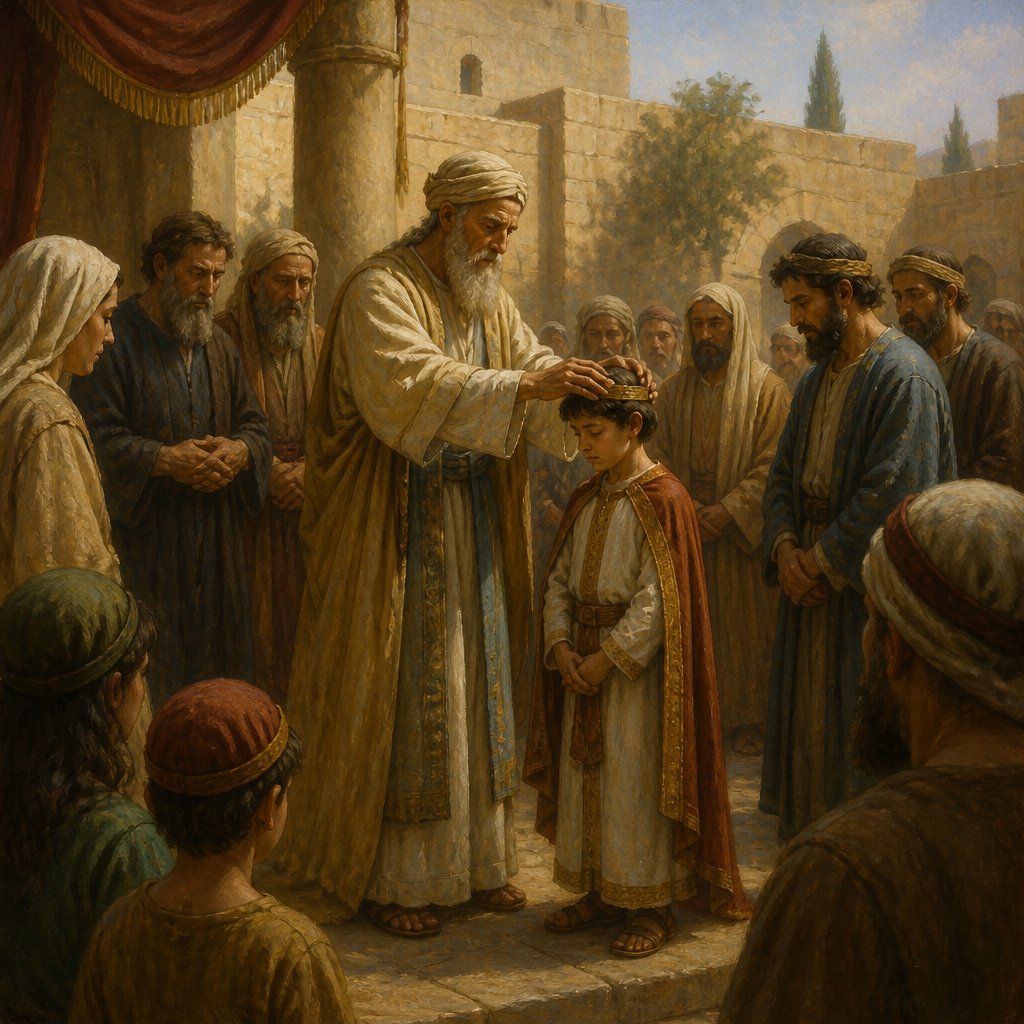
In the intricate tapestry of biblical narratives, the story of King Amon and his son, Josiah, entwines themes of leadership, the consequences of sin, and the hope for redemption. 2 Chronicles 33:25 states, "But the people of the land slew all them that had conspired against king Amon; and the people of the land made Josiah his son king in his stead." This verse encapsulates a pivotal moment in Judah’s history, showcasing the intensity of public sentiment and the transition of power from one king to another, within the context of divine sovereignty.
To better understand this moment, we must explore King Amon's reign. He ascended to the throne following his father, King Manasseh, who had a notorious reputation for idolatry and disobedience to God. Despite the significant reforms enacted towards the end of Manasseh’s life, Amon returned to the former idolatrous practices, choosing not to humble himself before the Lord (2 Chronicles 33:23). His reign lasted only two years, marred by conspiracy and treachery, ultimately leading to his assassination. Amon's life serves as a poignant narrative on the consequences of embracing wickedness. It illuminates a stark truth about leadership: the character and integrity of a leader profoundly influence both the people and the legacy left behind.
A salient lesson from Amon’s disobedience is the peril of neglecting the fear of God and the wisdom derived from humility. As leaders—in families, churches, or communities—our examples carry weight. When we choose paths of sin or rebellion, we not only harm ourselves but also set a dire precedent for those who follow us. The legacy we leave can either galvanize future generations toward faithfulness or embolden them to wander away from God. King Amon, in his brief reign, chose rebellion and led his people astray, resulting in his demise at the hands of those he wronged.
However, amidst a backdrop of treachery and the consequences of Amon’s choices, God’s providence shines through the appointment of Josiah. The verse indicates that the people, seeking new leadership after Amon’s downfall, turned to Josiah, his son. The name "Josiah" means "Yahweh supports," an encouraging reminder that despite the dark shadows cast by his father’s actions, God was orchestrating a plan for renewal in Judah. Josiah became one of the most revered kings in Israel’s history, known for his passion for restoring true worship and the covenant between God and His people.
The transition from Amon to Josiah invites us to ponder the abundance of grace inherent in God’s plan. Regardless of our familial lineage or the failures of those before us, we have the opportunity to respond to God’s call. Josiah initiated monumental reforms, rediscovering the Book of the Law and initiating a revival (2 Chronicles 34). His story exemplifies the power of accountable, godly leadership—leadership that directs hearts back to the Lord and aligns society with divine purposes. This is a poignant reminder that while leaders may fail, one can rise with a heart after God and lead others to Him.
As we reflect on this narrative, let us consider our own lives. In what ways are we, either personally or as leaders, emulating Amon? Are we sowing seeds of rebellion, or are we fostering an environment ripe for revival? Let the fall of Amon serve as a cautionary tale. And let the rise of Josiah inspire hope in all of us that, regardless of our beginnings, we can be vessels for God’s grace and truth. It's never too late to choose the pathway of righteousness and lead others to the heart of God.
Finally, may we endeavor to be like Josiah, listening to God’s call, making amends for past failures, and molding a legacy that points toward faithfulness, hope, and the redemptive love of Christ. The legacy of our leadership can sow seeds of faith in generations yet to come. Let us strive to live out a legacy that truly reflects the heart of God.
Get our apps


Artwork for 2 Chronicles 33:25

2 Chronicles 33:25 - "¶ But the people of the land slew all them that had conspired against king Amon; and the people of the land made Josiah his son king in his stead."
"¶ But the people of the land slew all them that had conspired against king Amon; and the people of the land made Josiah his son king in his stead." - 2 Chronicles 33:25

1 Chronicles 2:33 - "And the sons of Jonathan; Peleth, and Zaza. These were the sons of Jerahmeel."

2 Chronicles 33:10 - "And the LORD spake to Manasseh, and to his people: but they would not hearken."

2 Chronicles 29:33 - "And the consecrated things were six hundred oxen and three thousand sheep."

2 Chronicles 25:2 - "And he did that which was right in the sight of the LORD, but not with a perfect heart."

2 Chronicles 33:5 - "And he built altars for all the host of heaven in the two courts of the house of the LORD."

2 Chronicles 33:24 - "And his servants conspired against him, and slew him in his own house."

2 Chronicles 33:2 - "But did that which was evil in the sight of the LORD, like unto the abominations of the heathen, whom the LORD had cast out before the children of Israel."

2 Chronicles 25:25 - "¶ And Amaziah the son of Joash king of Judah lived after the death of Joash son of Jehoahaz king of Israel fifteen years."

2 Chronicles 33:17 - "Nevertheless the people did sacrifice still in the high places, yet unto the LORD their God only."

2 Chronicles 33:21 - "¶ Amon was two and twenty years old when he began to reign, and reigned two years in Jerusalem."

2 Chronicles 20:33 - "Howbeit the high places were not taken away: for as yet the people had not prepared their hearts unto the God of their fathers."

2 Chronicles 33:23 - "And humbled not himself before the LORD, as Manasseh his father had humbled himself; but Amon trespassed more and more."

2 Chronicles 33:1 - "Manasseh was twelve years old when he began to reign, and he reigned fifty and five years in Jerusalem:"

Genesis 25-33

2 Chronicles 33:12 - "And when he was in affliction, he besought the LORD his God, and humbled himself greatly before the God of his fathers,"

2 Chronicles 33:4 - "Also he built altars in the house of the LORD, whereof the LORD had said, In Jerusalem shall my name be for ever."

2 Chronicles 33:20 - "¶ So Manasseh slept with his fathers, and they buried him in his own house: and Amon his son reigned in his stead."

2 Chronicles 33:16 - "And he repaired the altar of the LORD, and sacrificed thereon peace offerings and thank offerings, and commanded Judah to serve the LORD God of Israel."

2 Chronicles 25:28 - "And they brought him upon horses, and buried him with his fathers in the city of Judah."

2 Chronicles 25:22 - "And Judah was put to the worse before Israel, and they fled every man to his tent."

1 Chronicles 2:25 - "¶ And the sons of Jerahmeel the firstborn of Hezron were, Ram the firstborn, and Bunah, and Oren, and Ozem, and Ahijah."

Luke 14:25 - 33

"And the LORD spake to Manasseh, and to his people: but they would not hearken." - 2 Chronicles 33:10

2 Chronicles 25:26 - "Now the rest of the acts of Amaziah, first and last, behold, are they not written in the book of the kings of Judah and Israel?"

2 Kings 21:25 - "Now the rest of the acts of Amon which he did, are they not written in the book of the chronicles of the kings of Judah?"

"And the sons of Jonathan; Peleth, and Zaza. These were the sons of Jerahmeel." - 1 Chronicles 2:33

2 Chronicles 33:9 - "So Manasseh made Judah and the inhabitants of Jerusalem to err, and to do worse than the heathen, whom the LORD had destroyed before the children of Israel."

2 Chronicles 25:6 - "He hired also an hundred thousand mighty men of valour out of Israel for an hundred talents of silver."